Treatment plant servicing around Battle, why the High Weald leaves so many homes on a plant, and what a service catches before a fault reaches the stream.
A sewage treatment plant around Battle wants servicing every six to twelve months, at whatever interval its manufacturer sets, and it wants the same attention whether it is two years old or twenty. That is not because plants are fragile. It is because a treatment plant is a machine, with a motor or blower, bearings and moving parts that run every hour of every day, and when one of those parts wears the plant does not stop politely. It carries on discharging, just without treating properly.
That matters more around Battle than in most places, because of where the water goes. Out here a plant often discharges to one of the small streams that run down every valley, so a plant that has stopped treating is putting poorly treated effluent straight into a watercourse. A treatment plant service is what catches the worn bearing or the tired blower while it is still a part, and before it is a pollution problem with your name on it.
Why so much of the Battle area runs on treatment plants
Battle town is on mains drainage. The parish around it is a different story. Battle sits inside the High Weald National Landscape, which describes its own ground as a deeply cut, ridged landform of clays and sandstone, with a high density of isolated farmsteads and hamlets and numerous small headwater streams, known as gills. Put those together and you have a lot of homes down long private drives with no prospect of a sewer connection.
The same ground decides what kind of system those homes can have. A septic tank needs a drainage field, and a drainage field needs soil that will take the water. Heavy clay drains slowly, and on a steep slope it is hard to get a field to work at all. So where the slope and the clay rule out a field, the answer is usually a treatment plant, which treats the effluent well enough to discharge to a stream instead.
That is also why replacing a plant with a septic tank is rarely an option here. A septic tank cannot legally discharge to a watercourse, and we have explained why in our guide to whether a septic tank can discharge to a ditch. For most properties around Battle the plant is the system, so keeping it working is what matters.
What the rules expect from the owner
Under the General Binding Rules, a treatment plant has to be installed and operated in line with the manufacturer's specification, maintained by someone competent, and desludged at least once a year or as often as the manufacturer says. Keeping the service paperwork is not itself a legal requirement, but it is worth doing. When a property is sold the guidance asks the seller to pass maintenance records to the buyer if they have them, and a buyer's solicitor will usually ask, which is a point we cover in selling a house with a septic tank or plant.
Approved Document H, the drainage section of the building regulations, makes a related point. It expects a notice to be fixed inside the property saying the drainage goes to a packaged treatment works, how often it needs maintaining, and that the owner is legally responsible for making sure it does not cause pollution, a health hazard or a nuisance. If you have bought a house near Battle and never seen that notice, it is worth asking us to look the plant over and tell you what make it is and what its manufacturer expects.
What a service covers
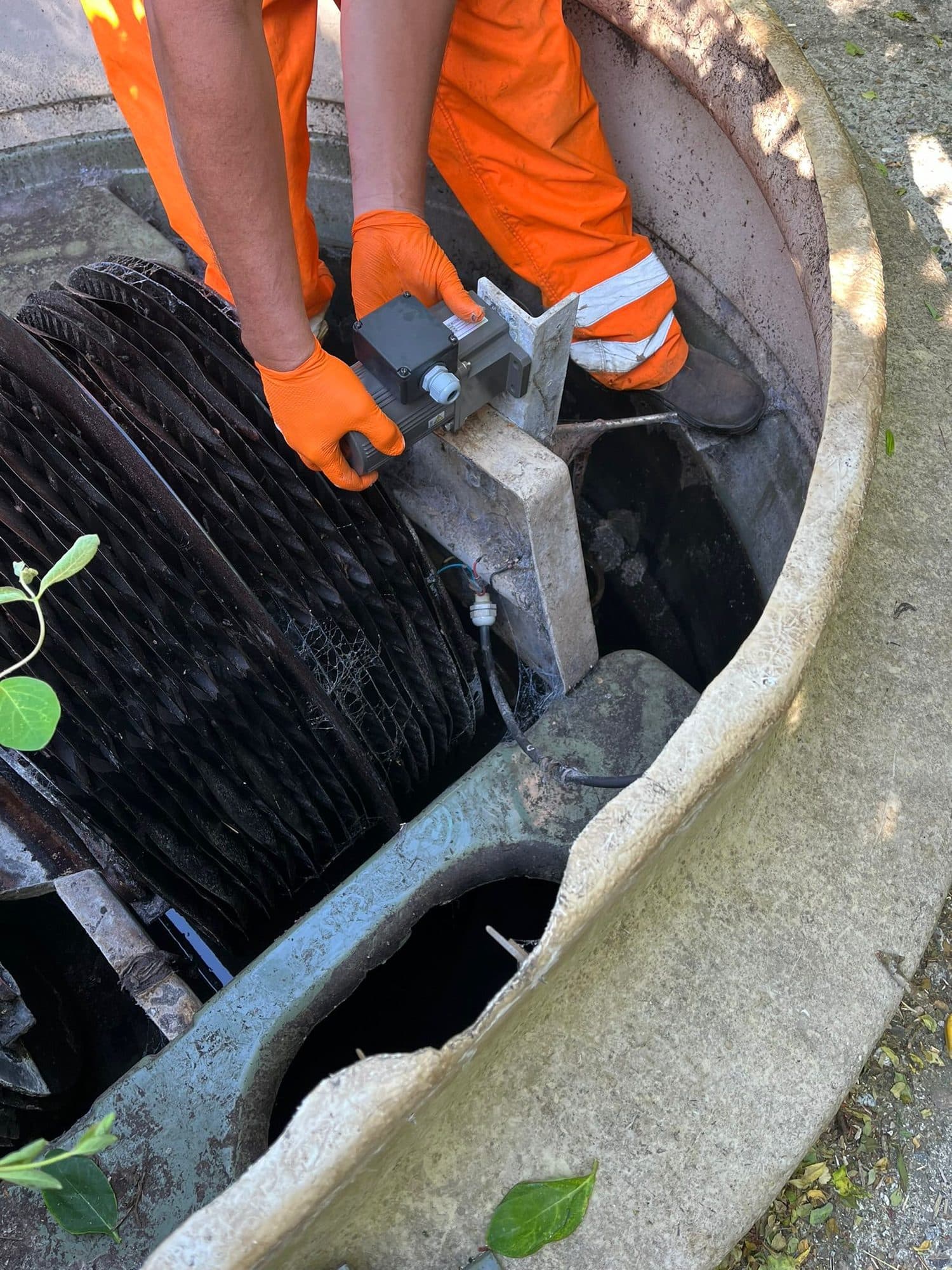
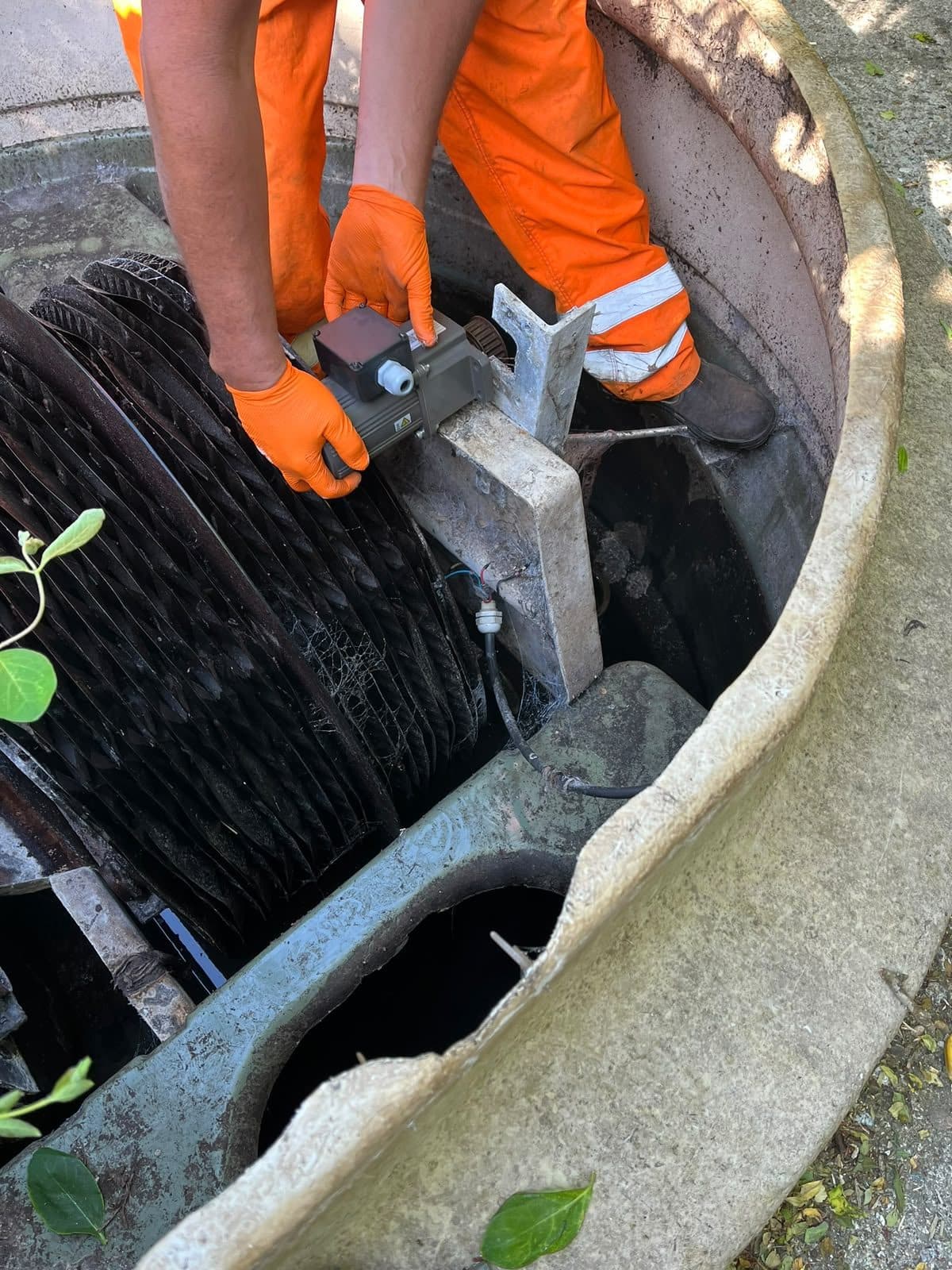
A service is not a quick look under the lid. We check and clean the blower and its filter, inspect the biodisc or aerator and its bearings, check the motor and drive, look at the settlement and final chambers, and assess the quality of what is being discharged. Worn parts get replaced before they strand you.
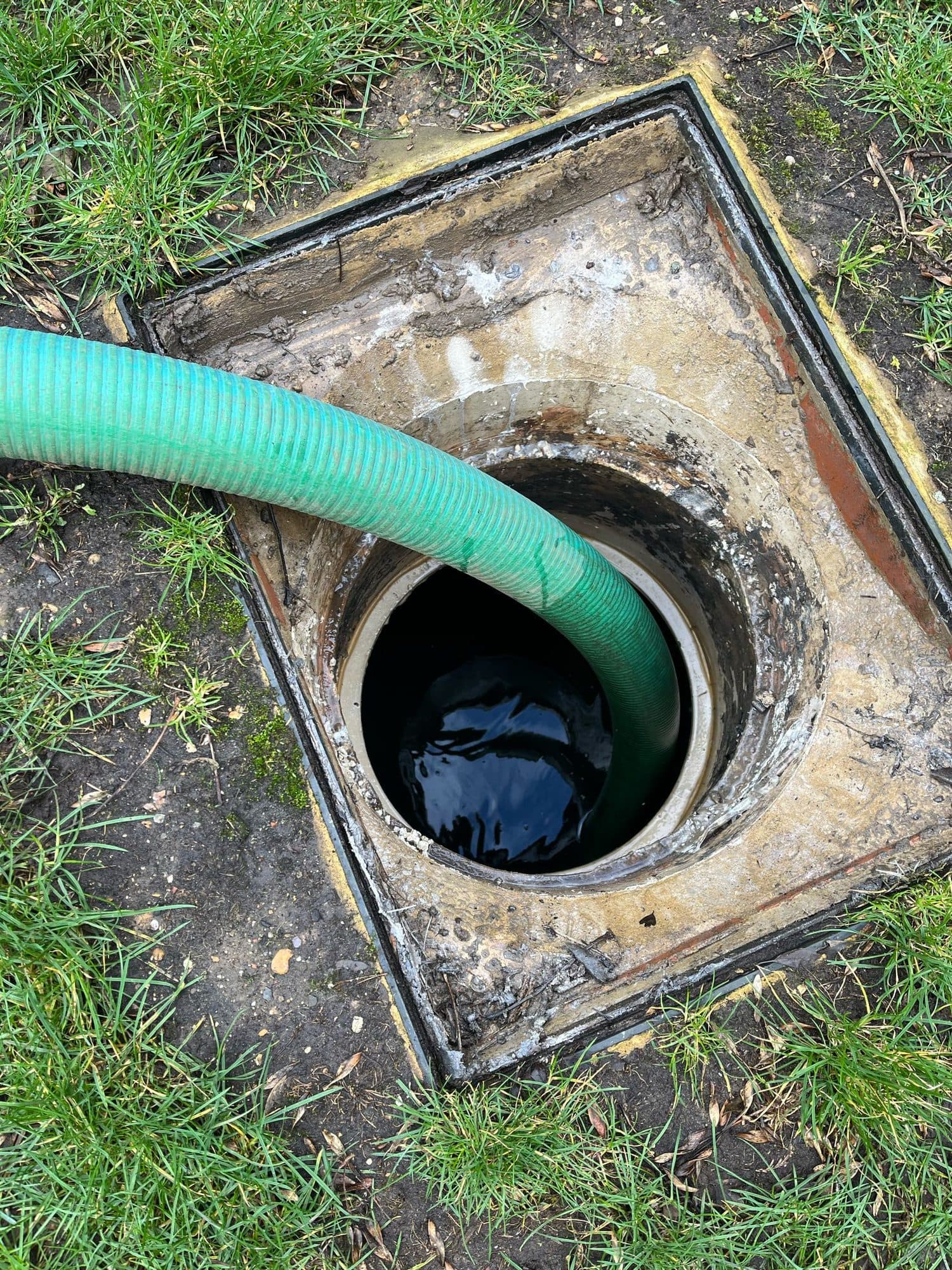
We also check how much sludge has built up, because a treatment plant needs emptying as well as servicing, and the service visit is the right time to judge when. If you want the longer version of a visit from start to finish, our guide to what to expect from treatment plant servicing walks through it, and how a sewage treatment plant works explains what each chamber is doing.
In our experience, replacing a worn bearing on a planned service works better than waiting for it to fail, because changing it on a planned visit is a routine job, while a seized shaft means a plant that treats nothing at all until the repair is done. Routine servicing is far more cost effective than an emergency repair, and the difference in what reaches the stream in the meantime matters even more.
Checks you can make between visits
You do not need to open anything to keep an eye on a plant, and you should not climb into or lean into a chamber, because the Health and Safety Executive treats spaces like that as confined spaces for good reason.
From outside, three things tell you most of what you need to know. The first is the sound. Most plants make a steady hum or a quiet turning noise, and a change of note, a grinding sound or silence usually means a motor, blower or bearing problem.
The second is the outlet. Approved Document H says the effluent leaving a packaged treatment works should be free flowing and clear, so grey, cloudy or smelly discharge means the plant is not treating properly.
The third is the smell. A healthy plant should not smell much beyond the lid, and a sewage smell near the plant or the stream is worth a call. Our guide to smells from a septic tank or treatment plant explains how to narrow it down.
Storms, power cuts and the alarm
Most treatment plants stop when the power goes off. Approved Document H expects a packaged treatment works that needs power to keep working adequately without it for up to six hours, or to have an uninterruptible supply. A short cut is therefore nothing to worry about. A long one is different, and once power is back it is worth checking the plant has restarted and any alarm has cleared. Our guide to how weather affects septic tanks and treatment plants covers what heavy rain does to a system as well.
If the plant has stopped, is alarming or has started to smell, ring us. We carry common parts and can usually get a unit running again the same day. If a part has to come in, we will tell you what it is and how long it will take rather than leaving you guessing. Where the fault is urgent, it goes in as an emergency callout.
When a plant is past repairing
Plants do wear out, and a unit that needs a major part every year is costing more than it should. When that point comes we will say so, and what a replacement would involve. Our guide to how long a treatment plant lasts explains what usually goes first, and we supply and fit new treatment plants where a repair no longer makes sense.
Booking a service around Battle
We work right across the farms and lanes around Battle, and to the north east we cover Northiam, Peasmarsh and Rye as well. If you are elsewhere in the county, see our East Sussex coverage.
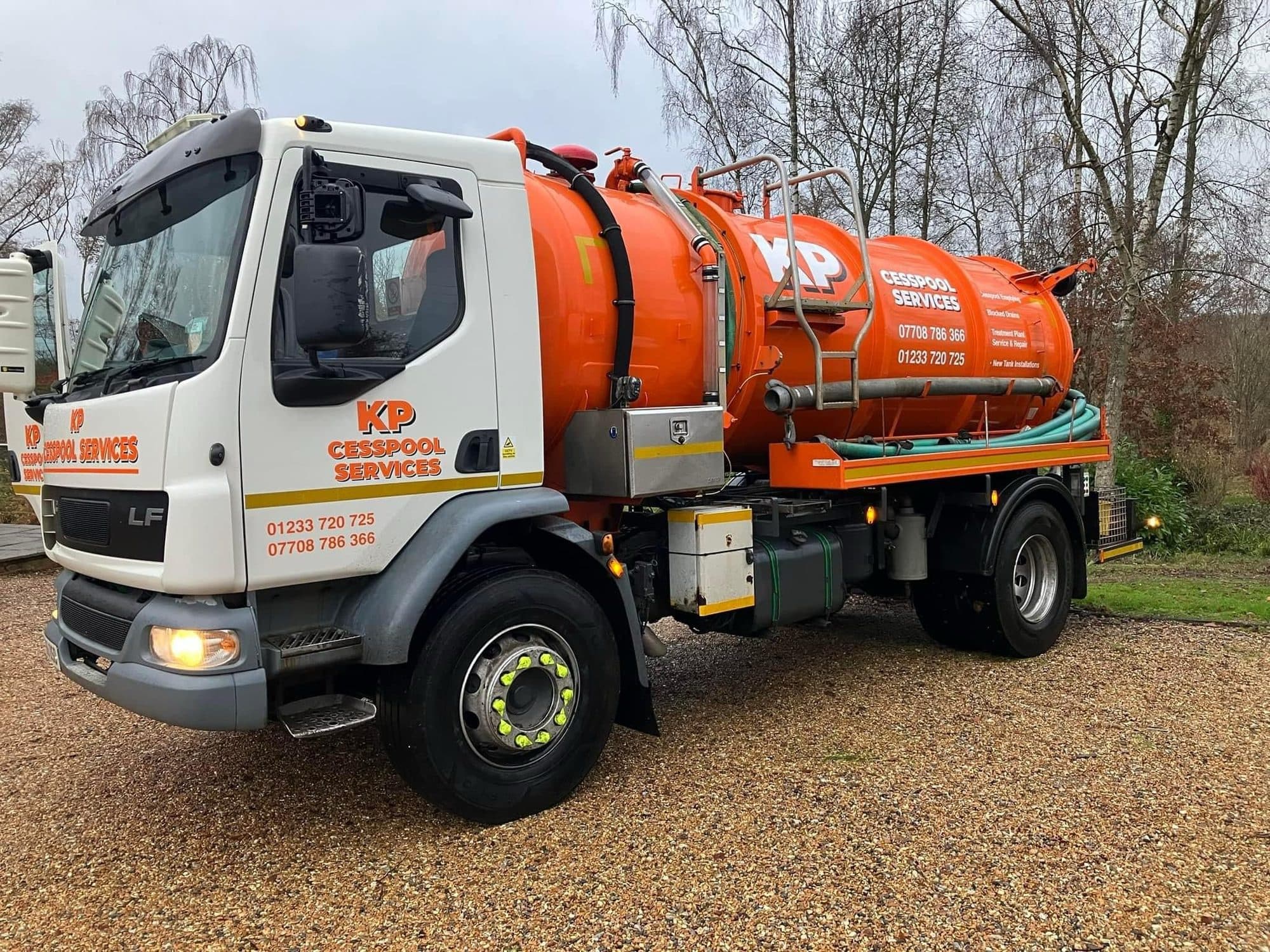
KP Cesspool Services has over twenty years' experience of servicing and repairing treatment plants across Kent and East Sussex, and you can read our reviews on Checkatrade. To book a service or report a fault, call 01233 720725, email kpcesspoolservices@hotmail.com, or contact us and tell us the make of plant if you know it.