
New Tank Installations in Kent and East Sussex
Septic tanks, cesspools and sewage treatment tanks installed to current regulations, groundworks included, whether it is a new build or an old system replaced.
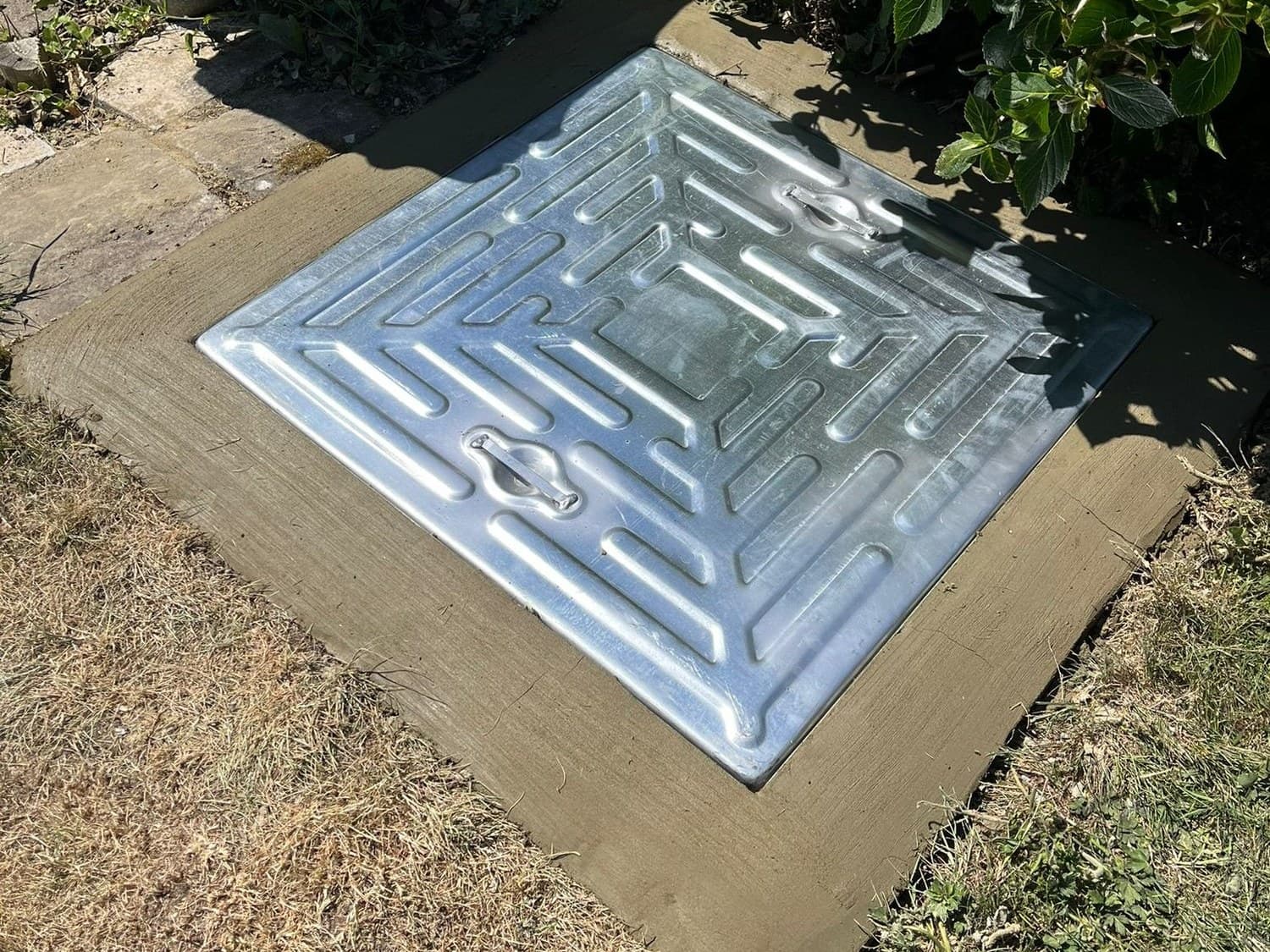
New build or replacement
Whether you are building a property with no mains drainage or replacing a tank that has come to the end of its life, we install the whole thing. Old concrete and steel tanks in particular have a finite life, and once one starts leaking it becomes an environmental problem rather than just a maintenance one. When to upgrade your septic system sets out the usual triggers.
Choosing between the three
A cesspool stores only and needs emptying every few weeks, so it is the fallback where there is genuinely no drainage option. A septic tank needs suitable ground for a drainage field. A treatment plant can go where the ground will not take a field, as long as there is a watercourse that flows all year, but it needs power and servicing. We look at your ground, your property and the rules that apply, then tell you which of the three actually fits. How to choose between a cesspool, septic tank or treatment plant compares them side by side.
Where a tank can go
Approved Document H sets out where a tank can sit. A septic tank or cesspool should be at least 7 metres from the habitable parts of a building and within 30 metres of where a tanker can park. A drainage field needs to be at least 10 metres from any watercourse and 15 metres from any building, and the ground has to pass a percolation test. Those distances rule out more plots than people expect, which is why the site comes first. Why a site assessment comes first explains how we look at a plot, and replacing a failed drainage field covers what the ground has to pass.
Getting the size right
A new cesspool should hold at least 18,000 litres for two people, plus 6,800 litres for each extra person. Septic tanks and treatment plants are sized on how many people the property can sleep. A bigger cesspool does not cost proportionally more to install and it buys a longer gap between empties for the whole life of the tank. What size cesspool do I need works through the numbers.
Permissions and standards
A new tank of any kind needs building regulations approval. A new cesspool also needs planning permission, and a septic tank or plant may too, which your council will confirm. Factory made tanks and plants should meet BS EN 12566. If the new system discharges, it must meet the General Binding Rules or have an environmental permit, and for a new discharge that means checking it is not within 50 metres of another system discharging under the rules, or of a spring, well or borehole that supplies drinking water.
Groundworks, access and the old tank
We handle the excavation, the base, the backfill and the pipework, and we work out the access for the digger and for the tanker that will empty the tank for years afterwards. The old tank is emptied and made safe so it cannot collapse or hold water later. What is involved in new tank installations and how to prepare for a septic tank installation cover the job from your side.
Done to current regulations
Installations are done to the standards in force now, not the ones that applied when the old tank went in. That matters when you come to sell, because a buyer's solicitor will ask what the system is, where it discharges and what permissions it has, and an installation that cannot be evidenced holds up sales.
Covering both counties
We carry out new tank installations right across Kent and East Sussex.
Sewage Treatment Plant Installation Cost Explained
What actually moves the price of a sewage treatment plant installation, from ground conditions and access to power, commissioning and the discharge route.
Replacing a Failed Septic Tank Drainage Field
How to tell the drainage field has failed rather than the tank, the three tests new ground must pass, and what to do when the plot will not take one.
Installing a Septic Tank in Rye, What the Rules Allow
Tank installs in Rye, and why the Rye Bay designations and the levels decide which system you can legally put in rather than which one you prefer.
When to Upgrade Your Septic System
The five signs your septic system needs upgrading, including legal duties, drainage field failure, ageing tanks and choosing the right replacement.
Need help with new tank installations?
Ring us for a price, or drop us a message and we will get straight back to you. We are on call 24 hours a day, every day of the year.