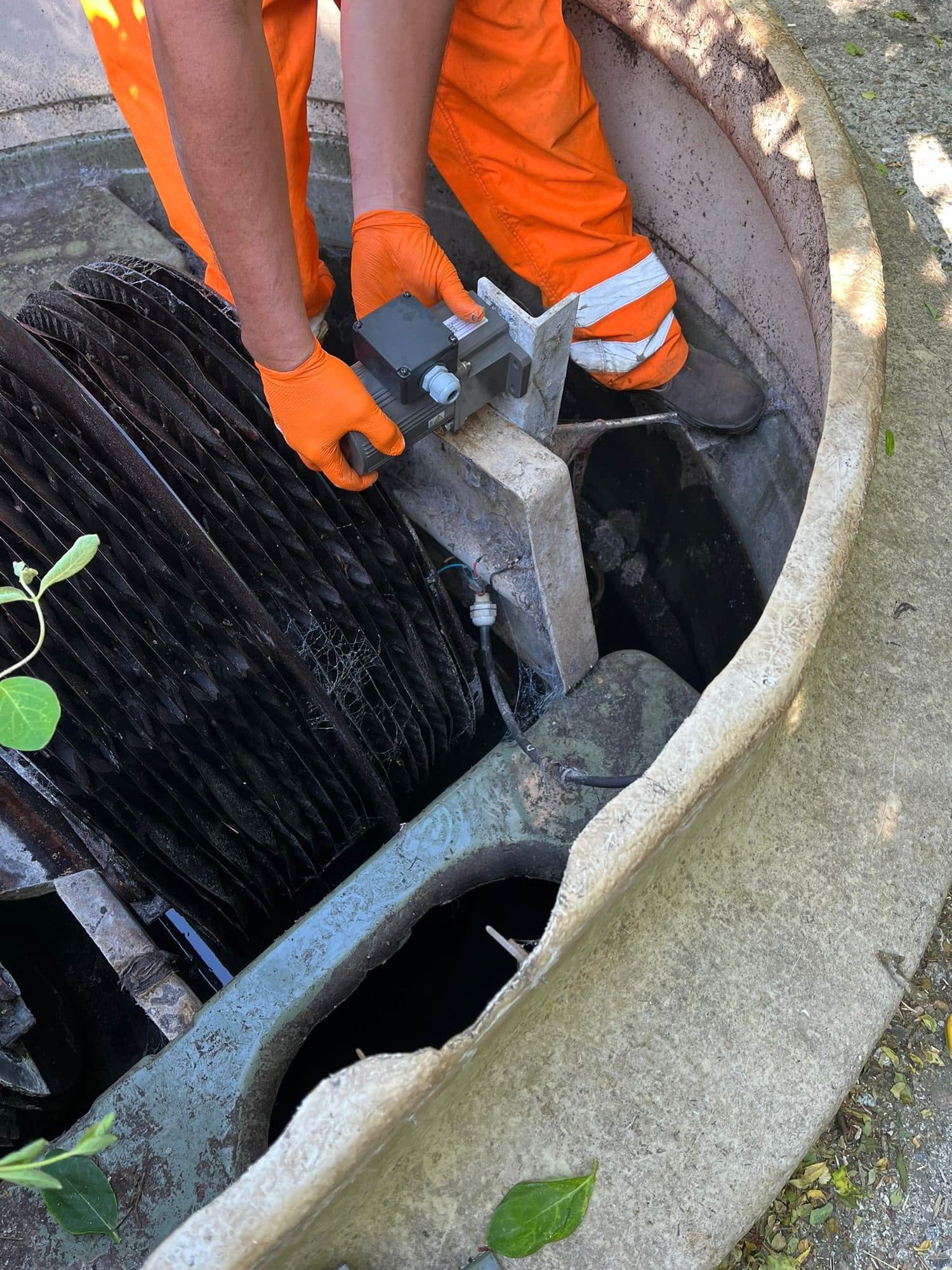
What an engineer actually does on a treatment plant service visit in East Sussex, chamber by chamber, and what gets checked, cleaned and replaced.
At KP Cesspool Services, owners often tell us they have paid for treatment plant servicing in East Sussex for years without ever being told what was actually done. This guide is the answer to that. It follows a service visit from the moment the covers come off, through the blower, the aerator, the settlement chamber and the final discharge, and sets out what gets checked, what gets cleaned and what gets replaced. Booking is on our plant servicing and breakdown repairs page.
Why Treatment Plant Servicing Matters
A sewage treatment plant is more complex than a septic tank or cesspit. It relies on biological processes and mechanical parts working together. In practice, what we often see is that most failures are not sudden. They build up over time when servicing is delayed.
Sludge gradually accumulates in the primary chamber, and mechanical components such as blowers or pumps begin to wear. Without routine servicing, this affects how effectively wastewater is treated. Over time, the quality of discharge drops, and the system can start to show clear signs of strain.
What Happens During a Service Visit
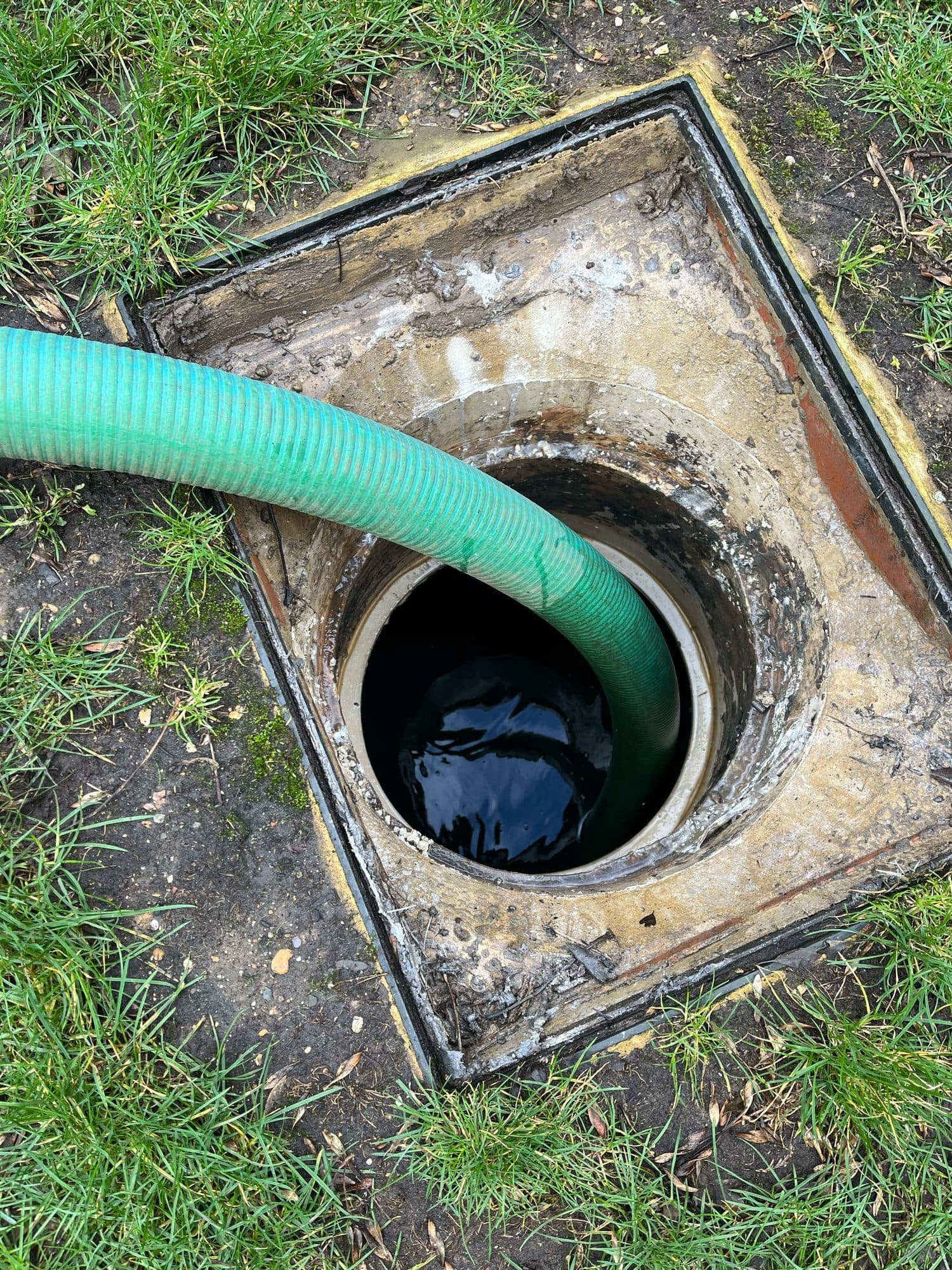
When we carry out treatment plant servicing in East Sussex, we begin with a full inspection of the system. This includes checking access covers, pipe connections, and the general condition of the tank.
We then assess sludge levels to determine whether emptying is required. Removing excess sludge restores the plant’s capacity and allows the treatment process to work properly. We also check airflow and mechanical operation, ensuring that the biological process is being supported as intended.
In practice, servicing is often where we identify early faults that would otherwise go unnoticed. Catching these early prevents more serious repairs later.
Common Treatment Plant Problems
Treatment plants tend to develop issues in predictable ways. One of the most common problems is mechanical failure. If the blower stops working, the bacteria inside the system cannot break down waste effectively. This leads to poor treatment and noticeable odours.
Another issue we regularly see is poor flow through the system. This can be caused by internal build up or external drainage problems. In many cases, this links directly to Blocked Drains and Tanks, which restrict how wastewater moves in and out of the plant.
Sludge overload is another common cause of failure. When sludge is not removed in time, it can move into other parts of the system and disrupt the treatment process.
When Repairs Are Needed
Servicing and repairs often go hand in hand. During routine checks, we may identify worn components, damaged pipework, or signs that the system is not operating efficiently.
This is where Treatment Plant Servicing and Repairs become essential. Addressing faults early prevents complete system failure and reduces the risk of environmental issues.
In our experience, delaying repairs almost always leads to higher costs. What starts as a minor issue can quickly affect the entire system if it is left unresolved.
How Often Treatment Plants Should Be Serviced
Most treatment plants should be serviced at least once a year, which sets the rhythm for our treatment plant work across East Sussex. However, this can vary depending on how heavily the system is used. Larger households or properties with higher water usage may require more frequent checks.
A common mistake we see is assuming the system is fine because it appears to be working. By the time visible signs appear, the issue has usually been developing for some time. Regular servicing helps avoid this situation entirely.
Environmental Responsibilities
Treatment plants must meet strict environmental standards. The Environment Agency expects systems to operate correctly and not cause pollution. If a treatment plant fails, it can lead to contaminated discharge and environmental damage.
Systems must also comply with the General Binding Rules, which outline how wastewater should be treated and released safely. Regular servicing and timely repairs are essential for staying compliant with these requirements.
Preventing Future Problems
There are several practical steps that help keep a treatment plant running smoothly. Avoid flushing items that do not break down easily, such as wipes or sanitary products. Do not pour fats or oils down sinks, as these interfere with the treatment process.
Spreading water use throughout the day also helps prevent overloading the system. In practice, we find that consistent, balanced usage has a noticeable impact on how well a treatment plant performs over time.
When Replacement Might Be Necessary
In some cases, older treatment plants or systems that have been poorly maintained may reach a point where repairs are no longer cost effective. Repeated faults, poor treatment performance, or outdated equipment can indicate that replacement is the better option.
Where this is the case, modern New Tank Installations provide improved reliability and compliance with current standards.
Choosing a Reliable Service Provider
Treatment plant servicing and repair should always be carried out by experienced professionals. We always recommend checking reviews on trusted platforms such as Checkatrade before choosing a provider. Proper servicing and repair protect both your property and the surrounding environment.
Conclusion
Treatment plant service and repair in East Sussex is essential for keeping your system reliable, compliant, and efficient. Most problems we deal with could have been avoided with regular servicing and early intervention. At KP Cesspool Services, we provide clear advice, thorough servicing, and practical repair solutions based on real experience. If your treatment plant needs servicing or you are concerned about how it is performing, contact us and we will be happy to help.