Where you smell it tells you what is wrong. A practical guide to smells from your cesspool or septic tank, indoors, outdoors and after rain.
Before you book anything, work out where you are smelling it, because the location tells you the cause and the causes are completely different. A smell inside the house is usually not the tank at all. It is normally a plumbing fault a few feet from where you are standing, and it is often free to fix. A smell outdoors around the tank or its covers usually is the tank, and that one wants attention. A smell over the drainage field means something else again, and on a septic tank it is the most expensive of the three.
So the order is simple. Check indoors first, because that is where the cheap answers live. Then walk the tank and the covers. Then walk the drainage field if you have one. One thing to rule out before you start, though. Do not lift a cover and lean over the opening to have a sniff. That is the one move that turns a nuisance into a hazard, for reasons covered in our cesspool safety guidance, and you do not need to do it to work out what is going on.
A smell indoors is usually a dry trap
Every sink, bath, shower and toilet in the house has a bend in the pipe below it holding a small amount of water. That water is the entire barrier between your rooms and the drainage system. Approved Document H requires it precisely so that foul air cannot get into the building, and depending on the fixture the seal is typically 50mm or 75mm deep. It is not much.
Water evaporates. So a shower in a spare room nobody has used since Christmas, a downstairs cloakroom basin, a utility sink, or the standpipe behind a washing machine that has been moved, will all quietly lose their seal. Once the water has gone there is nothing left in the way.
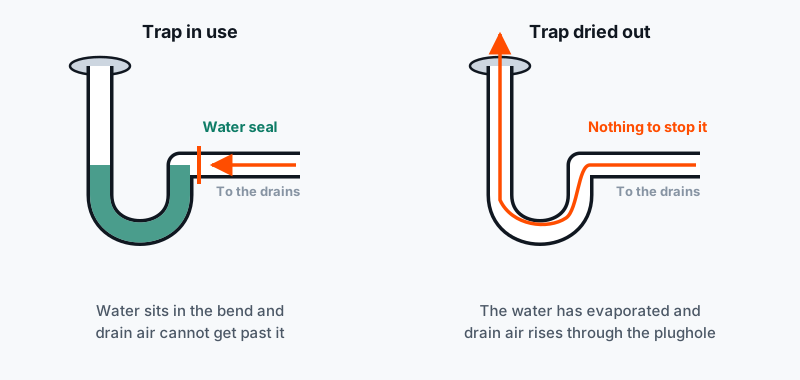
In our experience, running the taps and flushing the toilet in every room you rarely use works better than booking an emptying when the smell is indoors, because a trap that has dried out lets drainage air straight up through the plughole, and no tanker can fix a plumbing fault that a jug of water cures. Give every unused fixture a good run of water, then leave it a day. If the smell goes, that was it, and the fix is to run those taps once a fortnight from now on.
Two related indoor causes are worth knowing. The wax or rubber seal at the base of a toilet pan can perish, which lets air past at floor level and usually smells worse in warm weather. And a smell that appears in one room only, right after somebody upstairs has emptied a bath, is a sign of siphonage rather than evaporation, which brings us to the vent.
The gurgle that comes before the smell
Your drainage has a vent pipe, usually running up an outside wall to above roof level. Its job is to let air in and out so that water moving down the pipes does not drag the trap seals with it.
When that vent is blocked, the physics turn against you. A large slug of water going down the stack creates a partial vacuum behind it, and with nowhere to draw air from, the system pulls it through the nearest trap instead, sucking the seal out. The classic sequence is a gurgle from a basin or toilet as something else drains, and then a smell a few minutes later. Slow draining across several fixtures at once, or a toilet whose water level moves on its own, points the same way.
Vents block for unglamorous reasons. Leaves, general debris, a jackdaw's nest, or a hard frost. It is worth a look up at the top of the pipe from the garden before assuming the worst about your tank.
Outdoors, around the tank and the covers
If the smell is strongest outside near the tank, you are into genuine tank territory, and there are three usual explanations.
The tank is close to full. On a cesspool this is the common one, because everything you use goes in and stays there. As the level rises there is less space for gas to sit and it finds its way out around the cover. Smell rarely arrives on its own here, so check it against the other signs a cesspool is full. If it has turned up at the same point in your usual cycle, that is your answer and it is time for an empty.
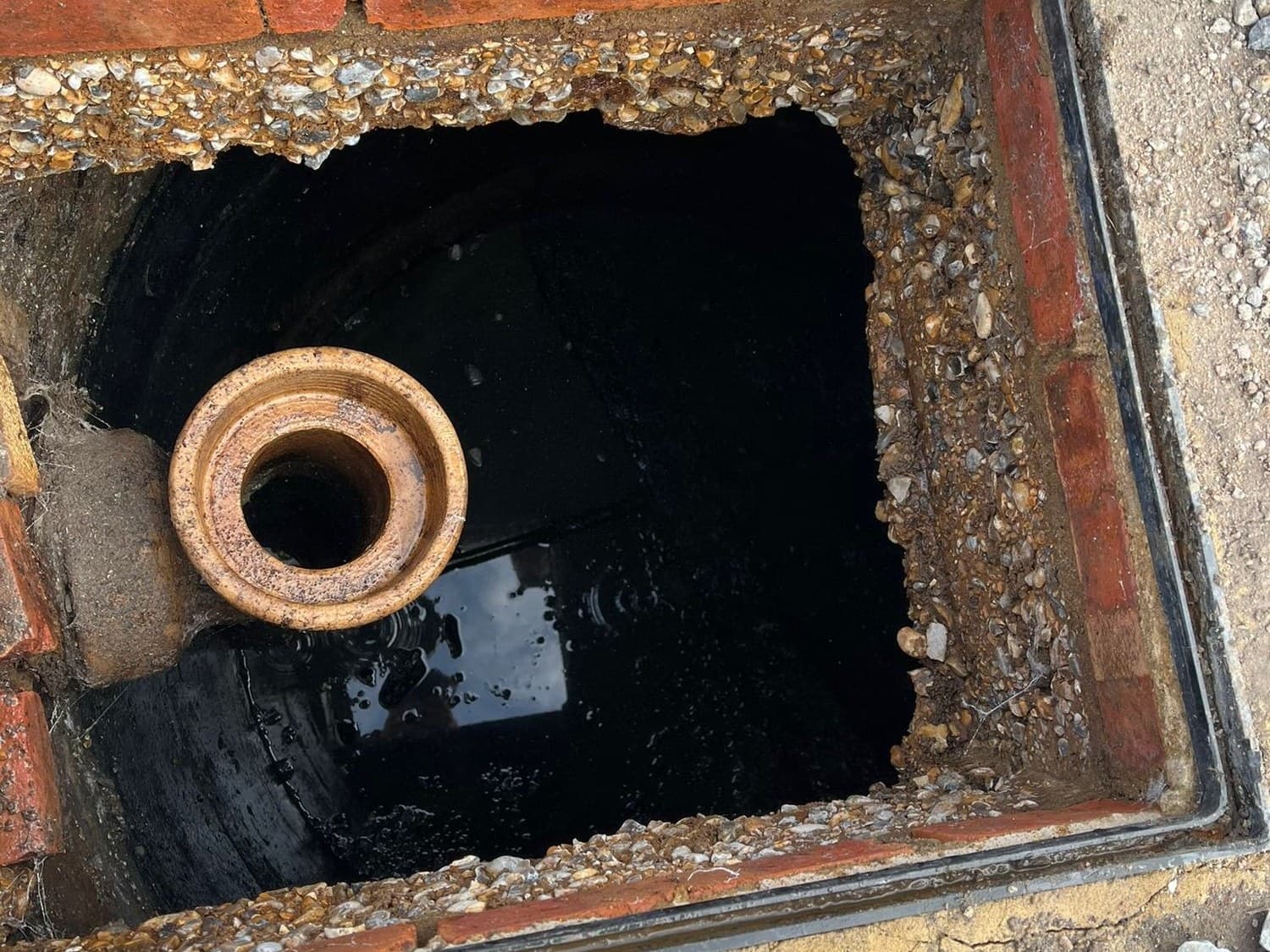
The cover seal has perished, or the cover is not sitting square. Older covers were often bedded on a mastic or a sealing compound that hardens and cracks with age, and coastal air is unkind to steel frames. A cover that has been lifted and not reseated properly will leak smell continuously. This one is cheap to put right and worth doing, because a cover that no longer seats correctly is also a safety problem.
The tank is simply venting, and you notice it only when the wind sits in a particular direction. Some smell around a tank on a still, warm, humid day is normal. A smell you can detect from the house, every day, regardless of weather, is not.
Over the drainage field, which is a different problem
If you have a septic tank, walk the ground where the drainage field runs. A smell out there, especially with soggy ground or unusually lush green grass in strips, means effluent is not soaking away and is surfacing instead.
That is not an emptying problem and emptying will not cure it. It means the drainage field has stopped accepting effluent, either because it has clogged over the years or because the ground was never suited to it.
This is the most serious of the smells in this guide, and it is the only one on the list where you have a hard legal duty rather than just an incentive. Under the Environment Agency's general binding rules, a treatment system that is not in good working order must be repaired or replaced, and pools of water around the drainage point are one of the signs they name for exactly that. If the discharge goes on to cause pollution you may be committing an offence. Putting it right usually means rebuilding the field or moving to a treatment plant, which treats the effluent to a standard a septic tank cannot reach and, where there is a watercourse that flows all year to take its outlet, removes the dependence on ground that was never suited to soaking it away. Have someone look at it properly rather than waiting to see if it dries out in the summer, because it will, and it will be back in November.
A treatment plant that starts to smell
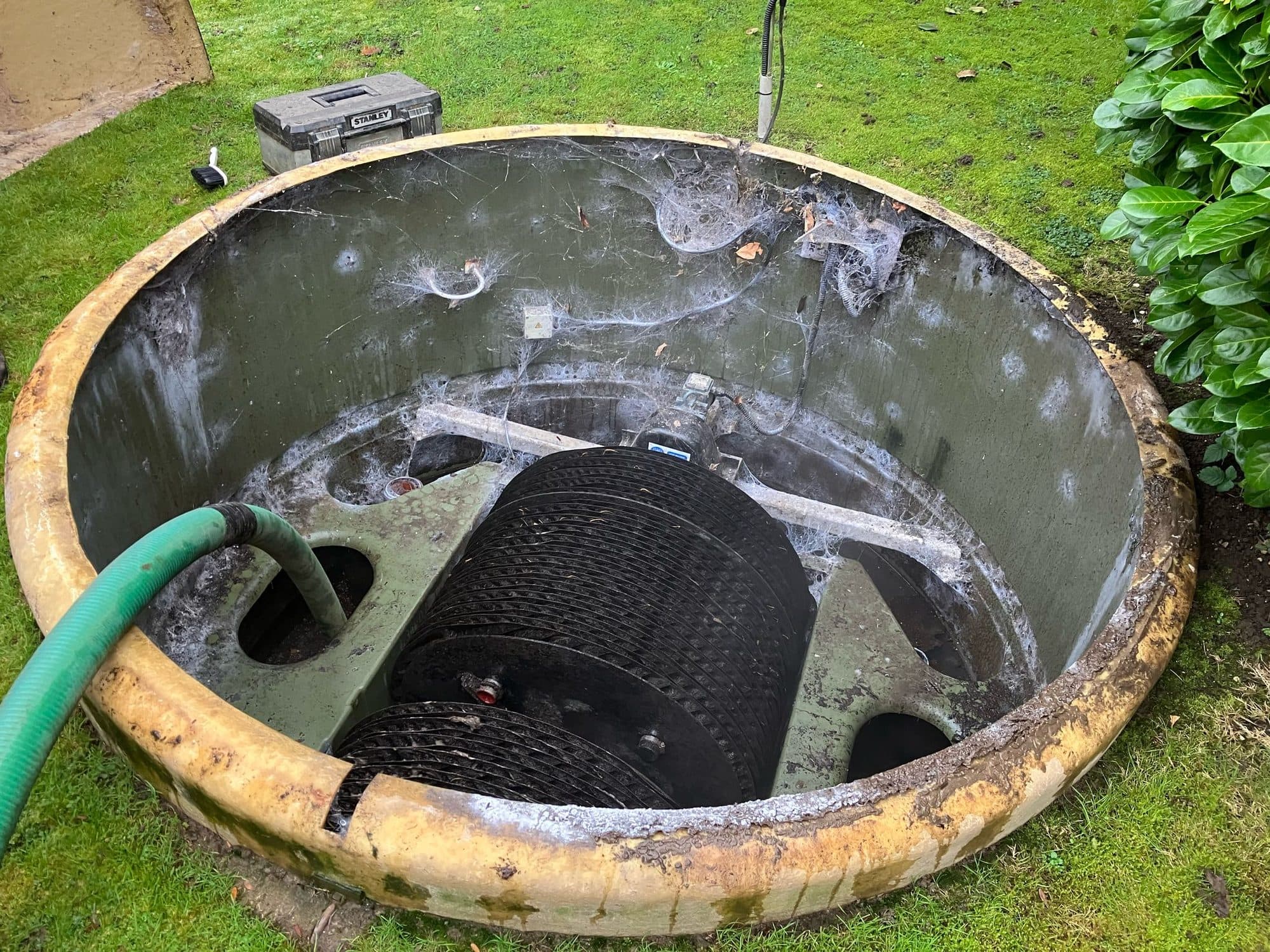
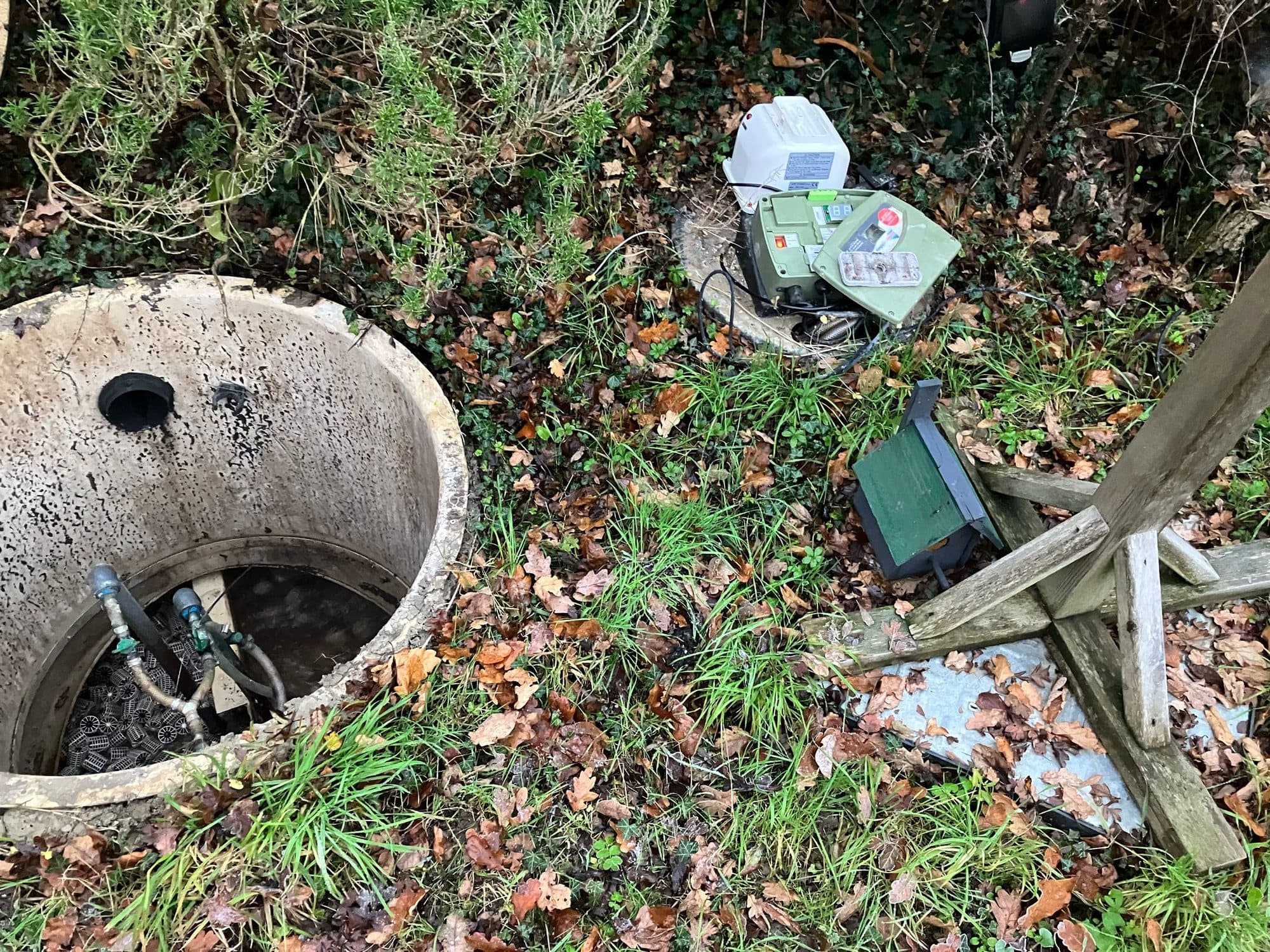
A working sewage treatment plant should not smell of sewage. The aeration keeps the process aerobic, and healthy aerobic sludge smells earthy or musty rather than foul. So a treatment plant that suddenly smells like a septic tank is telling you the aeration has stopped doing its job.
Usually that is the blower or the motor. The tell worth knowing is that the smell changes character rather than simply getting stronger. An aerated plant smells of damp soil. Once the air stops the process turns anaerobic and you get the rotten egg note of hydrogen sulphide instead, which is a different smell rather than more of the same one. If the unit has also started to sound different, that is the same fault announcing itself twice. A plant in that state needs servicing or repair reasonably promptly, because while the aeration is down the effluent leaving it is not being treated to the standard it is supposed to be.
The other cause worth ruling out is a chemical knock. Bacteria do the work in both a septic tank and a treatment plant, and a large volume of bleach, a strong disinfectant or a bottle of drain unblocker can set that population back badly. Normal household cleaning is not the issue. Quantity is.
Smells that only show up after heavy rain
If your system behaves in dry weather and misbehaves during or just after rain, the smell is telling you something about your pipework rather than your tank. Somewhere, surface water is getting into the foul run.
What that does to the smell is quite specific. On a septic tank or a treatment plant, a sudden slug of clean water shortens the time solids have to settle out, so material that should have stayed in the tank leaves with the flow and starts smelling further down the system. On a cesspool nothing leaves at all, so the rain simply eats your capacity and you are smelling a full tank weeks earlier than the calendar says you should be. Either way it is a plumbing job with a permanent fix rather than a cost you keep paying, and what a surface water connection does to a private system is worth understanding before you book anything.
Two things not to do
Do not pour anything down there to mask it. Bleach, disinfectant and proprietary odour treatments either do nothing or make it worse by killing the bacteria you need, and on a cesspool they just sit in the tank until somebody removes them.
Do not open the tank to investigate. Air in a sealed tank contains hydrogen sulphide, which is toxic, and methane, which is flammable. Hydrogen sulphide is worse than its reputation because it deadens your sense of smell as the concentration climbs, so the smell fading is not the reassurance it feels like. The Health and Safety Executive treats spaces like this as confined spaces and the first duty is to stay out of them. You can diagnose everything in this guide from outside the tank.
When to get someone out
Call somebody if the smell is outdoors and constant, if the ground over a drainage field is wet or smelling, if a treatment plant has changed its note, or if you have run every tap in the house and the indoor smell is still there after a day. Any of those is a real fault rather than a quirk.
We work on cesspools, septic tanks and treatment plants across Kent and East Sussex with over twenty years' experience, so a smell is usually something we can narrow down over the phone before anyone comes out. If it turns out to be a dry trap we will tell you that too. You can see our reviews on Checkatrade before you book. To arrange a visit, call KP Cesspool Services on 01233 720725, email kpcesspoolservices@hotmail.com, or send us a message.
Need a hand with yours?
We cover Kent and East Sussex 24 hours a day. Ring us and a real person will pick up, whatever time it is.