Treatment plant breakdowns and servicing around Ashford, what an alarm usually means, which faults are fixed on the spot and what a yearly service prevents.
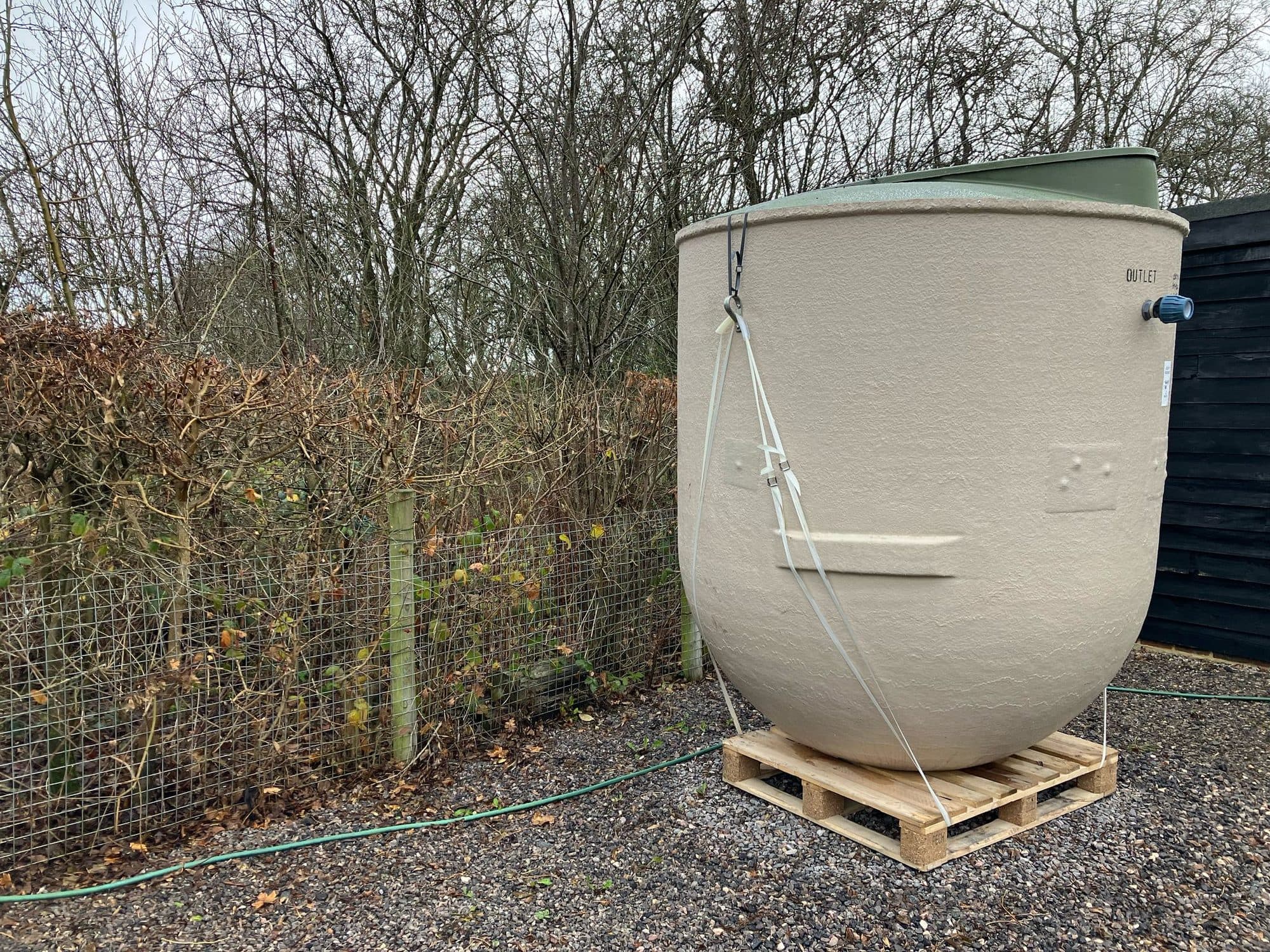
Across the villages around Ashford, a great many homes run on their own sewage treatment plant rather than the mains sewer. A plant is a small machine that works around the clock, and like any machine it eventually stops. This guide is about that moment. It covers what a plant alarm usually means, what to do before anyone arrives, which faults are put right on the spot, and how a yearly service stops most of them happening. Ashford is our home patch, so it is also where we can usually get to a broken plant fastest.
The alarm has gone off
Most modern plants have an alarm, a light, a buzzer or both, on a panel in the house or on a post near the tank. It usually means one of two things. The air supply has stopped, so the bacteria that treat the waste are starving, or the level in the tank has risen higher than it should, because something downstream has stopped moving.
Neither fixes itself. Check the obvious first. Has the plant's fuse or breaker tripped, and is there power to the panel? If the supply has tripped once, reset it once. If it trips again, leave it off and call, because a fault that keeps tripping a breaker needs finding, not forcing. Then cut down on water while you wait, no washing machine or long showers, so the level is not pushed higher.
The faults behind most callouts
Most plant breakdowns come down to a short list of parts.
The blower or air pump is the commonest. It runs every minute of every day and its diaphragms, vanes or bearings wear out. A plant with a failed blower goes quiet, then starts to smell within days.
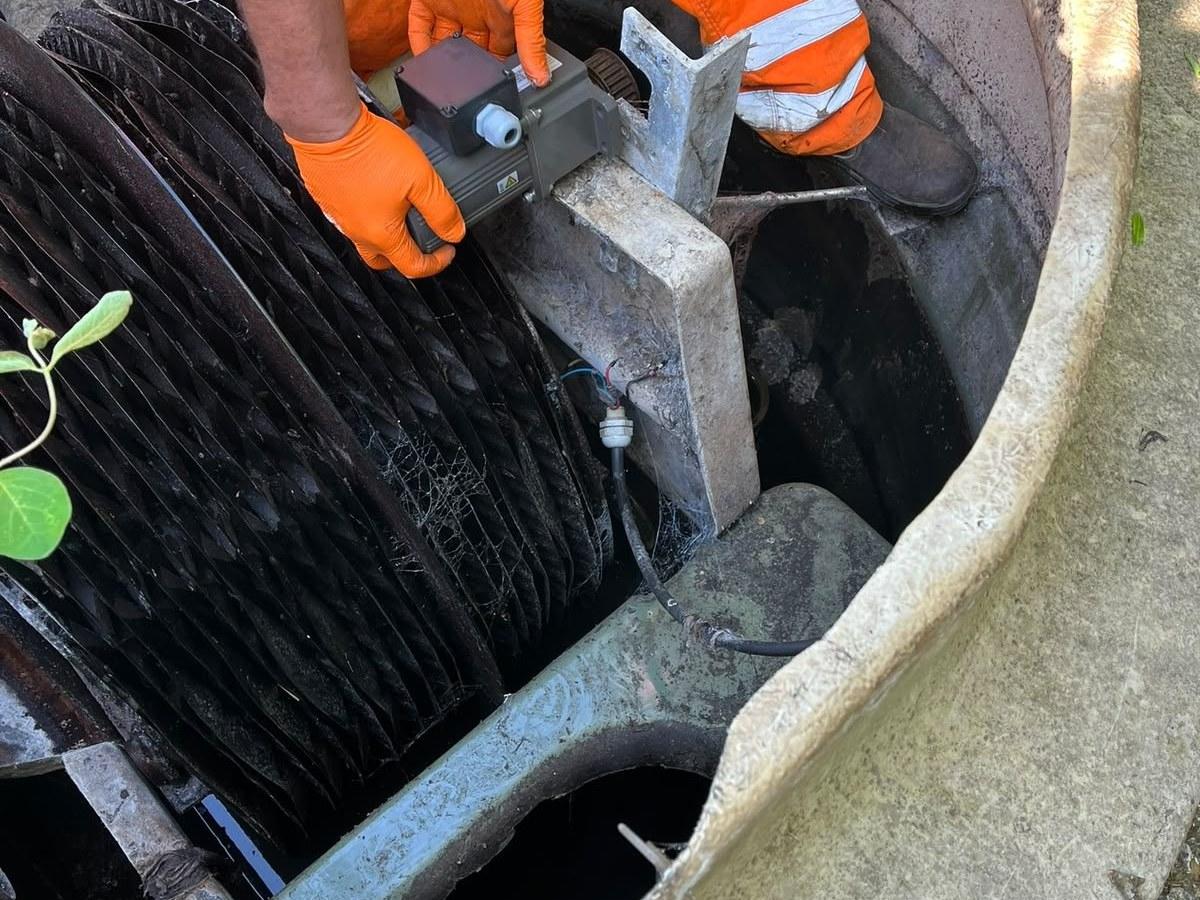
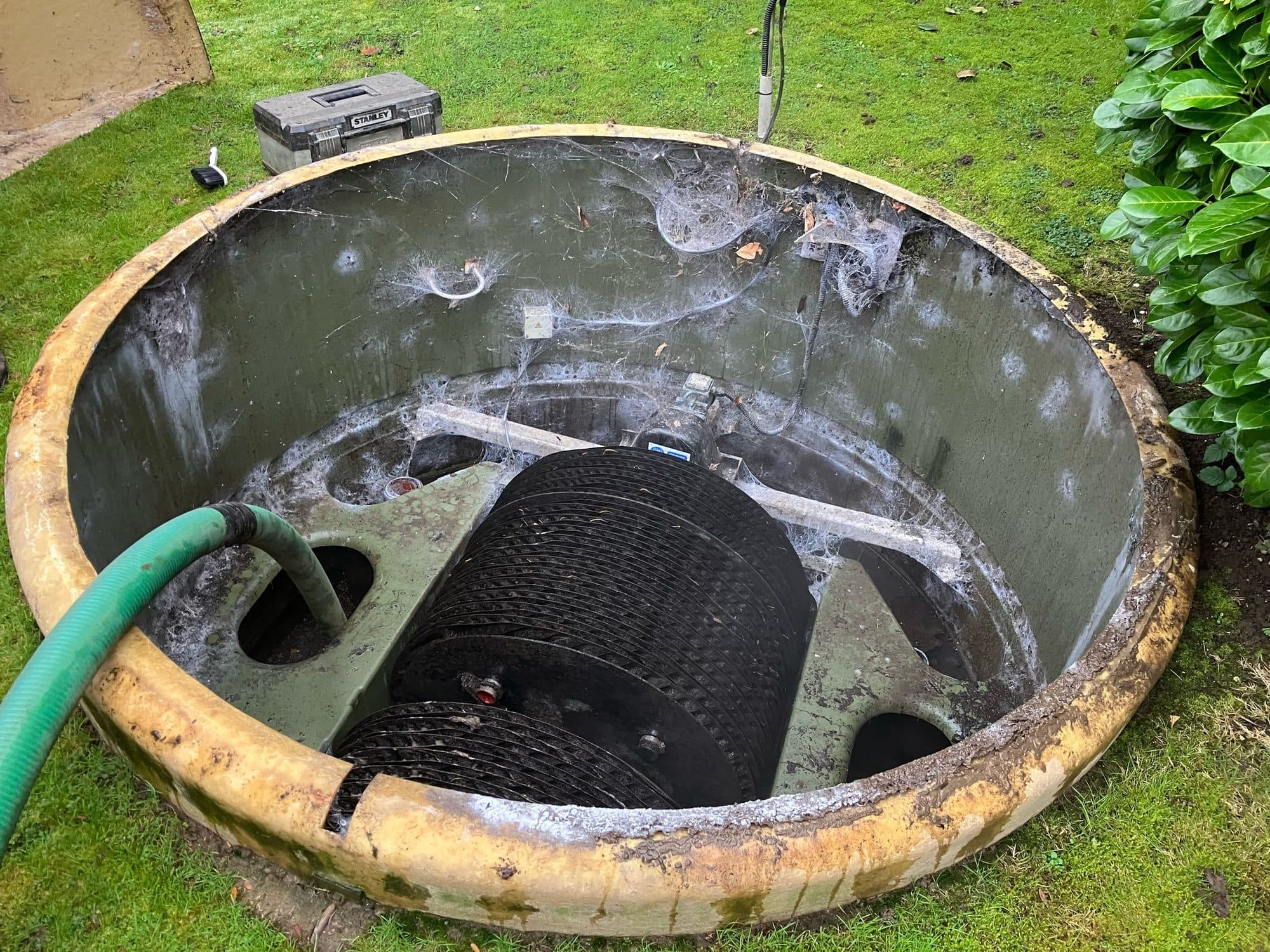
On a rotating disc plant such as a Klargester BioDisc, the motor, gearbox and main shaft bearing do the work instead. A grinding or knocking noise, or discs that have stopped turning, are the signs.
Pumps and float switches move treated water out of plants that cannot drain by gravity, and a stuck float switch will leave a plant brimming even though everything else works. Electrical faults, often water getting into a connection, account for most of the rest.
The good news is that many of these are replacement parts rather than rebuilds, and a plant can often be running again the same day. Where a part has to be ordered, we tell you what it is and how long it will take.
What we do on a repair visit
We find the cause before replacing anything. That means testing the supply and the controls, listening to the unit, checking the air flow or the drive, and looking at each chamber for the tell tale signs of a plant that has stopped treating, a thick crust where there should be none, a grey or cloudy outlet, a smell. Once it is running, we check it is treating again rather than simply turning over, and we tell you whether the fault was wear, a one off or a sign of something larger.
Why a yearly service prevents most of it
Nearly every fault above gives a warning before it strands you. Diaphragms stiffen, filters clog, bearings start to run noisily. A service catches them while they are a small part and a planned visit rather than an emergency. Most manufacturers ask for a service every six to twelve months, and skipping them can void the warranty. What to expect from treatment plant servicing walks through a visit.
The General Binding Rules also make it your duty to keep the plant maintained by someone competent and to repair it if it is not in good working order, so a service record is worth keeping for its own sake and for when you sell.
What it costs
When this guide was first written in late 2025, a typical annual service around Ashford ran between £150 and £300, depending on the plant and how long since it was last looked after. Repairs vary with the part. A blower diaphragm is a modest job, while a new motor or gearbox costs considerably more. Ring for a current price for your plant. Treatment plant faults and what they cost in Kent goes into the common repairs in more detail.
When a repair stops making sense
If a plant needs something major every year, or the tank itself is cracked, the money is often better spent on a replacement. We will tell you straight when we think a plant has reached that point, and our treatment plant installation page covers what a new one involves. How long a treatment plant lasts explains what to expect from each part.
Treatment plants around Ashford
Our treatment plant work around Ashford covers servicing, repairs and desludging across the town's villages, and because it is the area nearest our base, a breakdown here usually gets a quick response, day or night. The treatment plant servicing and repairs page has the full detail.
KP Cesspool Services has over twenty years' experience with private drainage across Kent and East Sussex, and you can read our reviews on Checkatrade. If your plant has alarmed or stopped, call 01233 720725, email kpcesspoolservices@hotmail.com, or contact us.
Need a hand with yours?
We cover Kent and East Sussex 24 hours a day. Ring us and a real person will pick up, whatever time it is.