A septic tank must not discharge to a ditch, stream or watercourse. What the rule says, how to find out where yours goes, and the two ways to put it right.
At KP Cesspool Services, this is the single most common compliance problem we find on older properties, and the answer is short. No. A septic tank must not discharge to a ditch, a stream, a river or any other watercourse. If yours does, it has to be changed, and there are exactly two ways to do it. The rest of this explains why the rule exists, how to work out what your own system does, and how to tell which of the two fixes your ground will actually allow.
The rule in one paragraph
Under the General Binding Rules, a small sewage discharge in England either goes to ground through a drainage field, or it goes to a surface water. A septic tank is only permitted to do the first. It may discharge to ground through a properly built drainage field, and it may not discharge to a surface water of any kind. Where an existing septic tank does discharge to a watercourse, the owner is required to put it right.
Note the word septic. A sewage treatment plant is a different matter and is dealt with further down.
Why a septic tank is treated this way
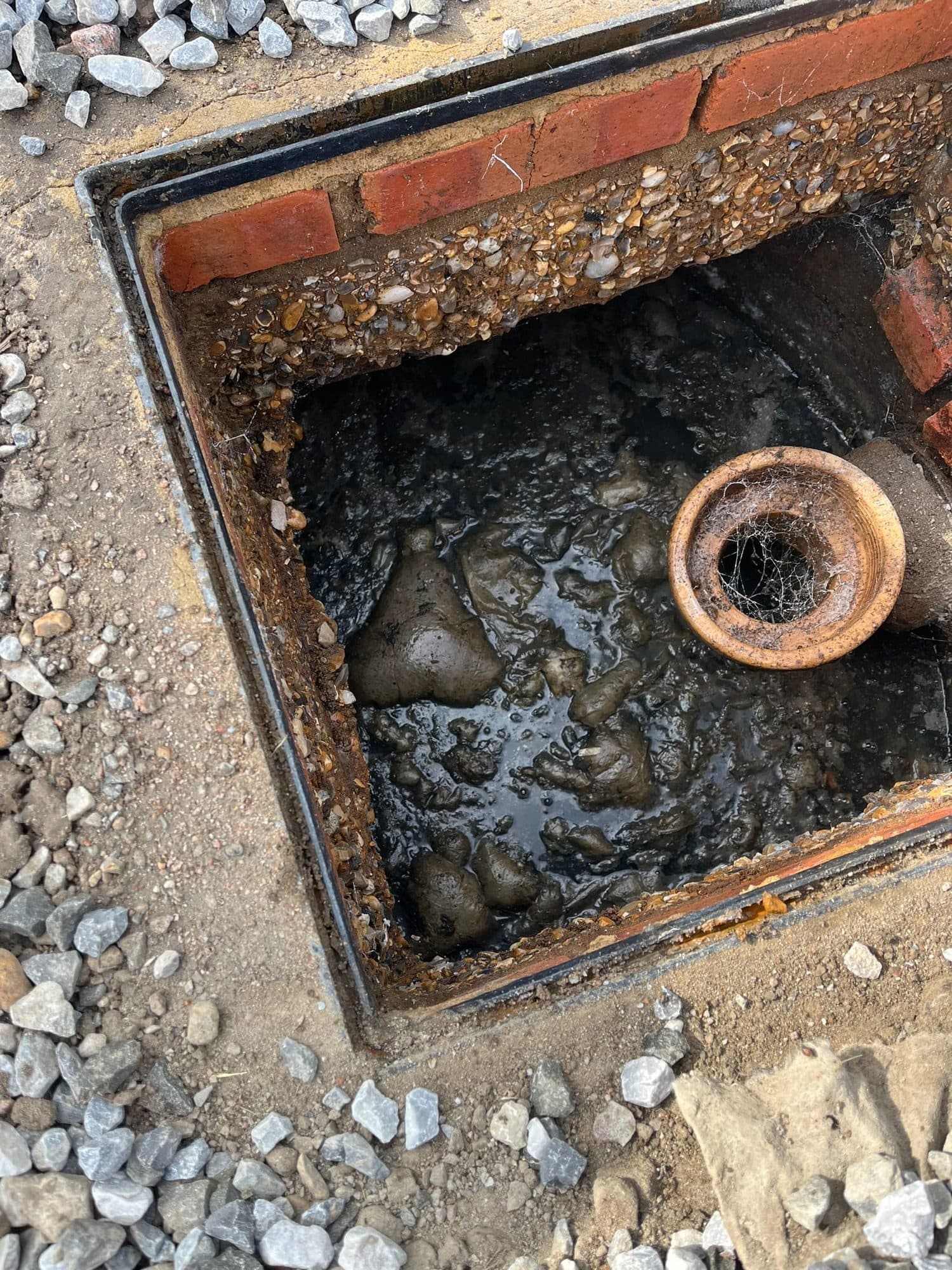
A septic tank does not clean anything. It separates. Solids settle to the bottom of the first chamber, grease floats, and the liquid in the middle drains away. What leaves is settled sewage, not treated effluent, and it still carries a heavy bacterial load along with the nitrogen and phosphorus that cause the problems downstream.
Sent into the ground through a drainage field, that liquid passes through soil, and soil is the treatment. Bacteria in the top layer break down what is in it before it ever reaches groundwater. Sent straight into a ditch, none of that happens. It arrives in the watercourse essentially as it left the tank, and from there it goes wherever the ditch goes.
That is the whole reason for the distinction. It is not paperwork. A septic tank into a ditch is an untreated discharge with a short walk to a river.
How to find out what yours does
Plenty of owners genuinely do not know, particularly where the house changed hands with no drainage paperwork. Three things usually settle it.
Look for the outfall. A septic tank discharging to a watercourse has a pipe that ends somewhere visible, usually in the bank of a ditch or a stream at the low end of the plot. Walk the boundary and look for it, especially after heavy use in the house.
Look for the drainage field. A working drainage field is a run of perforated pipe in trenches of stone, and it usually shows itself as a rectangle of grass that greens up early, grows faster or stays wetter than the ground around it.
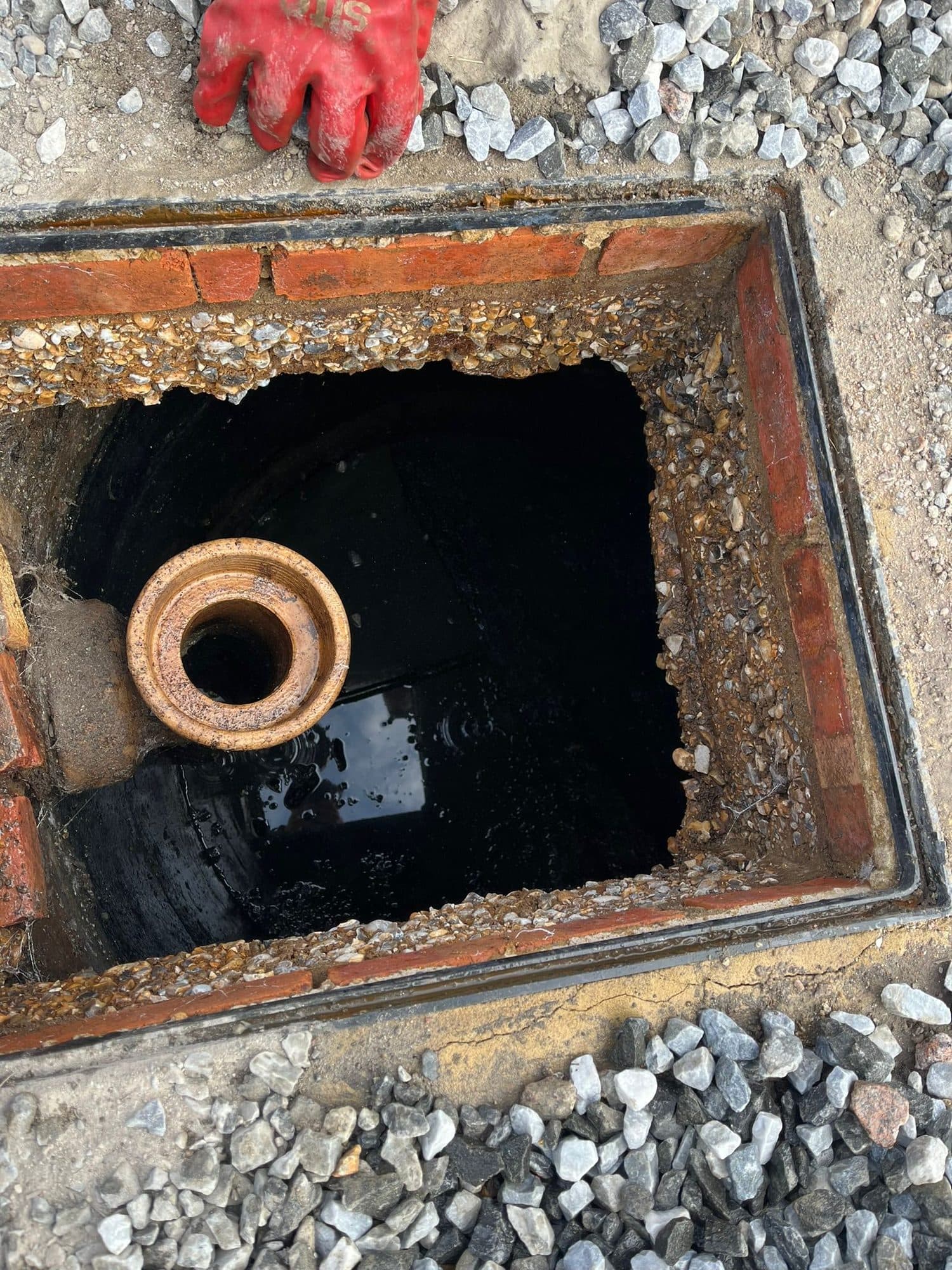
Lift the covers. The last chamber before the discharge tells you a great deal, and so does what the outlet pipe is doing. This is the part worth having someone do properly rather than guessing at, and it is part of a normal septic tank service.
Fix one, a drainage field
If the ground will take it, a drainage field is usually the simpler answer. The tank stays where it is, the outlet is re routed, and the discharge goes to ground instead of to the ditch.
The catch is that the ground has to pass three separate tests, all of them minimums and all of them measured at the worst time of year rather than the most convenient one. A percolation test has to come back between roughly 15 and 100 seconds per millimetre, there has to be at least 1.2 metres of unsaturated soil between the bottom of the field and the seasonally highest water table, and the field has to sit at least 10 metres from any ditch or watercourse. A plot can pass comfortably in August and fail in January without a thing about it having changed.
On the heavy Weald clay around Smarden and Biddenden, and on the low lying ground across Romney Marsh, one or more of those three regularly fails. Where the ground will not take a field at all, the treatment plant route below becomes the only option left.
Fix two, a sewage treatment plant
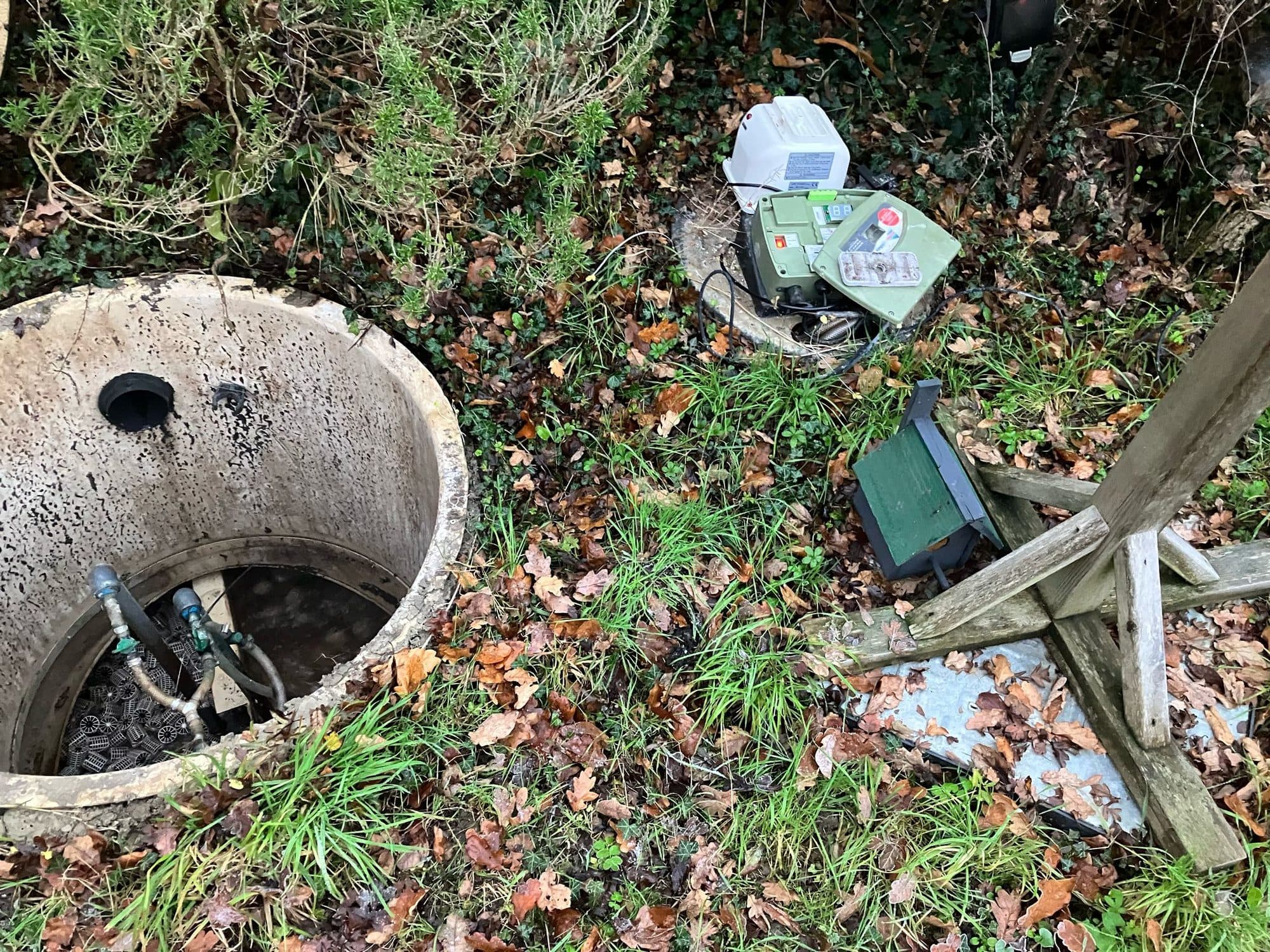
Where a drainage field is not possible, the answer is to replace the septic tank with a sewage treatment plant. A plant does what a septic tank does not, which is treat the waste. Air is pumped in, bacteria break the sewage down, and what leaves is clean enough that discharging it to a ditch or watercourse is permitted.
That is the reason the same ditch that cannot legally take your septic tank output can take a treatment plant's. The difference is not the destination, it is what arrives there.
A plant needs a power supply, it needs servicing once or twice a year, and it needs to be sized on how many people the property sleeps rather than how many live there now. Undersize it and it never develops a healthy bacterial population. Our treatment plant installation page covers the groundworks and commissioning, and treatment plant servicing and repairs covers keeping it running afterwards.
A treatment plant is not automatically in the clear
Two things still catch people out.
The discharge has to meet the standard the plant was certified to, which means the plant has to be serviced. An unserviced plant stops treating, and at that point you are discharging poorly treated sewage to a watercourse, which is a worse position than the one you started in.
And a plant discharging to a surface water still has conditions attached to where and how. If the watercourse is small, seasonal or dry for part of the year, it may not be an acceptable destination at all. That is worth establishing before anyone orders a unit rather than after.
When this actually has to be dealt with
Two triggers, and most people meet the second one first.
If the discharge is causing pollution, it has to be fixed now. The Environment Agency can require it, and "we have always done it this way" is not a defence.
If the property is being sold, it has to be resolved as part of the sale. This is where most of these come to light, because a buyer's solicitor asks the question directly and a lender will want the answer. We have written that side up in selling a house with a septic tank in Kent.
Beyond that, the honest answer is that a septic tank running to a ditch is non compliant today, whether or not anyone has knocked on the door about it. Dealing with it on your own timetable is cheaper than dealing with it on someone else's.
Finding out where you stand
If you are not sure what your system does, we will come and look. Lifting the covers, tracing the outlet and walking the boundary usually settles it in one visit, and you get a straight answer about which of the two fixes your ground allows rather than a quote for the more expensive one by default.
Ring us on the number below. We cover Kent and East Sussex, and we would far rather tell you a drainage field will work than sell you a treatment plant you did not need.