A sewage treatment plant needs desludging at least yearly or as its manual says. Why the sludge builds up, what happens on the day and what waiting costs.
Desludging a sewage treatment plant means pumping out the sludge that settles in its first chamber, using a vacuum tanker. The government's rules say it must be done before the sludge exceeds the plant's capacity, and that this should be at least once a year or in line with the manufacturer's instructions. For most household plants that means once a year, and some models ask for it more often.
At KP Cesspool Services we desludge treatment plants across Kent and East Sussex as part of our treatment plant servicing and repairs, usually on the same visit as the service. This guide explains why a plant that treats its own sewage still collects sludge, how to find the right interval for yours, what happens on the day, and what goes wrong when it is left.
Why a treatment plant still collects sludge
A treatment plant does far more than a septic tank. Air and bacteria break down the sewage so that the water leaving the plant is clean enough to go to a drainage field or, where the rules allow, to a stream that flows all year. Our guide to how a sewage treatment plant works walks through each stage.
What the bacteria cannot do is make the solids vanish. The heavier material settles out in the first chamber before the water moves on to be treated, and that layer of sludge grows a little every day the house is in use. Desludging is the job of taking it away. If you are new to these systems, what a treatment plant is is a good place to start.
How often a treatment plant needs desludging
Both sets of General Binding Rules, the one for a discharge to ground and the one for a discharge to a surface water, use the same words. You must get the sludge removed before it exceeds the capacity of the plant, and you should do it at least once a year or in line with the manufacturer's instructions.
That makes the manual for your plant the deciding document. Plants differ in how much sludge their first chamber can hold, so some need desludging more often than others, and we work to the manual for the unit in front of us. If you do not have the manual, look for the maintenance notice. Approved Document H, the building regulations guidance on drainage, says a notice describing the maintenance a plant needs should be fixed inside the building it serves. Older plants and some that were put in without it may not have one, and in that case we can tell you what the plant needs once we have seen it.
A plant serving more people than it was designed for will fill faster than its manual expects. The binding rules say a system must be large enough for the most sewage it has to treat, so an extension, an annexe or a bigger household is a reason to check the size of the plant and to look at the sludge more often in the meantime.
Desludging and servicing are two different jobs
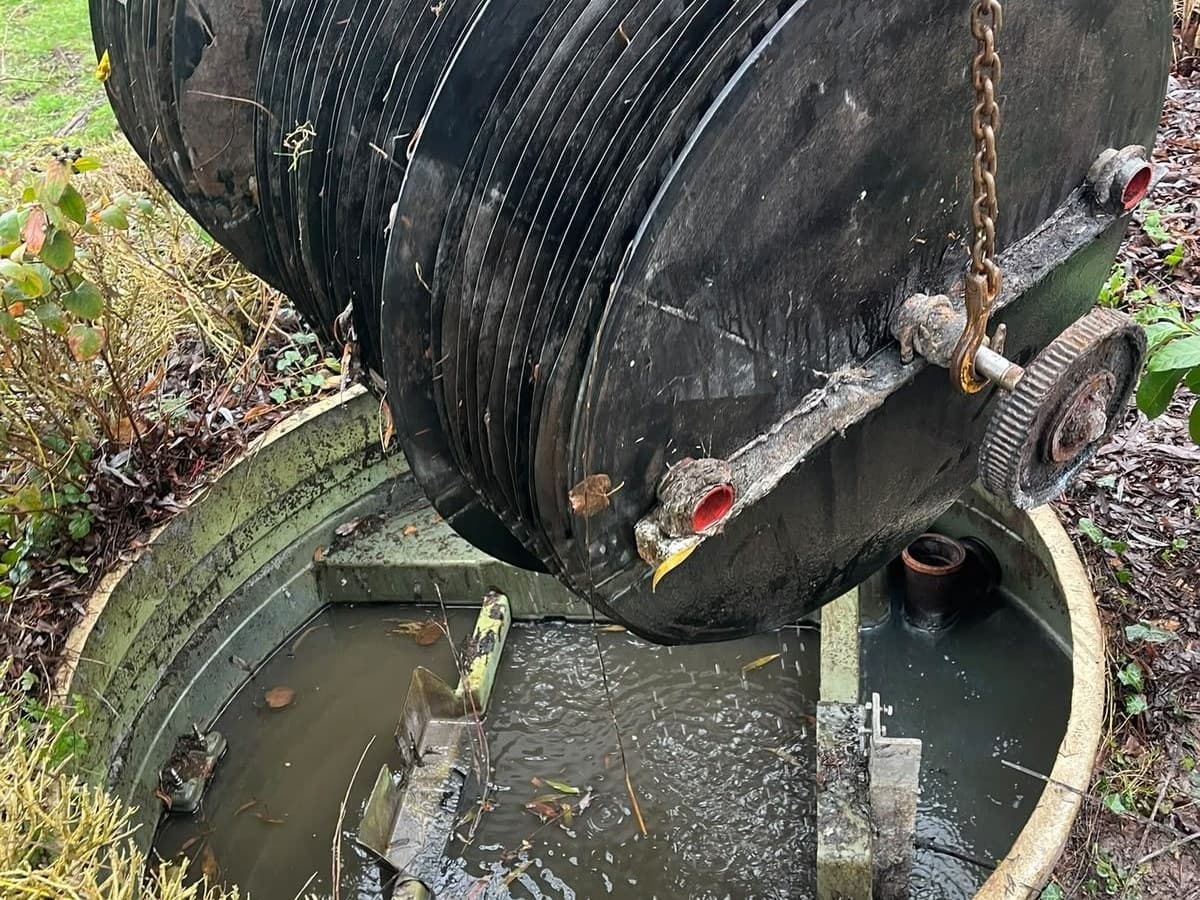
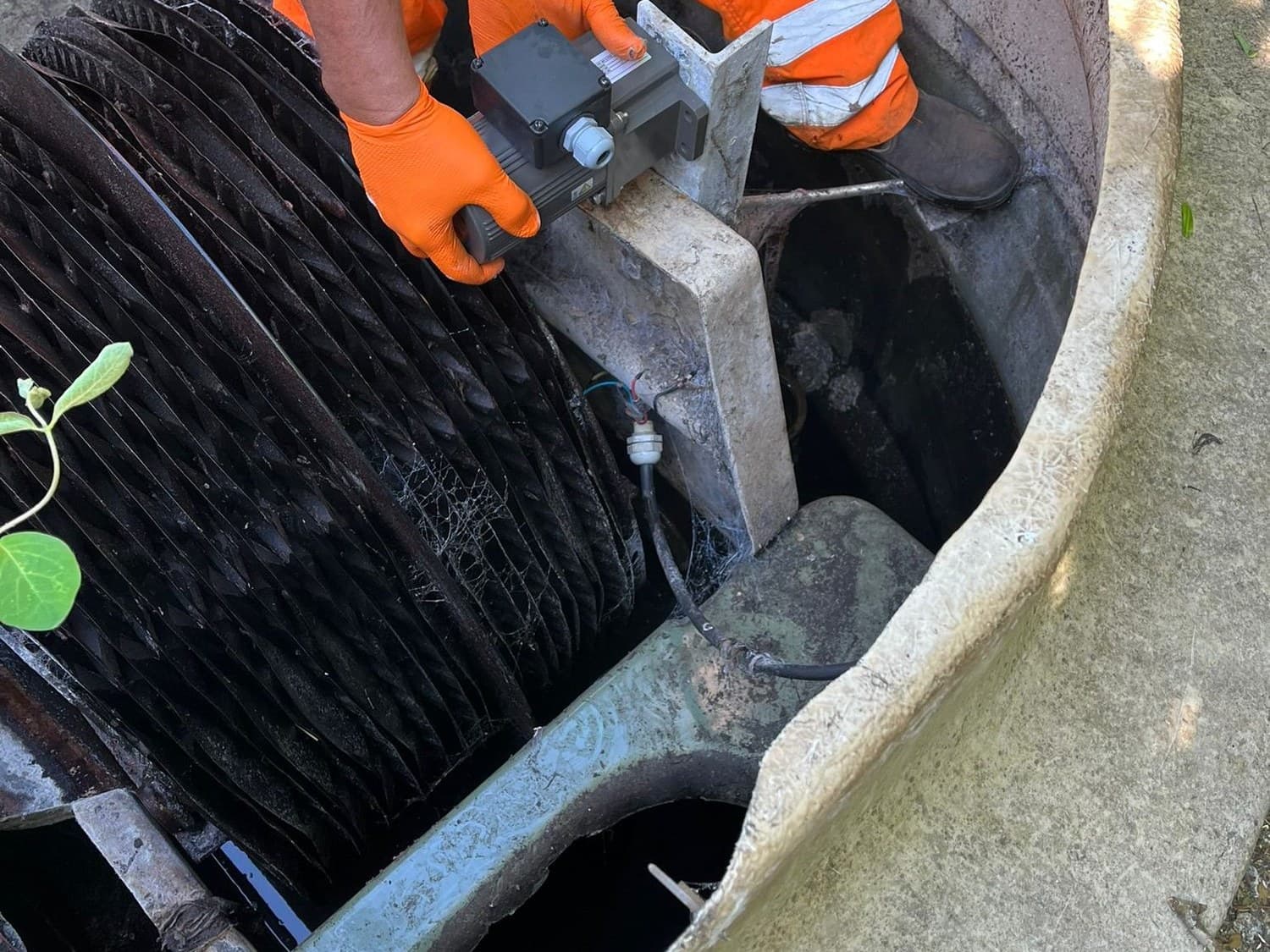
The two are easy to confuse. A service looks after the machinery, which means the blower and its filter, the biodisc or aerator and its bearings, the motor and drive, and the alarm. Most manufacturers want that done every six to twelve months, and what to expect from treatment plant servicing goes through a visit.
Desludging needs a tanker and deals with the sludge, not the machinery. A plant can have a perfect service history and still be overdue for desludging, or the other way round. Booking both together saves a second visit, and it means the person servicing the plant can see inside the chamber once the sludge is out. How long a treatment plant lasts explains why the two together decide how many years a plant gives you.
What happens on the day
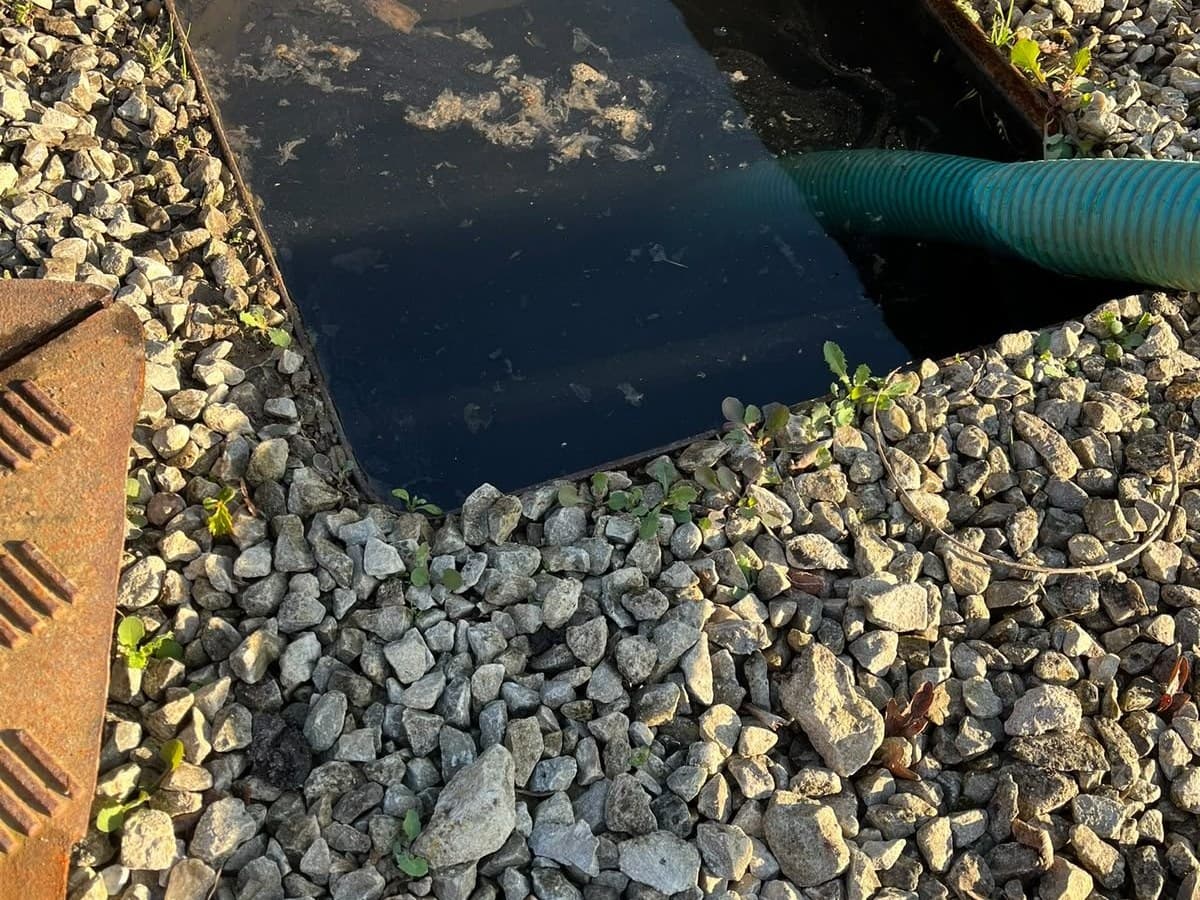
We park the tanker as close as we can and run the hose to the plant, so it helps to tell us when you book if the plant is a long way from the drive. We lift the covers and take the sludge out of the chambers the manual says to empty, in the way it says to empty them.
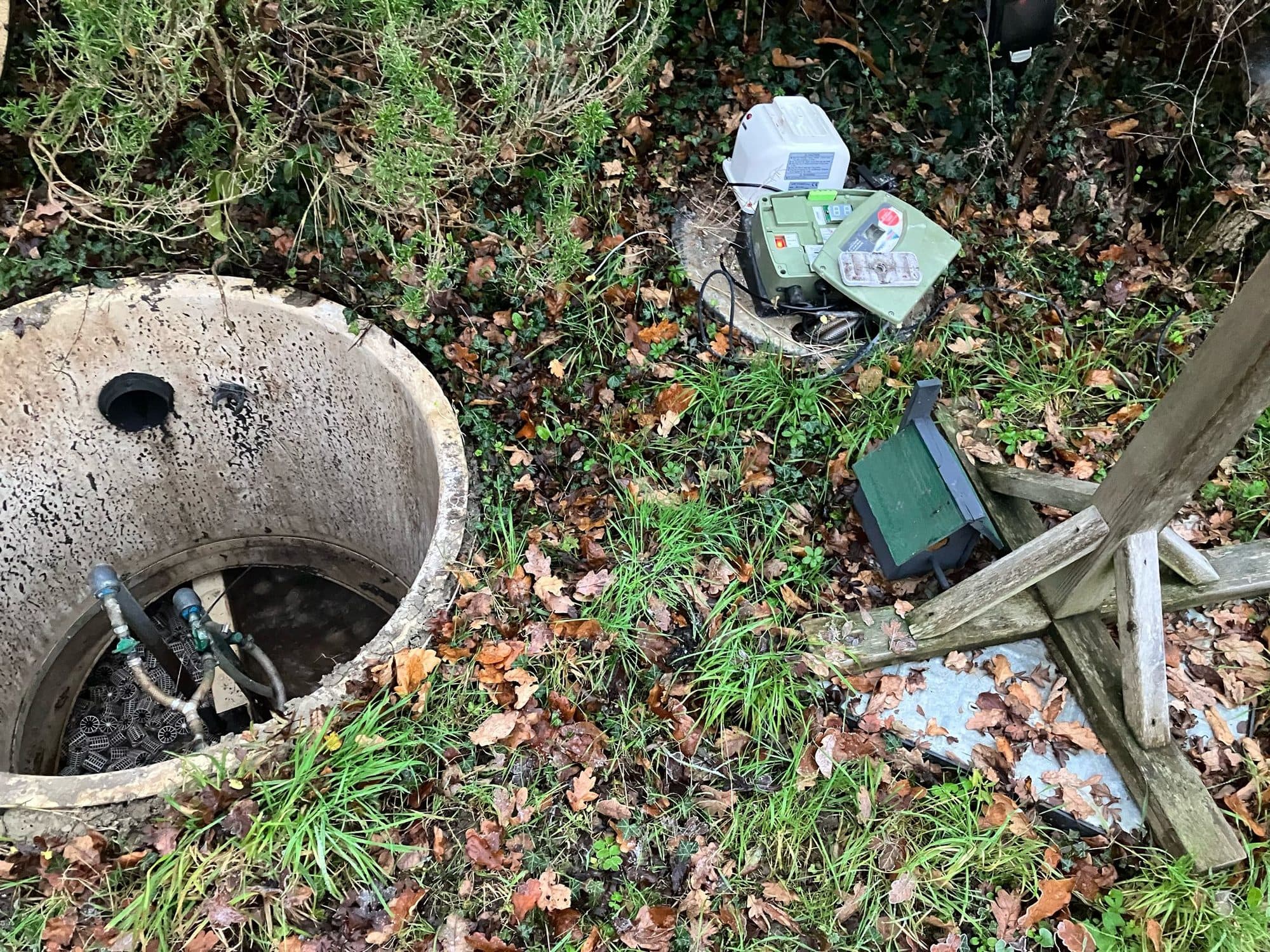
While the plant is open we look at the condition of the chamber, the inlet and the outlet. Approved Document H says the outlet of a treatment plant should be inspected regularly and that what comes out should be free-flowing and clear. Cloudy or grey water at the outlet is worth mentioning to us, because it can mean the plant needs more than a desludge.
The sludge goes to a licensed treatment site, and you are given a waste transfer note for your records. Keep it. If you ever sell the house, the binding rules say you must tell the buyer about the plant in writing and pass on any maintenance records you have.
What goes wrong when it is left
When the first chamber is full, sludge moves on into the chambers where the treatment happens and gets in the way of it, so the plant treats less well and the water leaving it gets dirtier. The binding rules expect a plant to be in good working order and say it must be repaired or replaced if it is not.
Where the plant discharges to ground, the dirtier water causes a second problem. The guidance says that without regular desludging, solids are likely to be carried into the drainage field or soakaway, and Approved Document H explains that solids in a drainage field block the pores in the soil. Putting that right is a far bigger job than a desludge, as replacing a failed drainage field explains.
Where the plant discharges to a stream or ditch, poorly treated water goes straight into it. The Environment Agency can take action where a system causes pollution, and the General Binding Rules explain what the rules expect of an owner.
Signs a plant is overdue
- the water at the outlet looks cloudy or carries bits of solid
- a sewage smell around the plant or the discharge point
- toilets and sinks draining slowly, or gurgling pipes
- the alarm sounding, or a change in the noise the unit makes
None of these proves on its own that the plant needs desludging, because a failed part can cause most of them too. Each one is worth a call, and if the plant has stopped working altogether, our 24 hour emergency callouts cover nights and weekends.
Do not climb in to look
A treatment plant chamber is an enclosed space, and the Health and Safety Executive's guidance on working in confined spaces names noxious fumes and reduced oxygen among the dangers. Lift a cover to look at the outlet if you like, but never lean in or climb down into a chamber, even once it has been emptied. That is a job for people with the right equipment.
Desludging around Kent and East Sussex
We desludge Klargester plants and every other common make across Kent and East Sussex, from Ashford out to the Marsh and up into the High Weald, and we can put yours on a regular service so the next visit is booked in line with the manufacturer's interval and the desludge is done on the same trip when it is due. Our posts on treatment plant emptying across East Sussex and treatment plant emptying in Smarden show how that works locally, and treatment plant servicing in Battle and the High Weald covers the servicing side.
KP Cesspool Services has over twenty years' experience with tanks and treatment plants, and you can read our reviews on Checkatrade. To book a desludge, or a service and desludge together, call 01233 720725, email kpcesspoolservices@hotmail.com, or contact us with the make of your plant if you know it.
Need a hand with yours?
We cover Kent and East Sussex 24 hours a day. Ring us and a real person will pick up, whatever time it is.