What actually moves the price of a sewage treatment plant installation, from ground conditions and access to power, commissioning and the discharge route.
At KP Cesspool Services, the first thing worth saying about the cost of a sewage treatment plant installation is that the unit itself is rarely the biggest number on the quote. Two identical plants going into two properties a mile apart can differ by thousands, and none of that difference is the plant. It is the ground, the access and what has to happen to the water once it leaves. This is what each of those actually does to the figure, so you can read a quote properly and see where a cheap one has quietly left something out.
Why nobody can price it over the phone
A treatment plant install is a groundworks job with a machine in the middle of it. Until somebody has seen the plot, nobody knows how deep the excavation has to go, whether the sides will stand up, whether a lorry can get to the hole, how far the power has to come or where the treated water is going to end up.
Anyone who gives you a firm figure without a site visit is either quoting for the unit alone and will find the rest later, or is padding the price to cover the worst case. Neither is much use to you. What a proper quote looks like is a survey first, then a breakdown you can read.
The unit
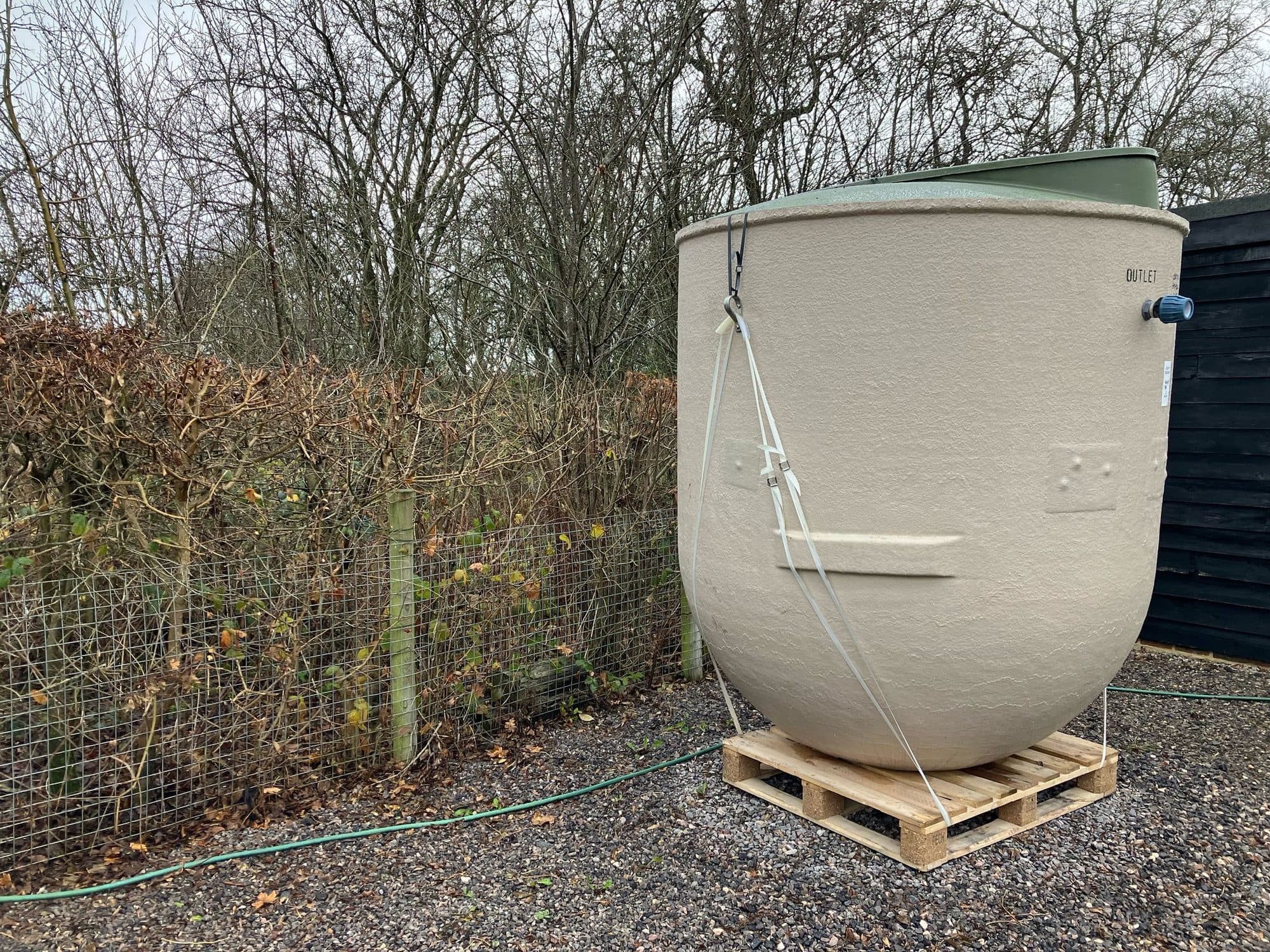
The plant itself is the one part that is genuinely comparable between quotes, and it is set almost entirely by size. Size is worked out from how many people the property could sleep, not how many live there now, which surprises people with a four bedroom house and two occupants.
That rule is not us being awkward. Undersize a plant and it never develops a stable bacterial population, so it does not treat properly and it never really recovers. Oversize it by a lot and you have paid for capacity that also struggles, because a plant needs a reasonable flow through it to keep the bacteria fed.
Ground conditions
This is the biggest single variable, and it is why a neighbour's price tells you very little about yours.
Ordinary ground that stands up while you dig is the cheap case. Running sand, made ground or anything that needs the sides supporting adds time and plant hire. Rock adds a great deal more. A high water table adds its own problem, because a tank going into ground that holds water has to be anchored or it will lift, and that means a concrete surround rather than a straightforward backfill.
Around here that is not a rare complication. Low lying ground across Romney Marsh and the levels behind Rye holds water through the winter, and heavy Weald clay changes what the excavation needs.
Access
The question is how close a lorry and an excavator can get to the hole.
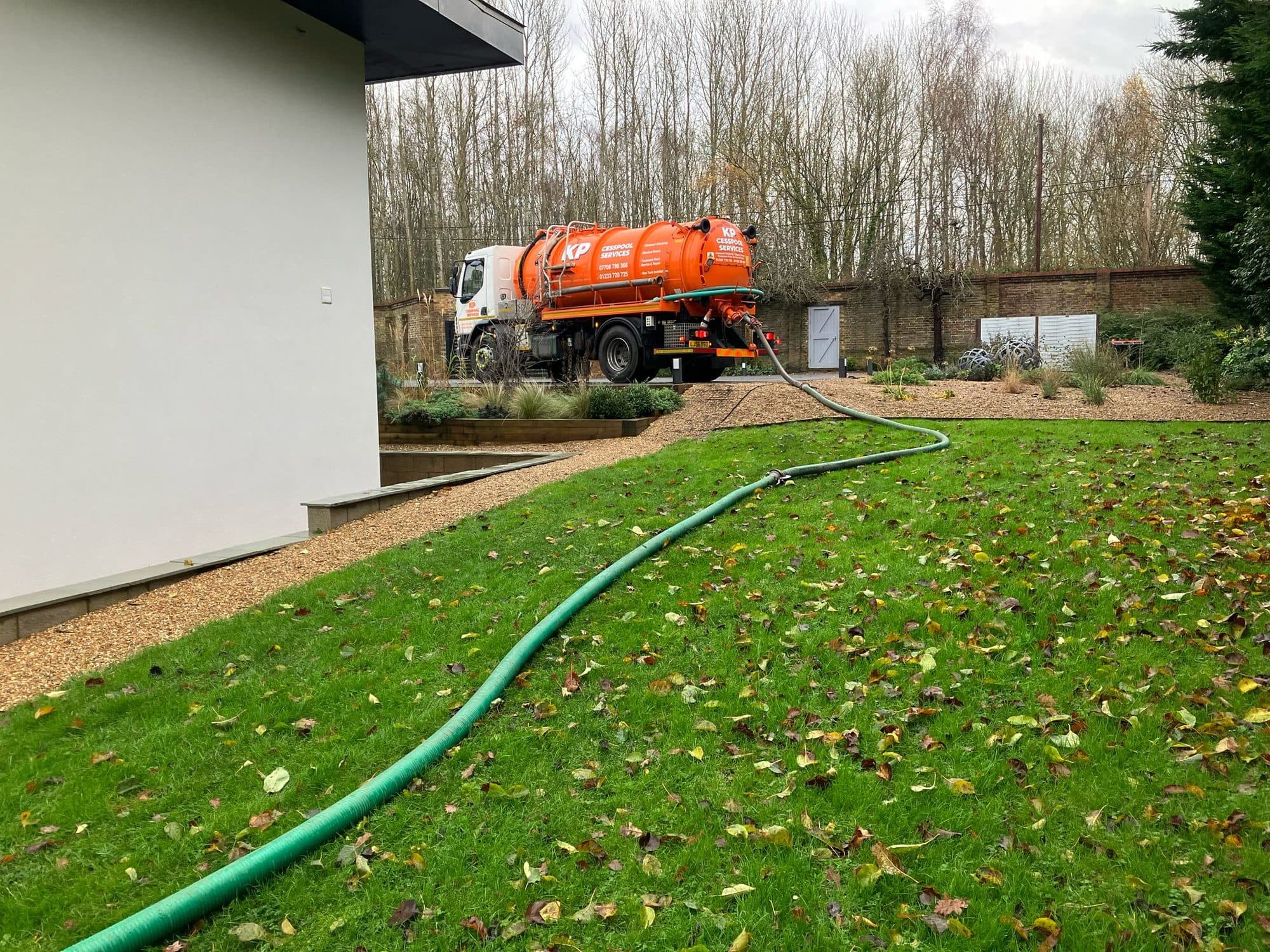
A plot with a hardstanding drive straight to the working area is the easy end. A long soft track, a narrow lane, an overhead cable, a gateway that will not take a lorry or a garden that has to be crossed and reinstated all add cost, sometimes a lot of it. Where a machine cannot reach at all, the work goes up a bracket immediately.
It is worth walking the route with whoever quotes, because access problems found on the day are the most common reason a job overruns its price.
The discharge route
A plant has to send its treated water somewhere, and the distance and difficulty of getting it there is a real line on the quote.
If there is a suitable ditch or watercourse close by, the run is short. If the only acceptable discharge point is at the far end of the plot, that is a trench, pipe and reinstatement all the way there. If the ground will take it and a drainage field is the route instead, that is a second set of groundworks on top of the plant, and it needs the ground to pass its tests first. We cover those in replacing a failed septic tank drainage field, and the rules that decide which route is allowed at all are in can a septic tank discharge to a ditch.
Where the discharge point is uphill or too far to fall naturally, a pump is needed, which adds a unit, a chamber and more cable.
Power
Unlike a septic tank, a plant is machinery and it needs a permanent electrical supply for the blower or the drive.
If the plant sits near the house, that is a short armoured cable. If it is at the bottom of a paddock, it is a long trench and a lot more cable. Where the existing consumer unit has no spare capacity or the supply needs upgrading, that is an electrician's job on top.
A quote that does not mention the electrical connection has not finished pricing the job.
Commissioning and paperwork
The last part, and the part that gets skipped on cheap quotes.
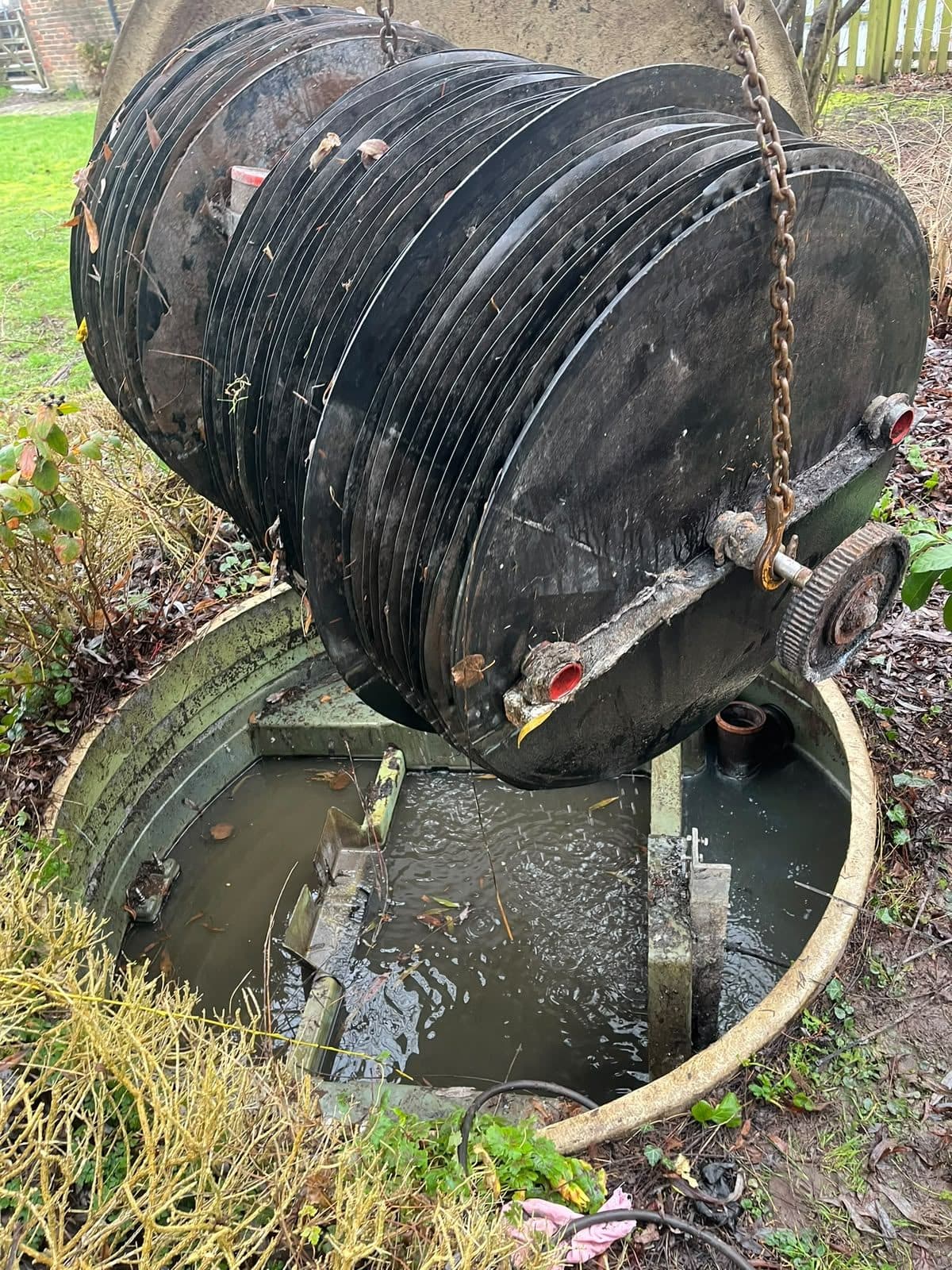
The plant has to be set running and checked, not simply dropped in and backfilled. You should also come away with the manufacturer's documentation, the commissioning record and evidence that the installation meets the standard in force now rather than the one that applied when the old system went in.
That paperwork matters twice. It protects the warranty, and it is what a buyer's solicitor asks for when you eventually sell. We have written that up in selling a house with a septic tank in Kent.
What it costs to run afterwards
Worth folding into the comparison rather than looking at the install in isolation.
A plant needs servicing once or twice a year, it needs emptying periodically, and it uses a small amount of electricity continuously. Against that, it is the system that works on ground where nothing else will, and it does not carry the frequent emptying bill a sealed cesspool does.
If you are weighing the three systems against each other rather than pricing one you have already chosen, how much does a septic tank cost and how much does a cesspool cost set out what the alternatives involve, and how to choose between a cesspool, septic tank or treatment plant works through which one your site actually allows.
Getting a real figure for your site
We will come out, look at the ground, the access, the power and the discharge route, and give you a written price with the parts of it separated so you can see what you are paying for. If a simpler repair to your existing system would do instead, we will tell you that too, because a plant you did not need is the most expensive outcome on this page.
Ring us for a site visit, or see treatment plant installation for what the job involves from start to finish.