
Pumping Station Servicing in Kent and East Sussex
Servicing and repairs for the small pumping stations that lift waste water uphill from a house to a tank, a plant, a drainage field or the sewer, before a jammed pump floods the chamber.
What a pumping station does
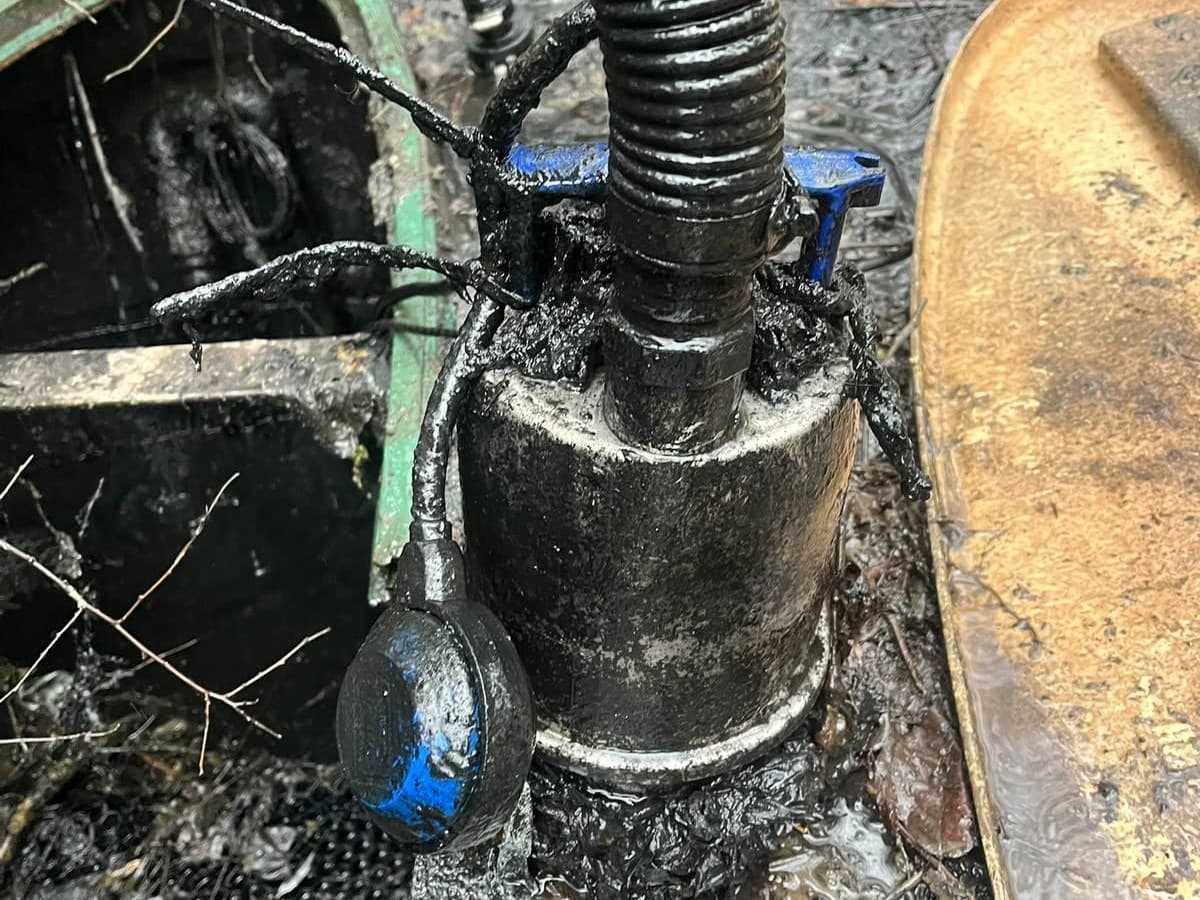
Waste water normally runs downhill by gravity. Where a house sits lower than the tank, the treatment plant or the sewer it drains to, or where a plant's treated water has to climb to reach a drainage field, a pumping station does the lifting. It is a chamber, often called a wet well, with one or two submersible pumps in the bottom, float switches that turn the pumps on and off as the level rises and falls, a control panel and an alarm.
It runs quietly and most owners never think about it, until it stops. When it does, waste keeps arriving with nowhere to go, and the first sign is often a toilet that will not flush or a manhole lifting in the garden.
What goes wrong
Most pumping station failures come from a short list. Wet wipes, sanitary products and fat wrap around a pump's impeller and jam it, or burn the motor out trying to turn it. A float switch tangles, sticks or is buried in grease, so the pump never gets the signal to start. A non return valve fails and lets the pumped water run back into the chamber, so the pump works far harder than it should. And an alarm that was never tested turns out not to work on the one night it is needed. What causes blocked drains and tanks covers the items that cause most of the trouble.
What a service covers
We lift the pumps and check the impellers, the motors and the cabling, clean out the solids and grease that build up in the bottom of the wet well, and free and test every float switch. We check the non return valves and the pipework, test the control panel, and make sure the high level alarm sounds where somebody will hear it. Worn parts are replaced before they fail, and you get a record of the visit.
How often depends on the station and how hard it works, and the manufacturer's manual is the starting point. A station serving a busy household or a commercial site needs attention more often than one handling a single quiet home.
Breakdowns
If the pumping station alarm sounds, stop using water in the property straight away. The chamber has some room above the pumps, but it fills with every flush and every shower. Then call. A jammed pump can often be cleared and a failed one replaced, and getting to it before the chamber overflows avoids a far bigger clean up. Out of hours, our 24 hour callouts cover it.
Power cuts
A pumping station stops when the power goes, and on rural properties that happens in winter storms. The chamber gives you some time, but not unlimited time, so during a long cut keep water use to the minimum and watch for the alarm once the power returns. If it does not settle, a check visit is worth it.
Part of the whole system
A pumping station rarely works alone. It feeds a septic tank, a treatment plant, a cesspool or a sewer, and a problem in one often shows up in the other. We can service the pumping station and the system it serves on the same visit, so you deal with one visit rather than two. Our treatment plant servicing and repairs and septic tank servicing pages cover the rest.
What you get
- Pumps, floats and valves checked
- Wet well cleaned out
- Alarm and controls tested
Covering both counties
We carry out pumping station servicing right across Kent and East Sussex.
Need pumping station servicing?
Ring us for a price, or drop us a message and we will get straight back to you. We are on call 24 hours a day, every day of the year.
Send us a message