A septic tank should be emptied at least once a year, and more often for a big household or a holiday let. What the rules say and how to judge your own tank.
A septic tank should be emptied at least once a year. That is the minimum in the government's General Binding Rules and in the building regulations guidance, and it suits most family homes. A tank that serves more people than it was sized for, a holiday let or a business usually needs it more often, and some manufacturers set a shorter interval for their own tanks, which then becomes the one to follow.
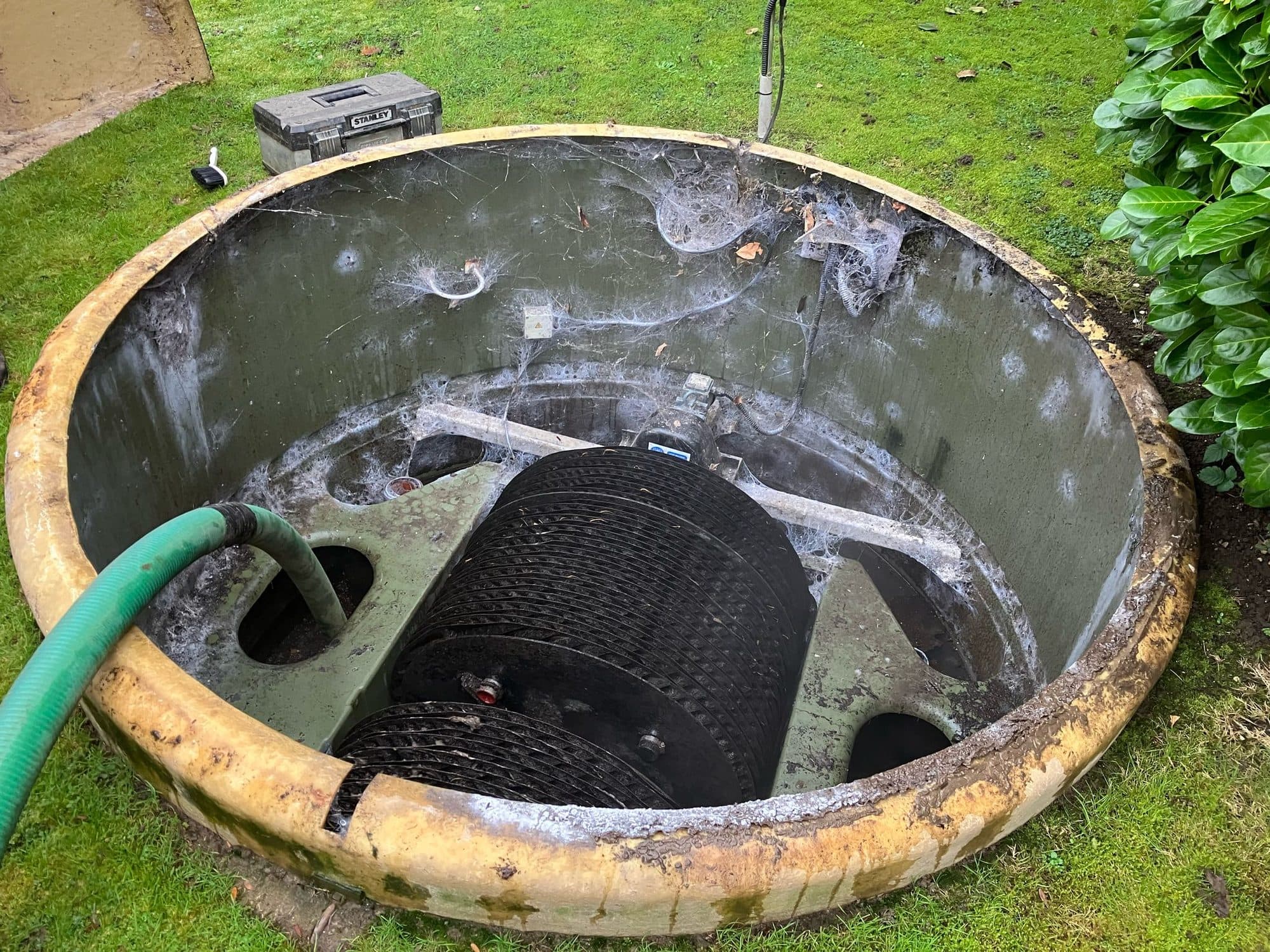
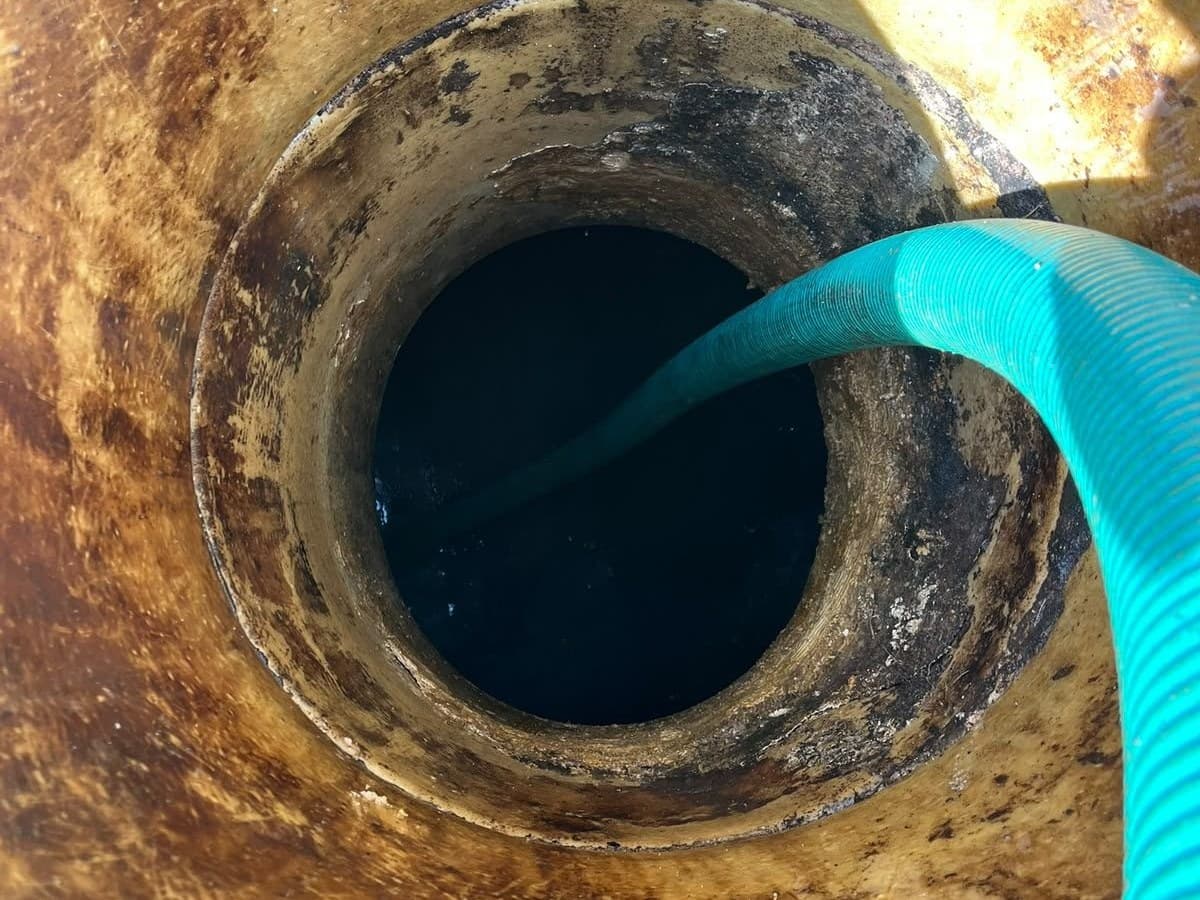
At KP Cesspool Services we put septic tanks on a yearly round for that reason, and our septic tank emptying covers every type and size of tank across Kent and East Sussex. The rest of this guide explains where the once a year figure comes from, what pushes a tank to need more, and what happens to a septic system when the emptying slips.
What the rules actually say
In England the General Binding Rules for a discharge to ground say the sludge that builds up in a septic tank must be removed before it exceeds the tank's capacity, and that this should be done at least once a year or in line with the manufacturer's instructions. The same page says the company taking the sludge away must be a registered waste carrier, and that you can ask them or the tanker driver for proof.
The building regulations say the same thing. Approved Document H, the guidance that covers drainage, says a septic tank should be emptied at least once a year, and its example of the maintenance notice that should be fixed inside a house with a new septic tank reads "emptying at least once every 12 months by a licensed contractor". If your house has one of those notices, it is worth reading.
Our guide to the General Binding Rules covers the rest of what they ask of an owner.
Why a septic tank is not emptied as often as a cesspool
People who have lived with a cesspool are often surprised that a septic tank can go a whole year. The two do different jobs. A cesspool holds everything the house sends it and lets nothing out, so it fills in weeks and most need emptying every four to eight weeks, depending on the size of the tank and how many people live there. Our guide to how often a cesspool should be emptied covers that side.
A septic tank lets the settled liquid run out to a drainage field, where the soil finishes the treatment. Only the solids stay behind, as a layer of sludge on the bottom and a crust on top, and those build up far more slowly. If you are not sure which of the two you have, what a septic tank is and cesspools and septic tanks compared will help you tell them apart.
What happens when the emptying slips
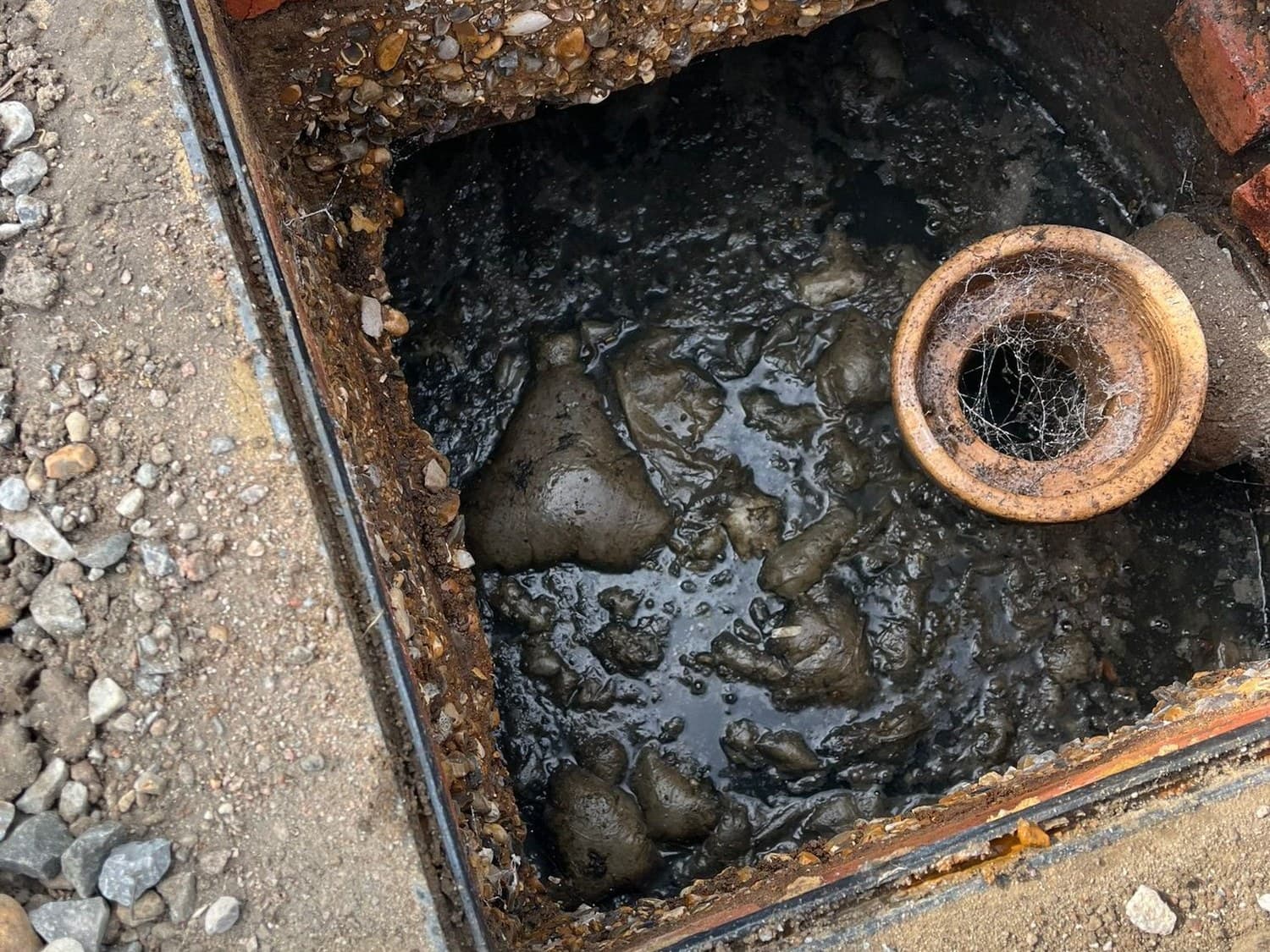
The sludge is what the emptying is for. As it gets deeper there is less room for the solids to settle, so more of them are carried out of the tank with the liquid. The government's guidance says that without regular emptying, solids are likely to be carried into the drainage field or soakaway.
Approved Document H explains why that matters. Solids carried into a drainage field block the pores in the soil, which can mean replacing the drainage field early and occasionally leaves the ground unfit for one at all. A failed drainage field is one of the most expensive faults on a septic system, and replacing a failed drainage field sets out what that job involves. An empty costs far less than that.
When once a year is not enough
The yearly figure assumes a tank sized for the people using it. The things that push a tank to need emptying more often are mostly about what goes into it.
More people than the tank was built for
The binding rules say a treatment system must be large enough for the most sewage it will have to deal with. If you have extended the house, added an annexe or have a bigger household than the last owners, the rules ask you to check the tank is still big enough. Until you know, a tank working near its limit should be emptied more often, not less.
Holiday lets and businesses
A holiday let can go from empty to full of guests every weekend, and a business has its own pattern of use. The government's guidance points commercial and holiday properties to the industry's flows and loads figures rather than its household calculator. In practice these premises usually need emptying more than once a year, and we set the interval with you once we have seen how fast the sludge builds.
Water that should not be there
Clean water takes up room in a septic tank just as waste does, and the more of it that runs through, the less time the solids have to settle before the liquid moves on to the drainage field. Dripping taps and a running cistern add up over a year. So does groundwater getting in through a cracked chamber, which is one of the things we look for on an older tank. A wet winter on low ground adds its own strain, which how weather affects cesspools and septic tanks explains.
Signs a tank needs emptying before its date
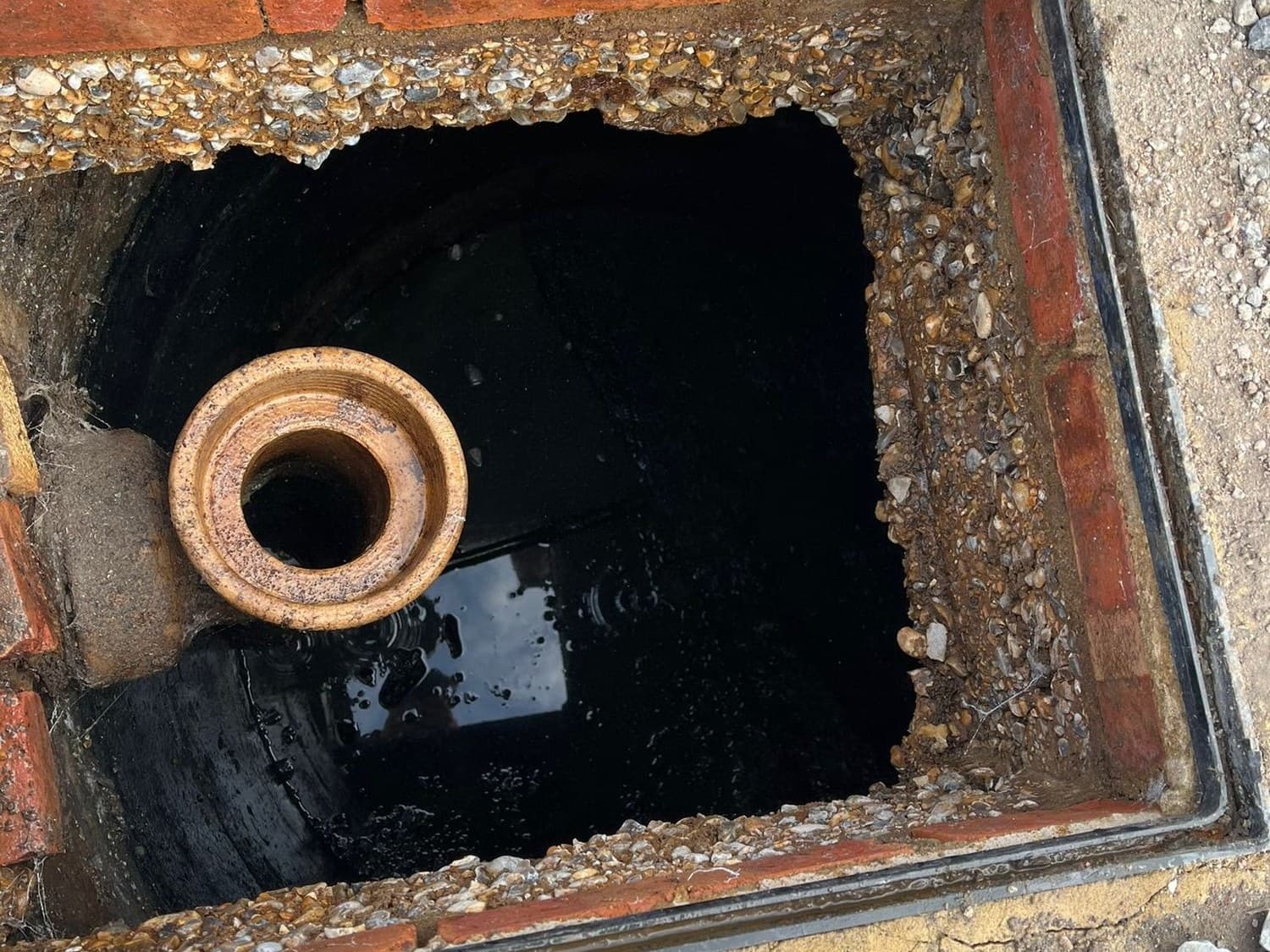
Approved Document H suggests a quick look at a septic tank every month. The liquid in the outlet should be running freely and look clear, and the drainage field should not be waterlogged or showing signs of effluent backing up towards the tank.
Between those checks, the signs that a tank is overdue tend to show up in the house or the garden first.
- sinks, baths and toilets draining slowly
- gurgling from the pipework
- a sewage smell around the tank or over the drainage field
- wet ground, standing water or a strip of unusually green grass over the drainage field
Any of these is worth a call before the yearly date comes round. Signs your septic tank needs servicing explains what each one usually points to, and some of them are a fault rather than a full tank, which is where septic tank servicing comes in. If the house is already backing up, our 24 hour emergency callouts cover nights and weekends.
Why a little sludge is left behind
An empty septic tank is not always a spotless one, and that is on purpose. Approved Document H recommends that not all the sludge is removed, because what is left behind acts as a seed for the bacteria that break down the next lot of waste. We take out the sludge and the crust and leave a little behind so the tank starts working again straight away.
While the tank is open we also look at the chamber, the inlet and outlet and the dip pipes, because a collapsed dip pipe lets solids straight through to the drainage field however often the tank is emptied. The most common causes of septic tank failure covers that and the other faults worth catching early.
If you do not know when it was last done
This is common after a house move. If nobody can tell you when the tank was last emptied, book an empty and start counting from that date. It also gives us the chance to tell you what condition the tank is in, which is worth knowing in your first year in a house.
Keep the waste transfer note you are given each time. The binding rules do not make you keep records, but if you sell, you must tell the buyer about the system in writing and pass on any maintenance records you have, so a folder of dated notes makes a sale easier. Selling a house with a septic tank in Kent explains what a buyer's solicitor will ask for.
Check who takes the waste away
The sludge from your tank has to go to a licensed site, and the rules say the company taking it must be a registered waste carrier. The Environment Agency keeps a public register of waste carriers that anyone can search by business name or registration number. Ours is CBDU266860, and we are happy for every customer to look it up before we arrive.
Getting your septic tank on a yearly round
A yearly empty is the simplest way to keep a septic tank inside the rules and keep its drainage field working. Our rounds run right across Kent and East Sussex, and septic tank emptying in Ashford and the villages around it shows how a regular round works in practice. You can see everywhere we cover before you book.
KP Cesspool Services has over twenty years' experience of emptying, servicing and installing tanks, and you can read our reviews on Checkatrade. To book an empty or set a yearly date, call 01233 720725, email kpcesspoolservices@hotmail.com, or contact us and we will come back to you with a date.
Need a hand with yours?
We cover Kent and East Sussex 24 hours a day. Ring us and a real person will pick up, whatever time it is.