The signs a septic tank needs servicing, from a soggy drainage field and a lush strip of grass to slow drains and smells, and what each one tells you.
At KP Cesspool Services, we regularly help homeowners who are unsure whether their septic tank needs attention. A septic tank fails differently from a cesspool. It has an outlet, and most of its serious problems show up not at the tank but where that outlet goes, in the drainage field. The signs that it needs servicing are a soggy or unusually green patch over the field, smells in the garden, slow drains through the whole house, and a tank that has gone more than a year without being emptied. This guide explains what each one means and how urgent it is.
How a septic tank should behave
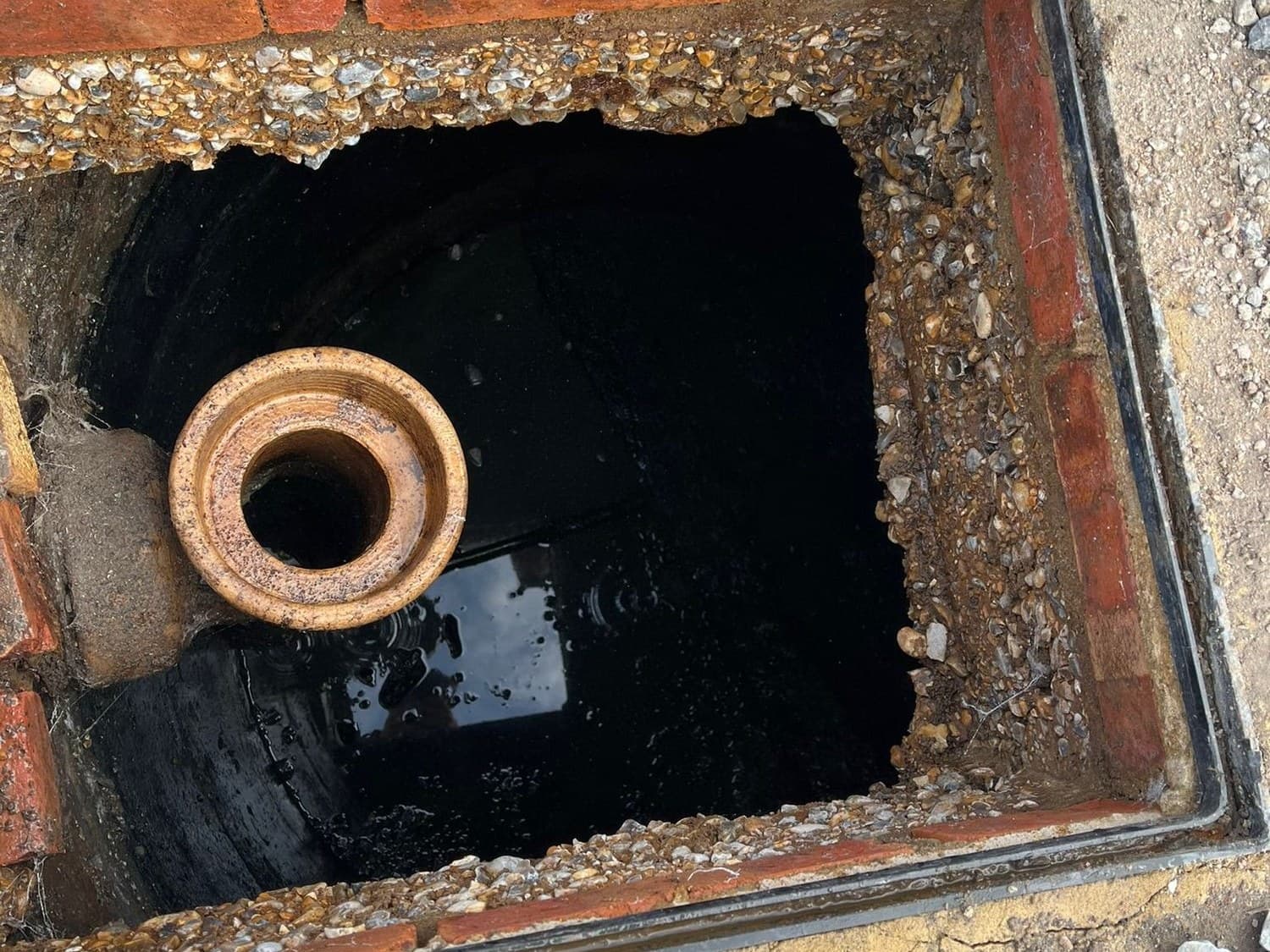
A septic tank lets the waste settle. Solids sink to form sludge, fats float to form a crust, and the liquid in between flows out to a drainage field, where the soil finishes the treatment. A healthy tank sits full of liquid up to its outlet all the time, so a full tank is normal. What is not normal is sludge or crust reaching the outlet, or liquid that cannot get away once it leaves.
A soggy or lush patch over the drainage field
This is the most important sign, and the one most often ignored. A drainage field is a set of perforated pipes in gravel trenches, usually under a lawn. When it is working, you cannot tell it is there. When it starts to fail, the ground above it stays wet after everywhere else has dried, water may stand on the surface, and the grass over the pipe runs grows greener and faster than the rest of the lawn.
It usually means the field cannot take the liquid as fast as the tank sends it. Sometimes the cause is a wet winter and a high water table. More often it is sludge that has carried over from an overdue tank and clogged the soil around the pipes. Either way, catching it early can be the difference between a service and a new field. Replacing a failed drainage field explains what happens if it goes too far.
Smells in the garden
A smell near the tank cover can just be a cover that does not seal. A smell over the drainage field is more telling, because the soil should be treating the effluent before it gets anywhere near the surface. If you can smell sewage on the lawn, the liquid is too close to the top.
Smells inside the house are often something else, a dried out trap or a failed seal, and what to do if you notice smells explains how to tell.
Slow drains through the whole house
When every sink, shower and toilet slows at once, the water leaving the house has nowhere to go. In a septic system that can be the tank, the pipe between the tank and the field, or the field itself. Gurgling from plugholes is usually the first stage. Water coming back up through a downstairs toilet or a shower tray is the last, and it needs dealing with that day.
If only one fixture is slow, the problem is more likely a blockage in that pipe than the tank.
More than a year since the last empty
You cannot see sludge building up, which is why time is a sign in its own right. The General Binding Rules say the sludge must be removed before the tank reaches capacity, and that should be at least once a year or as often as the manufacturer advises. If you do not know when yours was last done, assume it is overdue. Septic tank emptying explains why an annual empty protects the field.
A tank that is low, or a ditch that smells
Two less common signs are worth knowing. A tank whose level drops well below its outlet between visits is leaking, because a sound septic tank always stays full to the outlet. And if the outlet runs to a ditch or stream rather than a drainage field, the tank is discharging somewhere it is not allowed to. A septic tank must never discharge to a watercourse, and can a septic tank discharge to a ditch sets out the three ways to put that right.
What a service finds
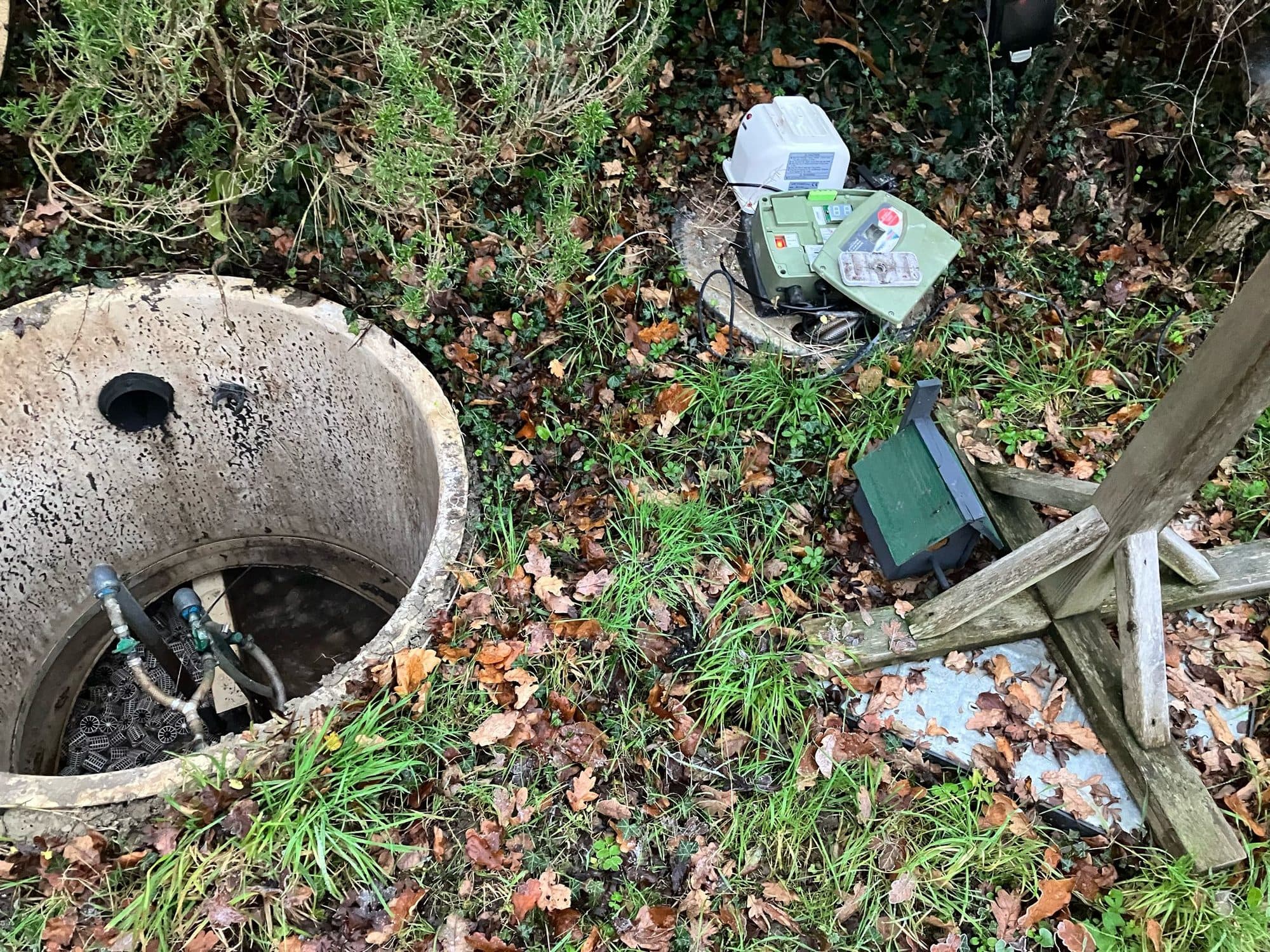
A service looks at the parts you cannot see from the garden. We check the sludge and crust, the dip pipes that stop floating solids leaving the tank, the baffle between the chambers, the inlet and outlet, and the walls for cracks or groundwater getting in. Then we walk the drainage field. The most common causes of septic tank failure covers the faults it tends to turn up, and our septic tank servicing page has the detail.
What you can do meanwhile
If the field is waterlogged, ease the load on it. Spread washing machine and dishwasher loads through the week, fix dripping taps and running cisterns, and make sure no downpipes or yard drains are running into the tank. Keep wipes, fat and heavy bleach out of the system, because they upset the bacteria and add to the sludge. And keep vehicles off the field, because compacted soil drains even worse.
Your duty as the owner
Under the General Binding Rules, a septic tank must be maintained by someone competent and repaired or replaced if it is not in good working order. A failing drainage field that lets effluent reach the surface or a ditch is exactly what the rules are there to stop, and the Environment Agency can require action. Acting on the early signs is cheaper than waiting for that.
Booking a service
If you have noticed any of these signs, KP Cesspool Services can look at the tank and the field in one visit, anywhere in Kent and East Sussex. We have over twenty years' experience, and you can read our reviews on Checkatrade. Call 01233 720725, email kpcesspoolservices@hotmail.com, or contact us.
Need a hand with yours?
We cover Kent and East Sussex 24 hours a day. Ring us and a real person will pick up, whatever time it is.