How often a septic tank around Ashford needs emptying, why the Weald clay south and west of town raises the stakes, and how to check who takes the waste.
Most septic tanks around Ashford need emptying once a year. That is what the building regulations work to, it suits the majority of households, and it holds whether you are out on the clay towards Bethersden or up on the Downs at Challock. Bigger households, holiday lets and anything commercial usually need it more often. A cesspool is a different thing altogether, because it fills right up and needs emptying every few weeks rather than once a year.
What changes from one side of Ashford to the other is not how often, it is what a missed year costs you. Most homes in the town itself are on mains drainage. The septic tanks are in the villages and lanes around it, and those sit on two very different kinds of ground. On one of them a late empty is an inconvenience. On the other it is how a drainage field gets ruined. Our septic tank emptying service covers both, and this guide explains where the risk actually sits.
Once a year, and where that figure comes from
The yearly figure is not a sales cycle somebody invented. Approved Document H, the part of the building regulations that deals with drainage, gives example wording for the maintenance notice that should be fixed inside any property draining to a septic tank. That wording says the tank requires emptying at least once every 12 months by a licensed contractor, and the document's maintenance appendix says the same again.
It adds one detail that surprises people. It recommends that not all of the sludge is removed, because a little left behind acts as a seed for the bacteria the tank depends on. An empty is not meant to be a scrub out, and a small amount left in the bottom is not a job half done.
If you have just bought a property and nobody can tell you when the tank was last emptied, do not wait to find out the hard way. Book an empty and start the clock from that date. The early warnings a septic tank gives are easy to miss, and by the time they are obvious the damage described below is often already under way.
Why the clay south and west of Ashford raises the stakes
A septic tank only settles the waste. The liquid that leaves it runs to a drainage field, where the soil does the real treatment. As the sludge in the tank deepens, solids start carrying over with that liquid, and Approved Document H is blunt about the result. The sediment blocks the pores in the soil, the drainage field needs replacing early, and occasionally the site is left unsuitable for a drainage field at all.
Follow the A28 out through Bethersden and High Halden, or head west to Smarden, and you are on Weald clay. Clay drains slowly even when everything is in perfect order, so a drainage field on it is working hard from the day it goes in and has very little spare capacity to cope with a dose of solids. That is why a missed year on the clay hurts more than anywhere else we work. The field is the most expensive part of the system to put right, and we have written separately about what replacing a failed drainage field involves.
Head north instead, up onto the Downs around Challock, and the ground is chalk. It drains far better and septic tanks generally fare better on it. The annual empty still matters there, but on the Downs the thing that more often gets in the way is reaching the tank at all.
In our experience, booking the empty for the same month every year works better than waiting for a symptom, because by the time a septic tank on clay is showing one, solids have usually been reaching the field for a while already. A fixed date costs nothing extra, and it is the one habit that protects the field rather than reacting to it.
Getting a tanker close enough
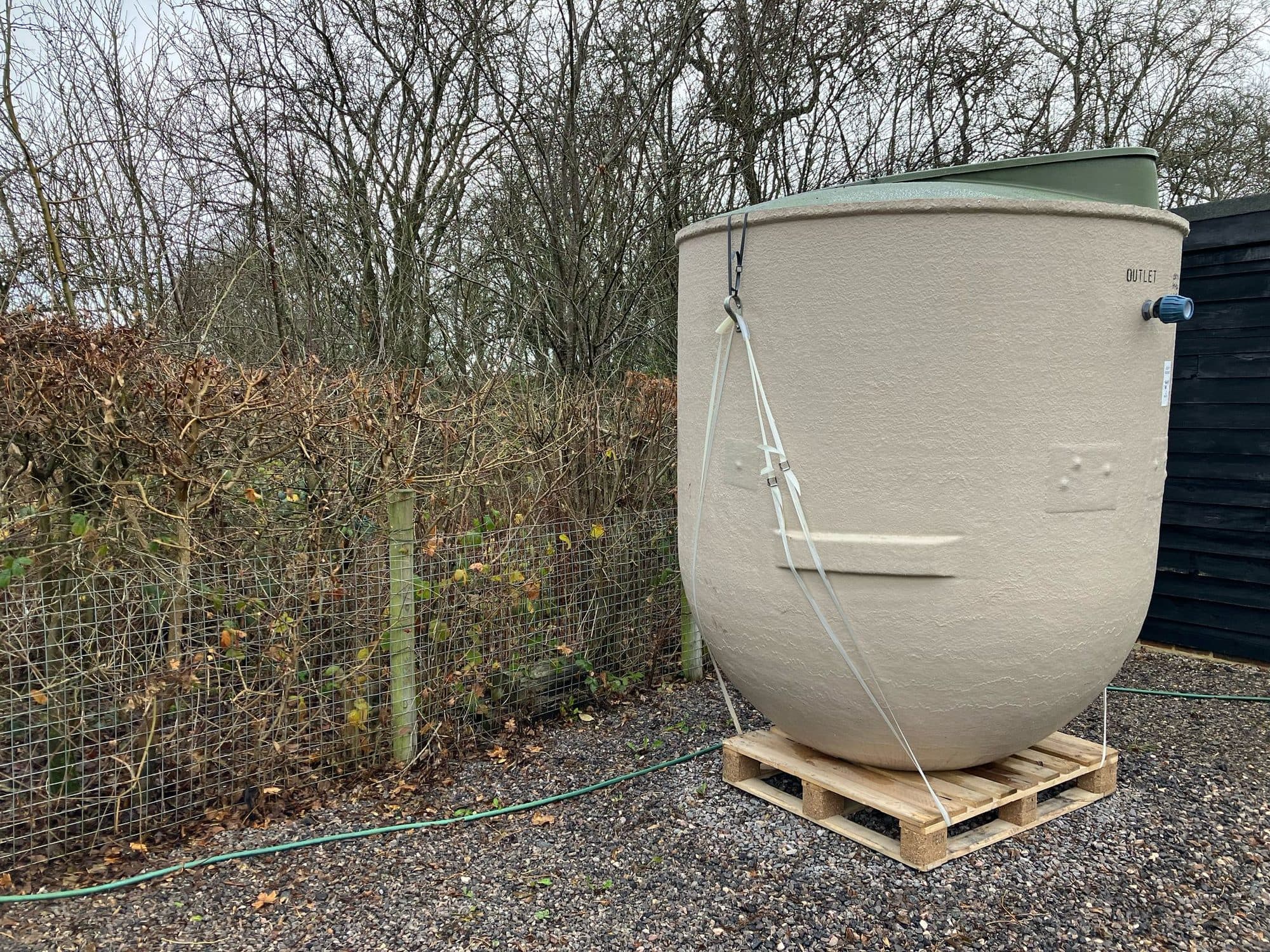
The building regulations expect a septic tank that is emptied by tanker to sit within 30 metres of a vehicle access, with the bottom of the tank no more than 3 metres below that access, and with a clear route for the hose that does not pass through the house. That applies to new installations. A great many of the tanks around Ashford went in long before anybody wrote that down, at the far end of a farm track or the bottom of a long drive.
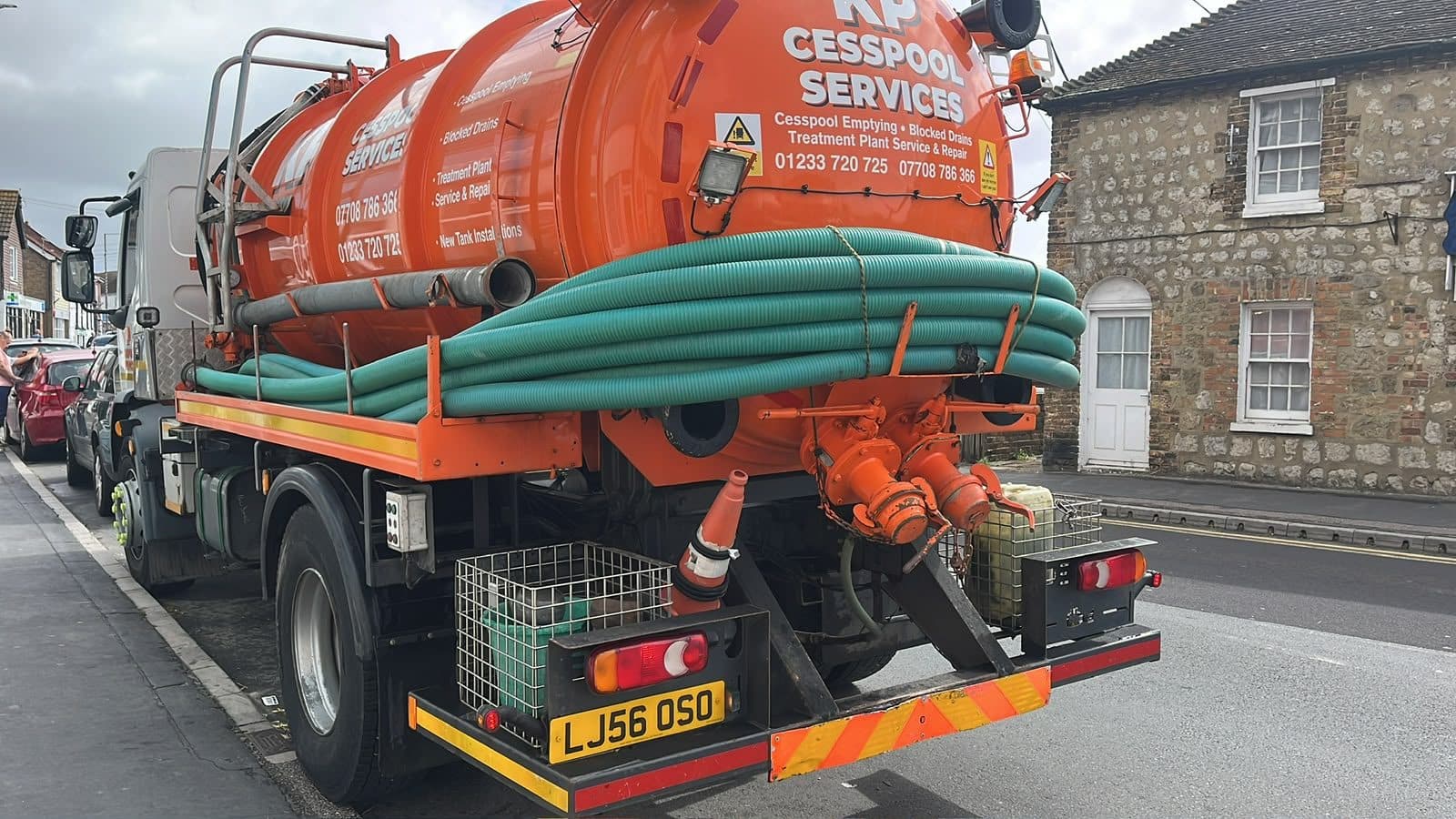
It rarely stops the job. We run long hoses as a matter of course, across lawns, fields and down driveways. What does help is telling us when you book if the lids are buried, overgrown or sitting under something, because finding a tank can take longer than emptying it.
What an empty involves
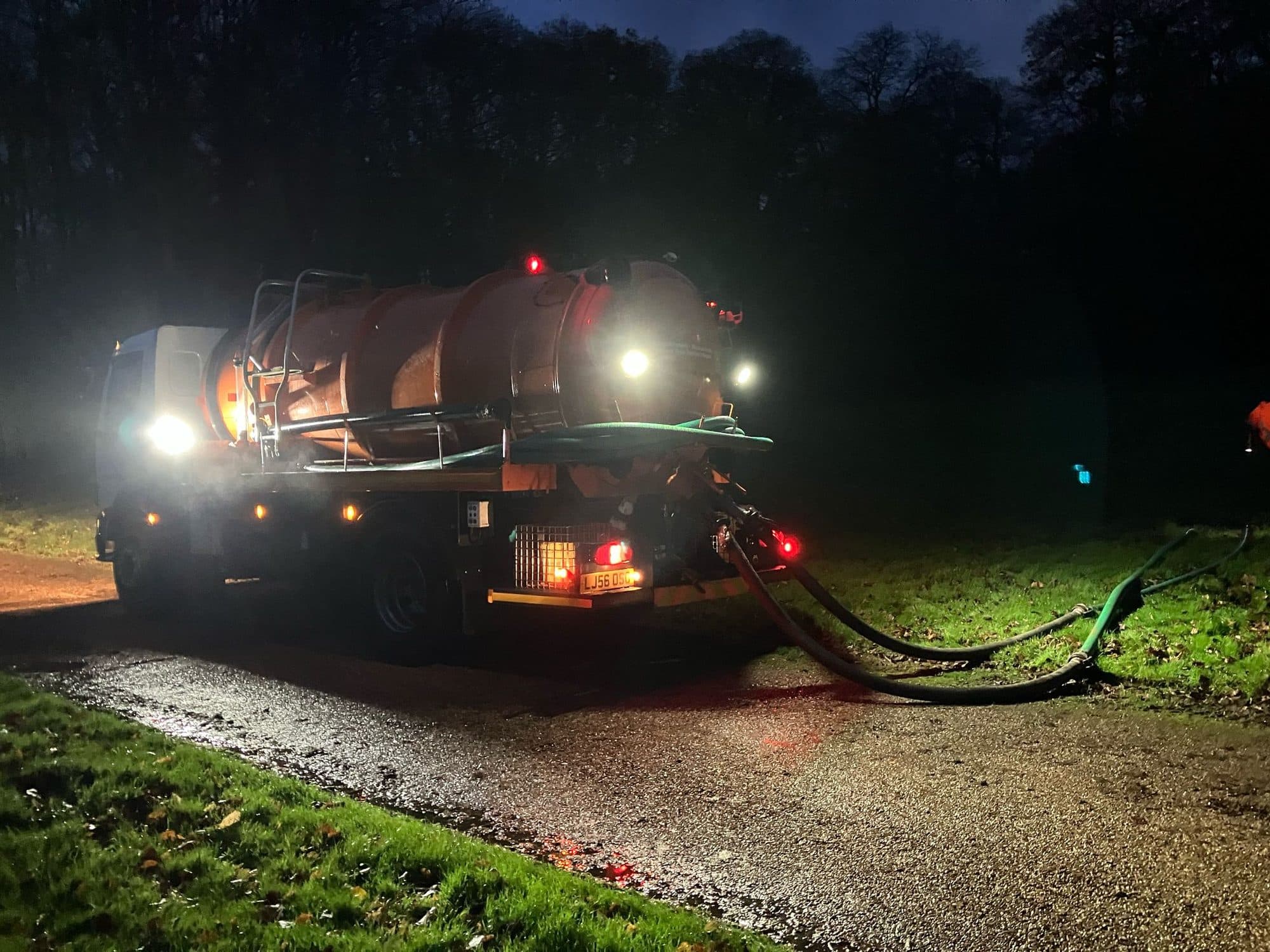
On the day we open the tank, run the suction hose from the tanker and take the contents away for licensed disposal. While the lids are up we look over the chamber, the inlet and outlet, the dip pipes and the state of the sludge, because an empty is the one time in the year anybody actually sees inside the tank.
If something is starting to fail we tell you plainly, and we tell you what it will cost. A cracked chamber taking on groundwater, a missing dip pipe letting solids straight through to the field and roots in the pipework are the usual finds, and each of them has small early signs and much larger late ones. Those are the jobs that turn a routine visit into a septic tank service. If you are trying to budget, our guide to what tank emptying costs in Kent explains what moves the price.
Signs it cannot wait for its date
Some tanks need doing early, usually because the household has grown, a holiday let has had a busy season, or the last empty was longer ago than anyone realised. Slow sinks and toilets, gurgling in the pipes, a smell around the tank, or a patch of unusually green or soft grass over the drainage field all point the same way. We have a fuller list of the signs a septic tank needs attention.
Not every slow drain is the tank, though. Blocked drains in Ashford have causes of their own, and if the problem is a smell, our guide to finding where a smell is coming from will tell you whether the tank is involved at all. If sewage is backing up into the house, that is not a booking, it is an emergency callout.
If your property runs on a treatment plant rather than a septic tank, it still needs emptying, but alongside a mechanical service. Treatment plant servicing around Ashford covers what that involves.
Check who takes the waste away
What leaves your tank is household waste, and the occupier of the property it comes from has a legal duty to take reasonable steps to make sure it only goes to somebody authorised to carry it. That duty sits in section 34 of the Environmental Protection Act 1990. It belongs to the householder, not only to the contractor.
Checking takes a minute. The Environment Agency keeps a public register of waste carriers that anyone can search by business name or registration number. Ours is CBDU266860, and we are happy for every customer to look it up before we arrive.
Booking an empty around Ashford
Ashford is our home patch, and it is where we get to fastest. We cover the town and every village around it, our regular emptying rounds run through those villages so a scheduled slot is easy to fit in, and an emergency here usually gets a same day response. If you are further out, you can see everywhere we cover across Kent and East Sussex.
KP Cesspool Services has been emptying, servicing and installing tanks for over twenty years, and you can read our reviews on Checkatrade before you book. To put your tank on a yearly round, call 01233 720725, email kpcesspoolservices@hotmail.com, or contact us and we will come back to you with a date.