The building regulations and laws that apply to a cesspit in England, from size and siting to who can make you repair it, and why the binding rules do not.
A cesspit, also called a cesspool, is governed in England by the building regulations and by the councils' and the Environment Agency's powers against leaks and pollution. The General Binding Rules, which many pages quote, do not apply to it, because a cesspit discharges nothing. The building regulations say a new cesspit should only be used where no other option is feasible. They set a minimum size of 18,000 litres for two people, a distance of at least 7 metres from the house and a sealed, ventilated tank. The law then lets the council or the Environment Agency act if one leaks or overflows.
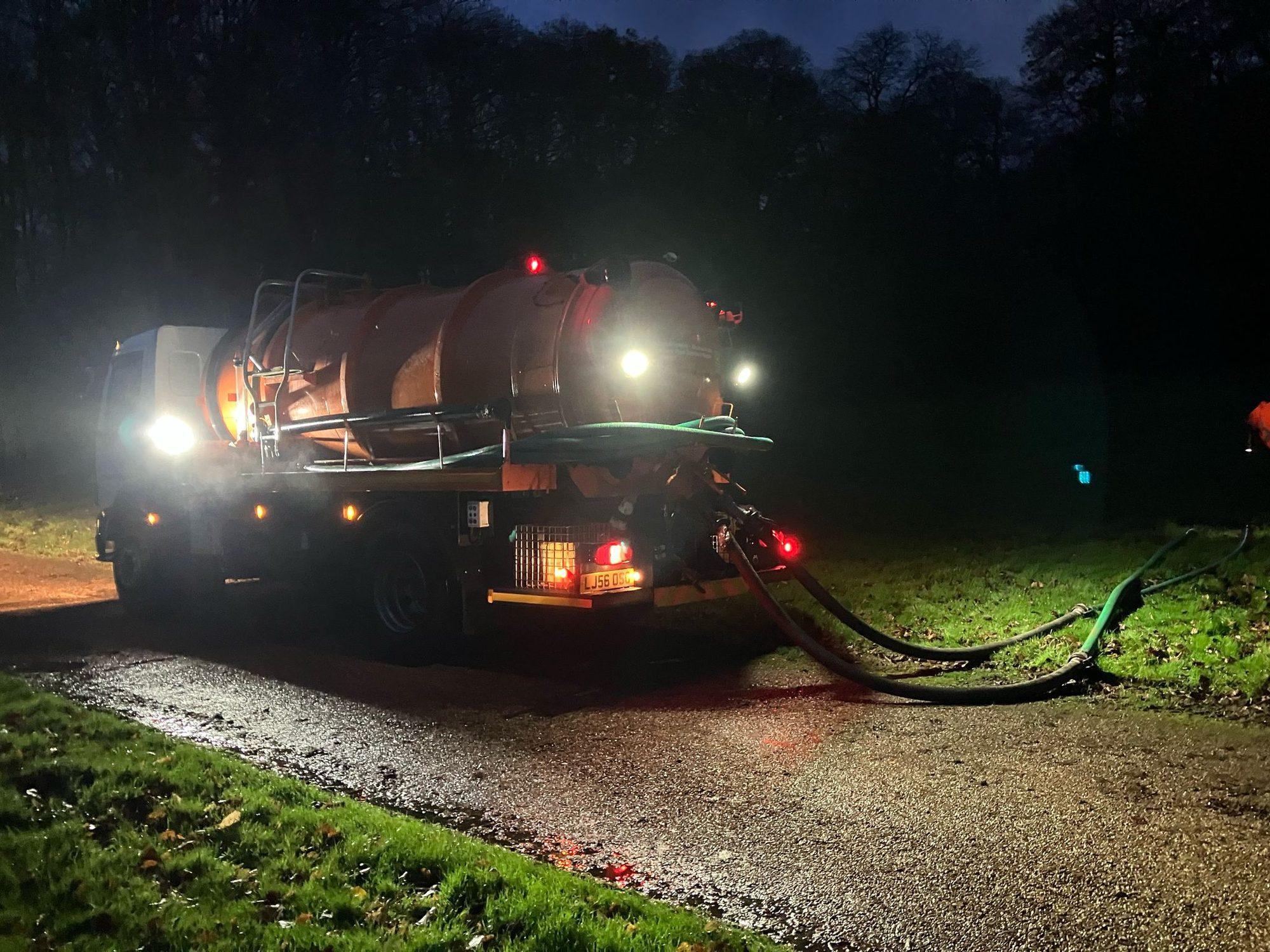
At KP Cesspool Services we empty and look after cesspits across Kent and East Sussex, and our cesspit and cesspool emptying service covers the regular visits a cesspit needs. This guide sets out what each set of rules says, where it comes from, and what it means for you as the owner of an existing cesspit or someone thinking of putting in a new one.
Why the General Binding Rules do not cover a cesspit
The General Binding Rules are the government's conditions for a small sewage discharge, meaning treated water from a septic tank or a sewage treatment plant going into the ground or a stream. A cesspit is a sealed tank that holds everything the house sends it and lets nothing out, so there is no discharge for those rules to govern. That is why answers written for septic tanks do not fit a cesspit.
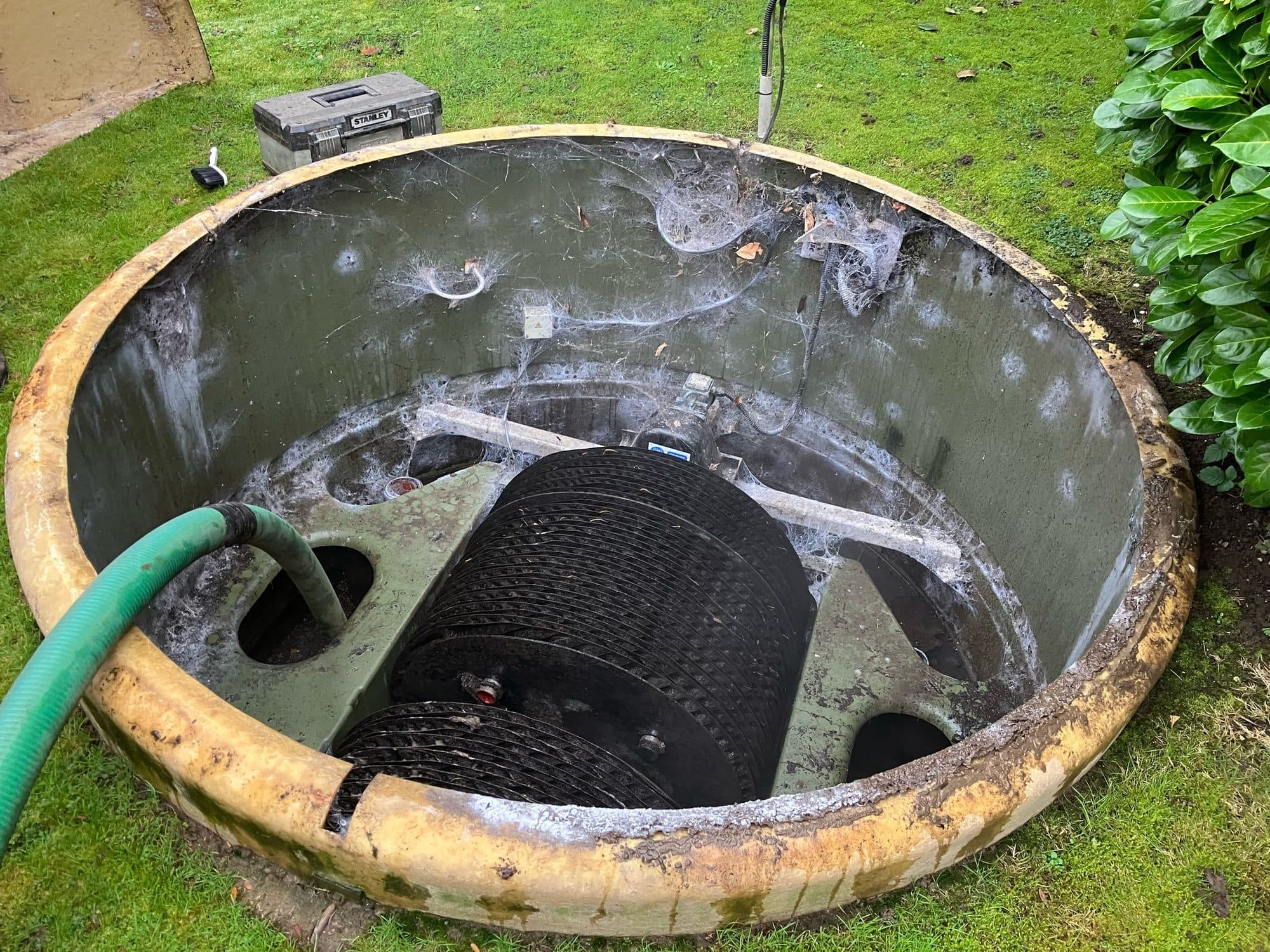
If you are not sure which system you have, what a cesspit is and how a cesspit differs from a septic tank will help you tell. If yours does let water out, it is not a cesspit, and the binding rules do apply to it.
What the building regulations say about a cesspit
The rules for a new cesspit sit in Part H of the building regulations, and the government's guidance on meeting them is Approved Document H. Its requirement for any cesspit is that it is sited and built so it does not harm anyone's health or contaminate any watercourse, underground water or water supply. It must also have proper access for emptying and maintenance, be large enough, be impermeable to liquids and be adequately ventilated.
The guidance then puts numbers on most of those.
Only where nothing else will do
Approved Document H says non-mains drainage should only be considered where connecting to the mains is not practicable, and that a cesspit may be acceptable where no other option is feasible. In practice that means a septic tank with a drainage field, or a sewage treatment plant, is expected first. A cesspit is the answer where the ground or the site rules both of those out.
Size
A cesspit should hold at least 18,000 litres below the level of the inlet for two people, with another 6,800 litres for each extra person. A household of four therefore needs at least 31,600 litres. What size cesspit you need works through more examples.
Siting
The guidance says a cesspit should be at least 7 metres from any habitable part of a building, preferably downslope and on ground that falls away from nearby buildings. It should also be within 30 metres of where a tanker can park, so it can be emptied without the contents being carried through a house or a workplace.
Construction
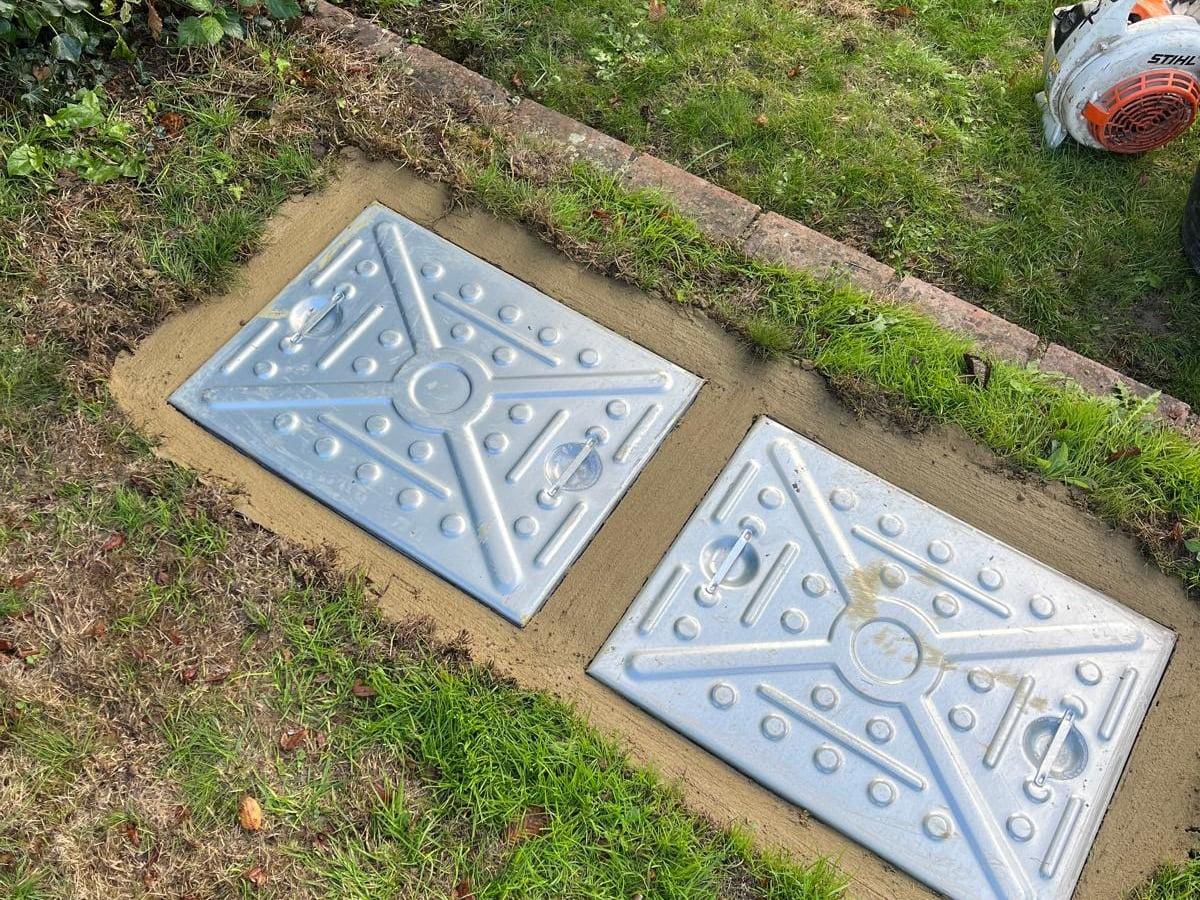
A cesspit should have no openings except the inlet, the access for emptying and the ventilation. It should stop its contents leaking out and stop groundwater getting in. Factory-made tanks should meet BS EN 12566-1. A built tank can be engineering brick at least 220mm thick or concrete at least 150mm thick, roofed with heavy concrete slabs. The access covers should be durable enough to stand up to what is in the tank, and lockable or otherwise made so that nobody can climb in.
A notice in the house
The building regulations require a durable notice inside the building saying what maintenance the cesspit needs. Approved Document H's example wording says the cesspit should be emptied at a set interval by a licensed contractor and inspected fortnightly for overflow. It also says the owner is legally responsible for making sure it does not cause pollution, a health hazard or a nuisance. If your house has one, it is worth finding.
What the law asks of an existing cesspit
The building regulations deal with how a cesspit is built. Once it is in the ground, the duty that matters is to keep it sealed and stop it leaking or overflowing, and three laws give the authorities teeth.
Under section 50 of the Public Health Act 1936, if the contents of a cesspit soak out or overflow, the local council can serve a notice on whoever caused it or let it carry on. The notice can require building work or regular emptying, whatever is needed to stop it. Approved Document H points out that this can be used against a builder who caused the problem, not only the owner.
Under section 59 of the Building Act 1984, the council can require the owner or occupier to put right a cesspit that is too small for the building or in a condition that harms health or is a nuisance. Where a cesspit is no longer used and has become a problem, the council can require it to be filled, removed or otherwise made harmless.
Pollution is the Environment Agency's to deal with. Approved Document H notes the Agency's power under the Water Resources Act 1991 to prosecute anyone causing or knowingly permitting pollution of a stream, a river or groundwater, and to require work to prevent pollution that is likely to happen.
None of this means a working cesspit is under threat. Our guide to whether cesspits are still legal explains why a sound, regularly emptied cesspit is perfectly lawful. The powers above are there for one that leaks or overflows.
How often a cesspit must be emptied
No law sets a number of weeks, because the right interval depends on the size of the tank and how much water the household uses. Approved Document H suggests working it out from 150 litres per person per day and checking the tank for leaks if it does not fill when it should. It also suggests a fortnightly look for signs of overflow. Most cesspits need emptying every four to eight weeks, depending on the size of the tank and how many people live there. How often a cesspit should be emptied goes into the detail, and the signs a cesspit is full tell you when it cannot wait.
A tank that never seems to fill is not good news. It usually means it is leaking, which is exactly what section 50 is there to stop. How to maintain a cesspit safely covers the checks worth making between visits.
Who can take the waste away
What leaves your cesspit is household waste, and the householder has a legal duty to take reasonable steps to make sure it only goes to someone authorised to carry it. That duty is in section 34 of the Environmental Protection Act 1990. The Environment Agency keeps a public register of waste carriers you can search by name or registration number. Ours is CBDU266860. Keep the waste transfer note from every empty, because it is your record that the waste went where it should.
Putting in a new cesspit
A new cesspit is building work under Part H, and Approved Document H expects anyone putting in non-mains drainage to seek building regulations approval. Because the guidance expects other options to be ruled out first, be ready to show why a septic tank or a treatment plant will not work on your site. Choosing between a cesspit, a septic tank and a treatment plant explains how the ground and the site usually decide it, and our new tank installations page covers the work itself.
If you already have a cesspit and the cost of emptying it every few weeks is the problem, a sewage treatment plant may be possible where the ground or a nearby stream allows it. Treatment plant installation explains what that involves.
Talk to us about your cesspit
Whether you need a cesspit emptied, want to know if yours is leaking, or are trying to work out what the rules allow on your land, we can help across Kent and East Sussex. You can see everywhere we cover before you get in touch.
KP Cesspool Services has over twenty years' experience of emptying, servicing and installing tanks, and you can read our reviews on Checkatrade. Call 01233 720725, email kpcesspoolservices@hotmail.com, or contact us and tell us what you have and what you are trying to do.
Need a hand with yours?
We cover Kent and East Sussex 24 hours a day. Ring us and a real person will pick up, whatever time it is.