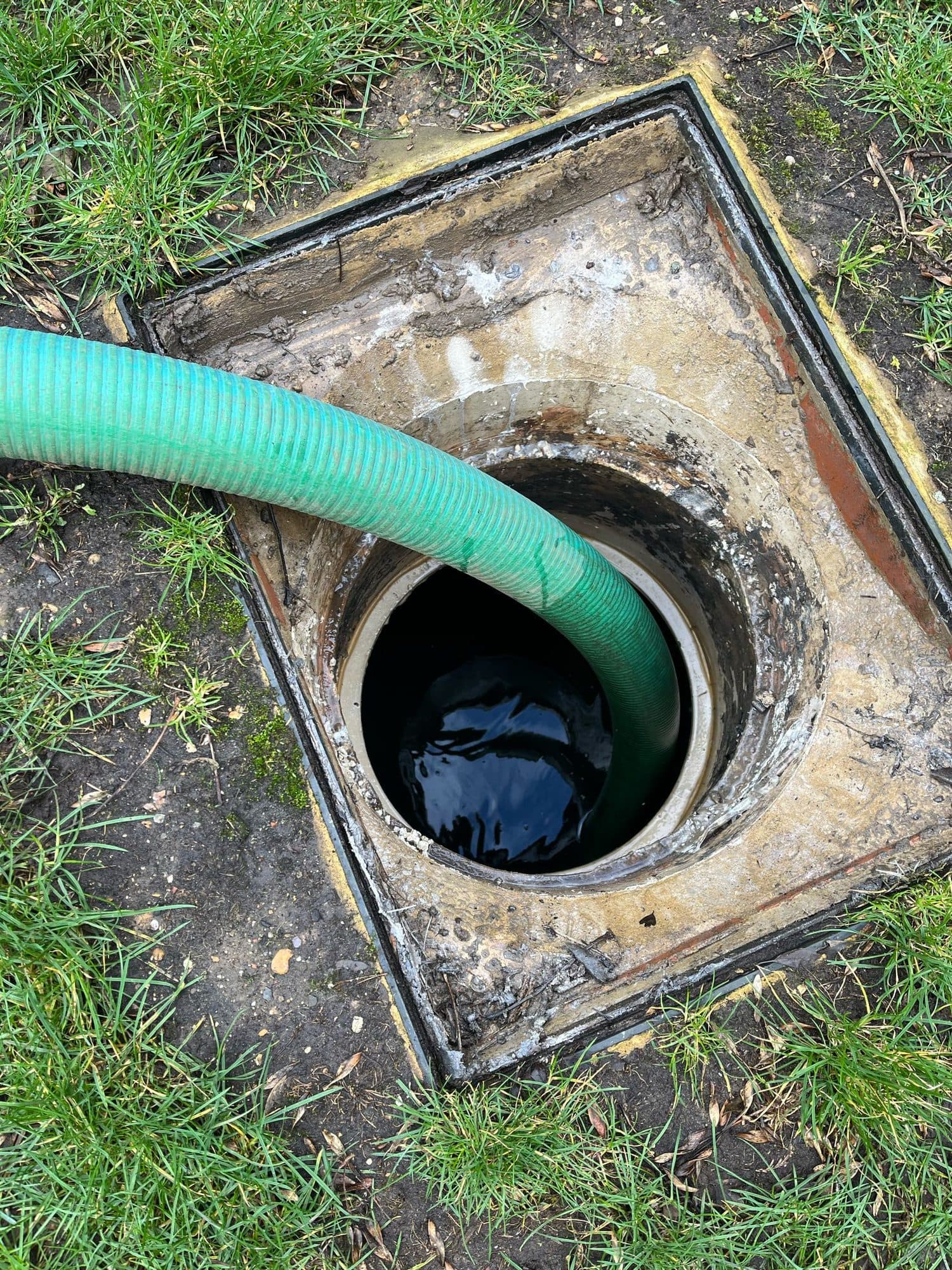
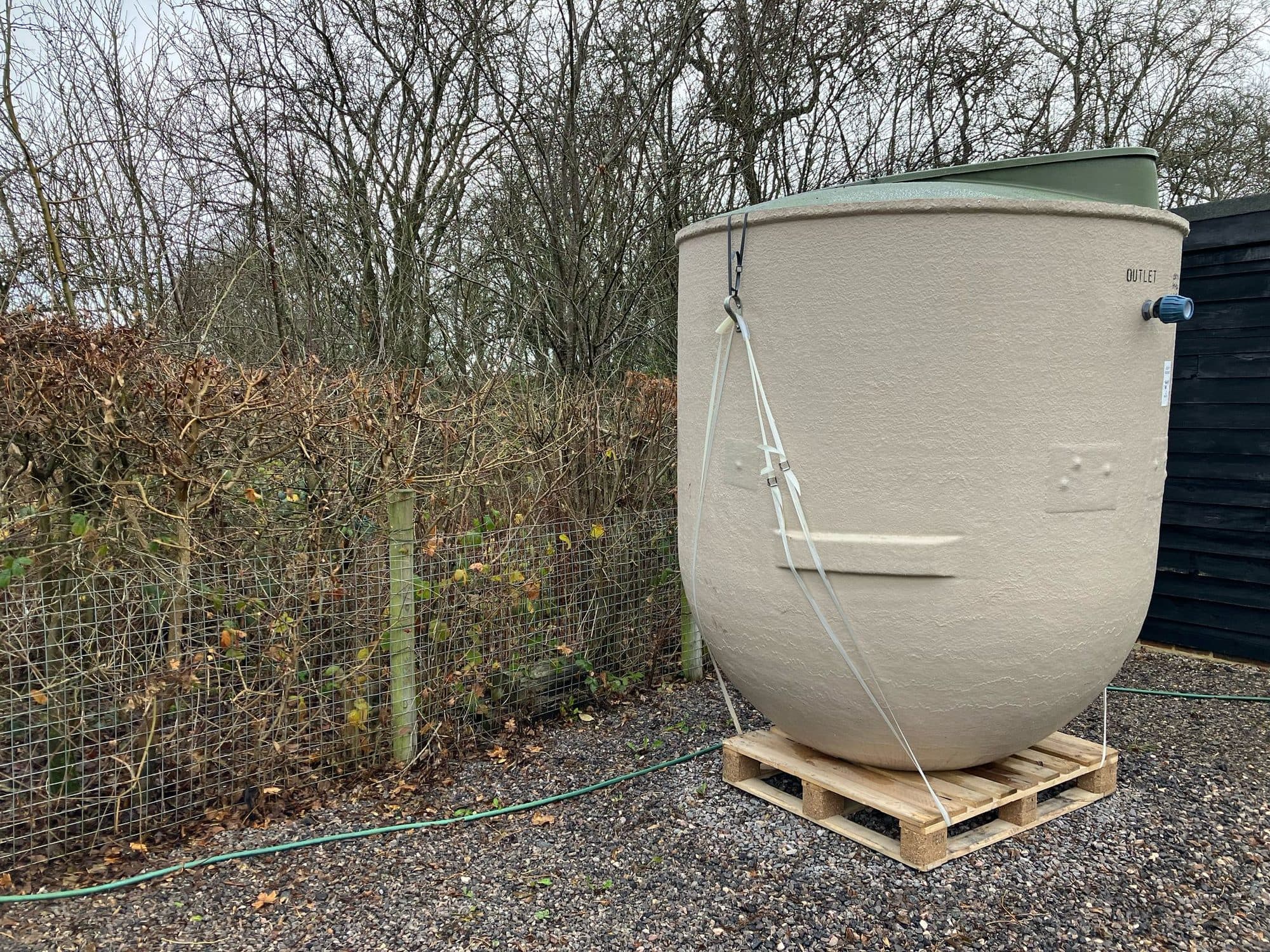
Tank installs in Rye, and why the Rye Bay designations and the levels decide which system you can legally put in rather than which one you prefer.
For most of the country, choosing a new wastewater system is a decision about budget and preference. Around Rye it usually is not. Two things decide it for you before anyone opens a brochure, and they are the conservation designations along Rye Bay and the ground on the levels. Between them they rule out a septic tank and drainage field on a great many plots here, which is why so much of what we install in and around Rye is a sealed cesspool rather than the system a homeowner arrived expecting.
That is not a sales position, it is what the rules and the soil allow. So the honest order of work for a tank install in Rye is to establish what is legally permitted on the plot, then whether the ground could physically take a drainage field even if it were permitted, and only then to talk about tanks, sizes and prices. Doing it the other way round is how people end up having paid for a percolation test on a site that was never eligible in the first place.
The designation that rules out a lot of Rye plots
Rye sits beside the Dungeness, Romney Marsh and Rye Bay complex, which carries Site of Special Scientific Interest status along with Special Protection Area and Ramsar wetland designations. That matters enormously for drainage, and most homeowners have never been told why.
Under the General Binding Rules, you cannot rely on the rules at all if the discharge will be in ancient woodland, or in or within 50 metres of a special area of conservation, special protection area, Ramsar wetland site or biological SSSI. That restriction applies to discharges starting on or after 1 January 2015, so it catches every new install and every replacement being put in now.
Fifty metres is not far in a place like this. Plenty of properties around Rye Harbour, Camber and the edges of the levels fall inside it without the owner having any idea. Being inside that buffer does not mean nothing can be done, but it does mean the simple route is closed. You are then looking at a bespoke permit from the Environment Agency, which is a longer and more expensive process with no guaranteed outcome, or at a sealed system that discharges nothing at all and therefore never engages the rules.
Two other thresholds are worth knowing before you plan anything. A discharge to ground under the binding rules is capped at 2 cubic metres a day, which larger households and most commercial sites will want to check carefully. And the drainage field itself has to be built to British Standard BS 6297.
Whether the ground would even take a drainage field
Say your plot is outside the 50 metre buffer. The next question is whether the soil can do the job, and this is where the levels defeat a lot of sites.
BS 6297 asks for three things at once, and a drainage field needs all three.
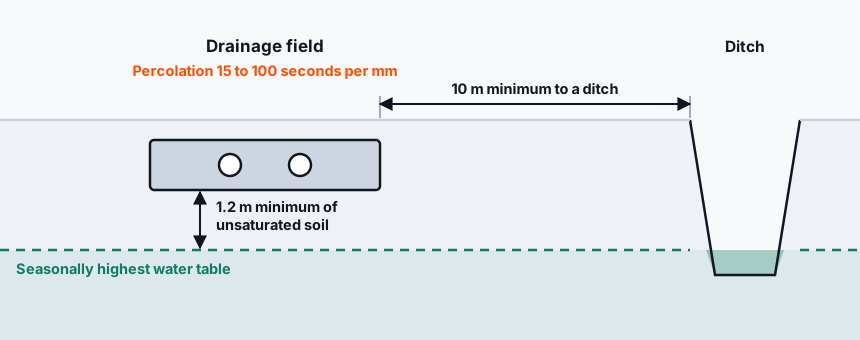
The soil has to percolate within a workable band, a Vp value between 15 and 100 seconds per millimetre. Faster than that and effluent shoots into the groundwater without being treated. Slower and it will not soak away at all, so it surfaces. The alluvial silt and clay across much of the low ground here sits at the slow end or beyond it.
There has to be at least 1.2 metres of unsaturated soil between the bottom of the field and the seasonally highest water table. On the levels in winter that clearance often simply does not exist.
And the field has to be at least 10 metres from a ditch or watercourse. This is a landscape stitched together by drainage ditches. Finding 10 metres of clear ground in every direction is genuinely difficult on some plots.
The reason we labour the point is that these are not independent hurdles you can trade off. A single plot on the levels can fail all three at once, and we have seen owners spend money working through them one at a time before anyone stood back and said the site was never going to work.
In our experience, a percolation test carried out in the winter works better than one carried out in high summer, because the standard is written around the seasonally highest water table rather than the water table on the day, and a trial hole dug into the levels in August can show a comfortable metre and a half of dry soil that is simply not there in January. A test that flatters the ground helps nobody. It produces a drainage field that works for one summer and then backs up.
What that usually leaves
Where a drainage field is out, either because of the designation or because of the ground, the realistic options narrow to two.
A sealed cesspool is the common answer around Rye, and it is the honest one. It discharges nothing, so the binding rules and their 50 metre buffer do not apply to it, and the ground conditions become irrelevant because nothing is soaking away. The trade is running cost, because everything you use has to be tankered away. Approved Document H sets the minimum size at 18,000 litres for two people, with another 6,800 litres for each additional person, and we would generally encourage going beyond the minimum where there is room. A bigger tank does not cost proportionally more to install and it buys you a longer interval between empties for the whole life of the system, which is where the real money is.
The other route is a sewage treatment plant discharging to a watercourse, which is a different permission again and depends on there genuinely being a suitable watercourse to discharge into rather than a field ditch you have decided to call one. Where it is available it is a good answer, because a plant treats the effluent to a standard a septic tank cannot reach and it removes the dependence on ground that was never suited to a drainage field. Where it is not available, it is not available, and no amount of wanting it changes that.
If you want the fuller comparison of the three system types before you decide, it is worth reading how to choose between a cesspool, a septic tank and a treatment plant.
Planning permission, building regulations and the standard
A new tank of any kind needs building regulations approval, and planning permission is usually required as well. The tank itself must meet BS EN 12566, which is the European standard covering small wastewater treatment plants and septic tanks, and any reputable supplier will be able to evidence that without being asked twice.
None of this is optional or negotiable, and it is worth getting right at the outset for a reason beyond compliance. When the property eventually sells, the buyer's solicitor will ask what the system is, where it discharges and what permissions it has. A system installed properly with its paperwork intact is a non-event at that point. One installed quietly by somebody's cousin is a problem that surfaces at the worst possible moment.
Getting the tank and the plant onto the plot
Rye presents two quite different access problems depending on which side of it you are on, and both need settling before anyone orders a tank.
In the old town, the Citadel lanes are narrow, cobbled and often on a gradient, with parked cars and limited turning. That constrains what plant can reach a property and it constrains the tanker that will service it afterwards. There is no point installing a tank we can get in but then cannot empty.
Out on the levels and the surrounding lanes the constraint is not width but ground bearing. A track that carries a car in August will not necessarily carry an excavator or a loaded tanker in January, and the ground here holds water long after the rain stops. From working with clients across this area, the installs that go smoothly are the ones where access was worked out first, and where a small area of hardstanding went in as part of the job rather than being talked about afterwards.
Talking it through
If you are building near Rye, replacing a system that has failed, or you have had an offer accepted on a property with drainage nobody can explain, the useful first step is a site assessment rather than a quote. We will tell you where the plot sits relative to the designations, whether a drainage field is realistically on the table, and what that means for the system and the running cost. Sometimes that conversation saves a customer the price of a test they did not need.
We install cesspools, septic tanks and treatment plants throughout Rye and the surrounding villages and have been working on private drainage across Kent and East Sussex for over twenty years. Owners here can also arrange regular emptying on a schedule once the system is in.
You can see our reviews on Checkatrade before you commit to anything. To arrange a site assessment for a new tank installation, call KP Cesspool Services on 01233 720725, email kpcesspoolservices@hotmail.com, or send us a message.