Buying a house with a septic tank, cesspool or treatment plant in Kent or East Sussex. What the seller must tell you and what to check before you exchange.
Buying a house with a septic tank, a cesspool or a sewage treatment plant is common across rural Kent and East Sussex. Before you exchange, find out which kind of system it is, where it discharges, what condition it is in and when it was last emptied or serviced. The seller has to give you some of that in writing, and a survey of the system tells you the rest.
At KP Cesspool Services we carry out septic tank surveys for buyers as well as sellers, with a written report on what we found. This guide explains what to ask for, what the rules say the seller must tell you, the one problem that matters more than any other, and how to keep the cost of a fault off your side of the deal.
Find out which system you are buying
The three systems look much the same from the garden, a cover or two in the lawn, but they cost very different amounts to run.
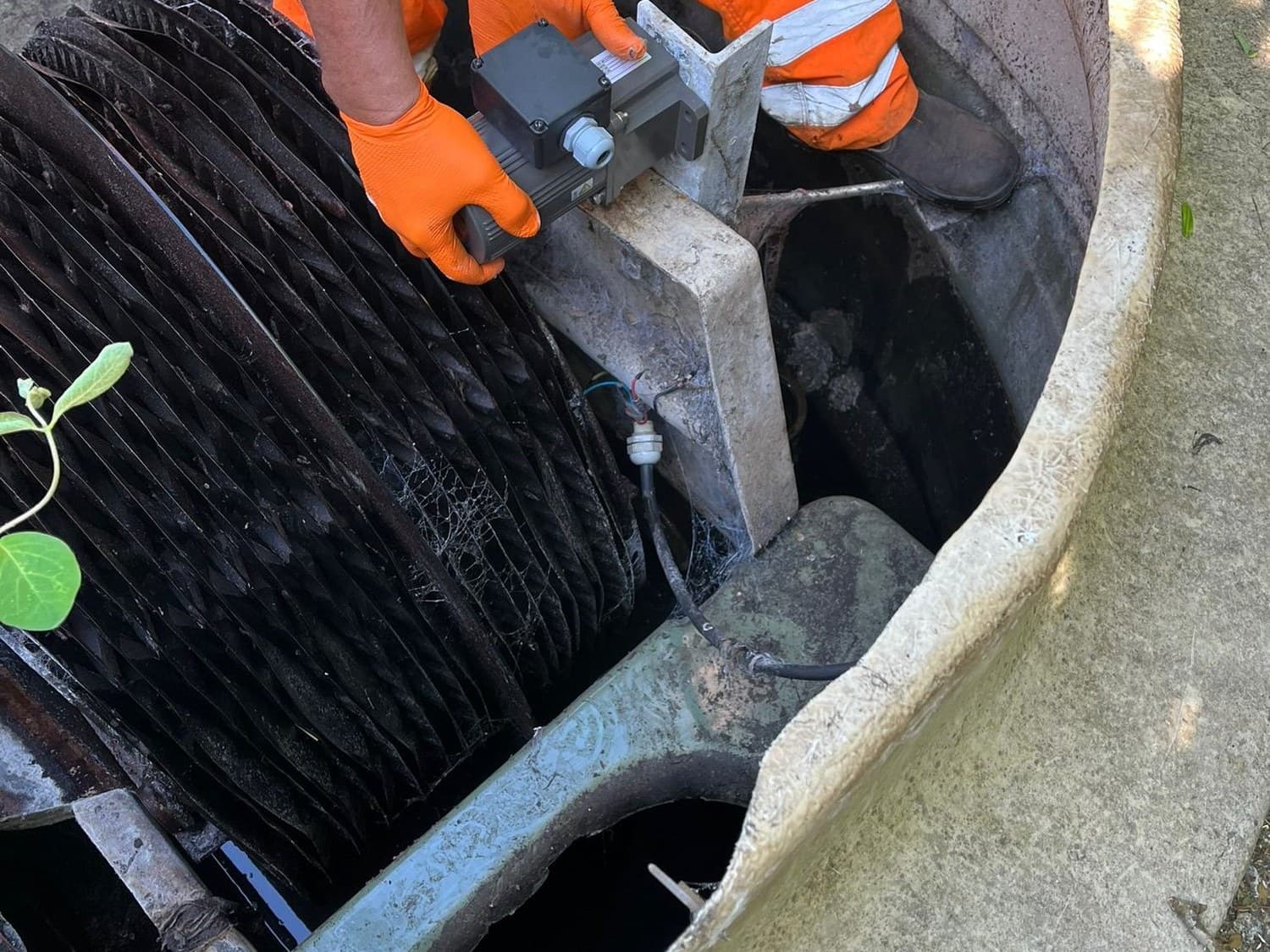
A cesspool is a sealed tank that holds everything and lets nothing out. Most need emptying every four to eight weeks, depending on the size of the tank and how many people live there, so it costs the most in emptying of the three. A septic tank lets settled liquid out to a drainage field and needs emptying at least once a year. A sewage treatment plant treats the sewage with air and bacteria, needs desludging at least once a year or as its manual says, and has machinery that needs servicing.
What a cesspool is, what a septic tank is and what a treatment plant is each explain one of the three. If the estate agent's details say only "private drainage", ask which it is before you go any further, because the yearly cost of a cesspool can change what a house is worth to you.
What the seller must tell you
In England, the General Binding Rules put a duty on anyone selling a property with a small sewage discharge. The rules for a discharge to ground and the rules for a discharge to a surface water both say the seller must tell the new operator, which will be you, in writing that a sewage discharge is in place.
Both sets of rules, for a discharge to ground and for one to a stream, spell out what that note should contain. It should describe the plant and the drainage system, say where the main parts and the discharge point are, list any changes made to the system, and give the maintenance details and the maintenance records if the seller has them.
The rules ask for maintenance records only where the seller has them, so a seller with none has not broken the rules. But a system nobody can account for is a system you are buying blind, and that is worth weighing. A cesspool has no discharge, so the binding rules do not cover it, and you will need to ask its owner the same questions directly.
The question that matters most, where it discharges
A septic tank must never discharge to a ditch, a stream or any other watercourse. The rules for a discharge to ground say plainly that you must not discharge effluent from a septic tank to a watercourse. The rules expect it to be put right as soon as possible, which means connecting to a public sewer where one is close enough, fitting a drainage field so the discharge goes to ground, or replacing the tank with a sewage treatment plant. Can a septic tank discharge to a ditch explains each fix.
A treatment plant can discharge to a watercourse, but only one that flows throughout the year, except in a drought or an unusually long dry spell. A ditch that dries out every summer does not count. So the outlet matters as much as the tank, and it is the one thing a buyer cannot see from the garden.
You may read that septic tanks had to be put right by 1 January 2020. That deadline has been taken out of the government's guidance, but it did not make an old system legal, as our guide to the General Binding Rules explains.
Plans for the house can change the answer
If you are planning to extend, add an annexe, take in more people or run the house as a holiday let, check the system against those plans before you buy. The binding rules say a treatment system must be large enough for the most sewage it will need to treat, and that you must make sure it is still big enough when the load increases.
There is a size limit too. The rules for a discharge to ground cover 2 cubic metres a day or less. If your plans take a discharge to ground above 2,000 litres a day, it is treated as a new discharge, and you would need to connect to the public foul sewer where that is reasonable or apply to the Environment Agency for a permit. An ordinary family home sits well inside the limit, but a large house with an annexe and a holiday let may not.
What a survey tells you
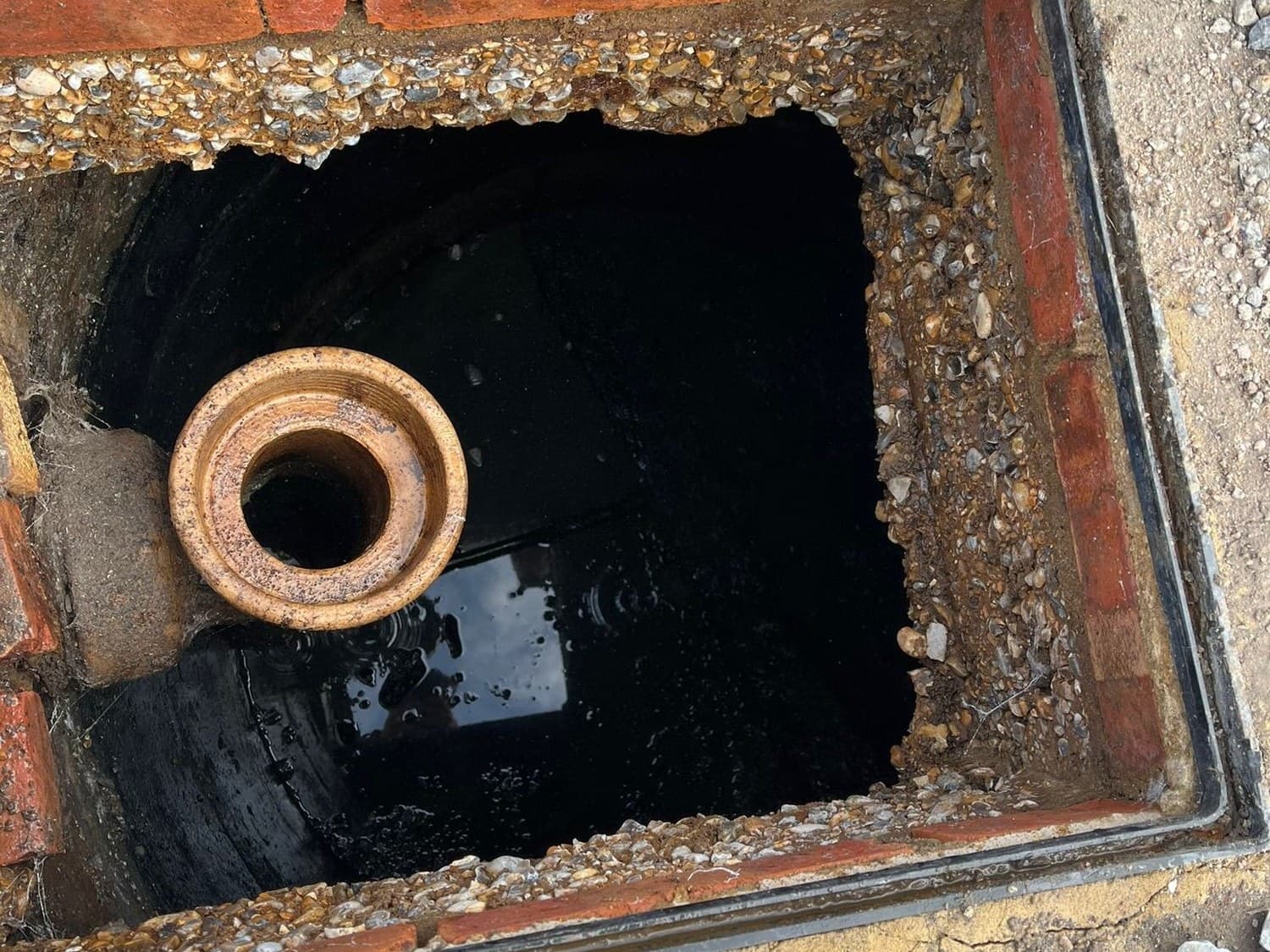
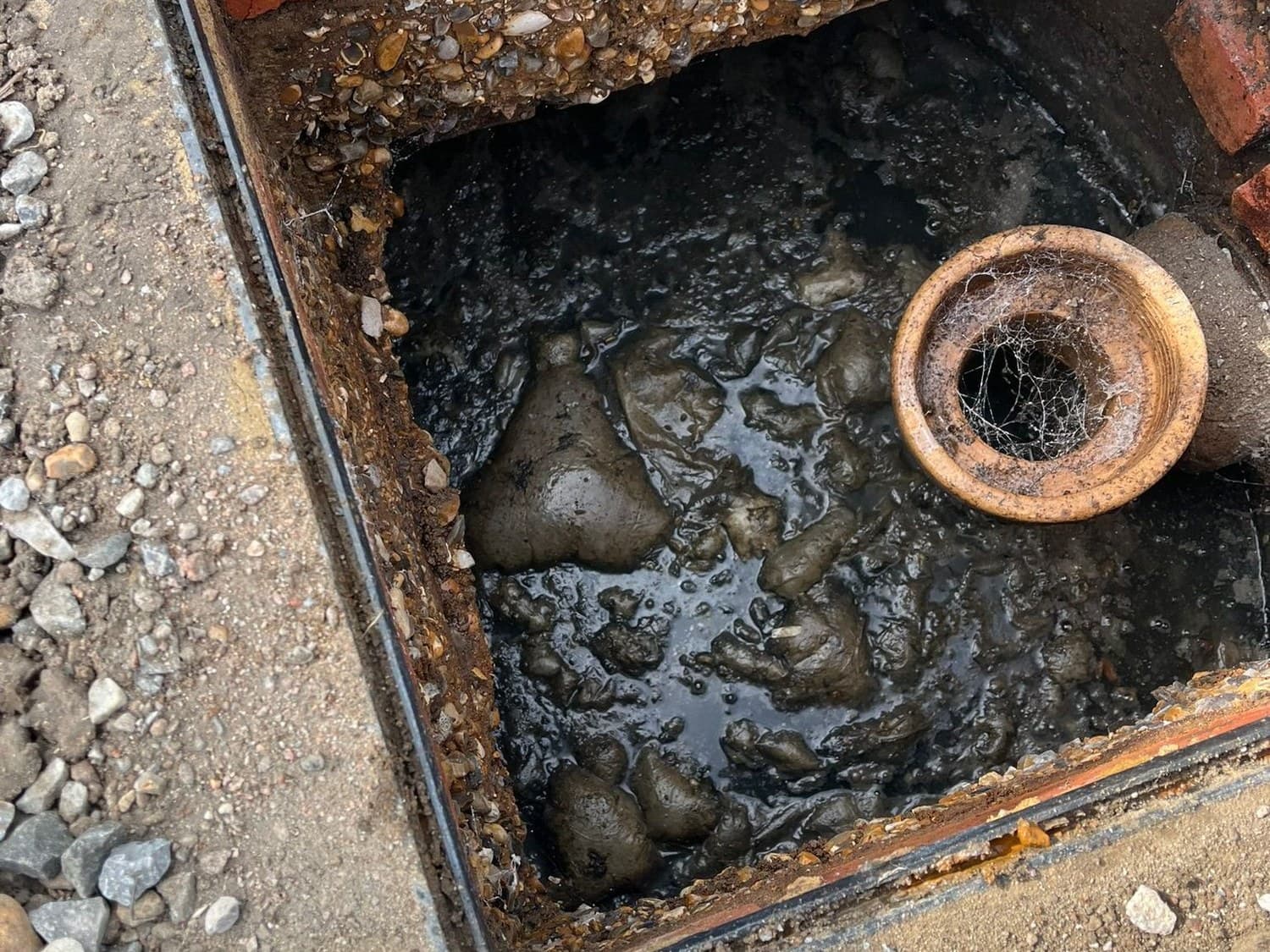
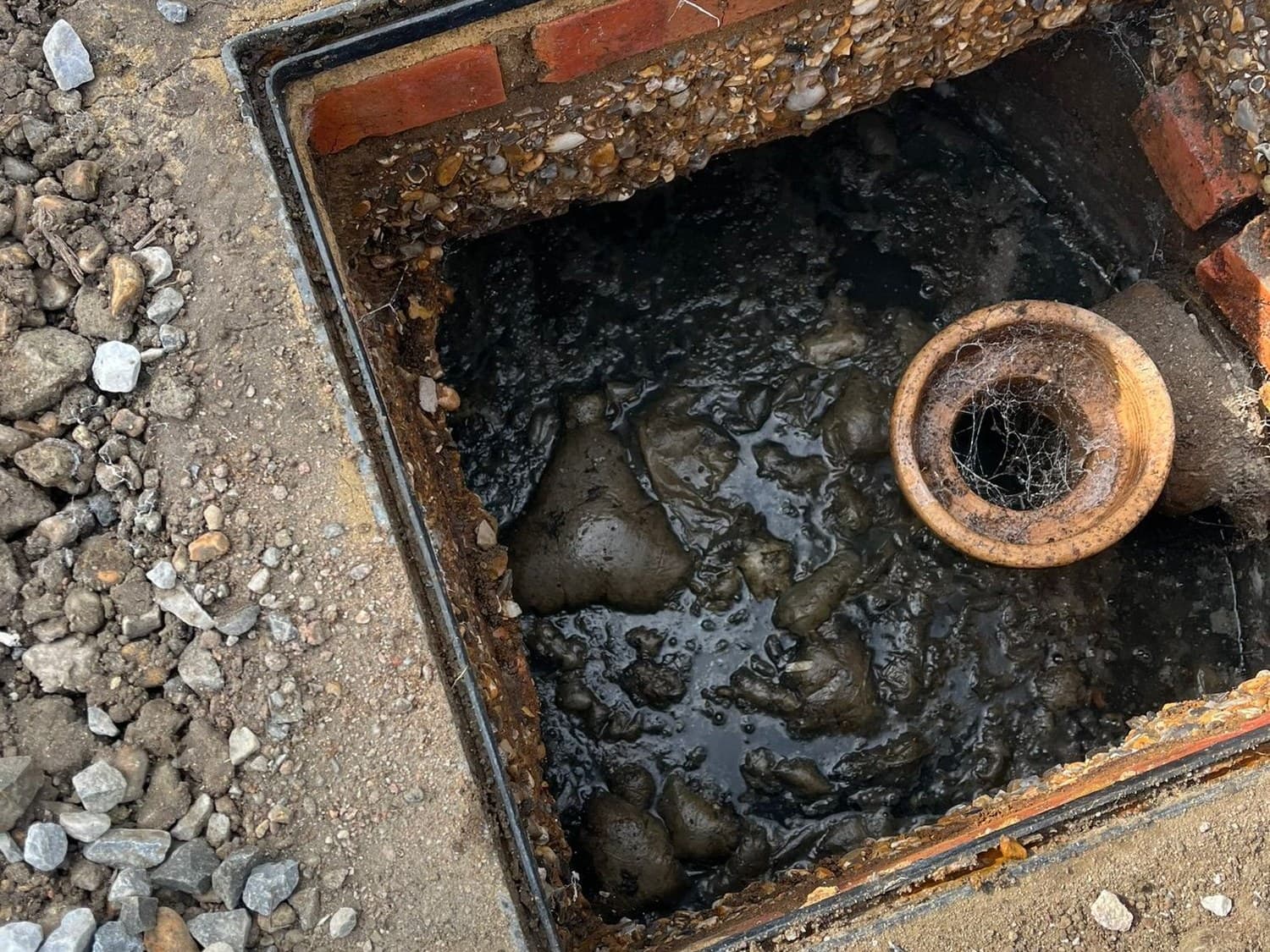
A survey answers the questions the paperwork cannot. When we survey a system for a buyer, we find and lift every cover and empty the tank so we can see inside it. Then we look at the walls, the joints, the inlet and outlet and the dip pipes. On a septic tank we trace where the outlet goes and walk the drainage field for wet ground, standing water or a strip of lush grass. On a treatment plant we check the working parts, the alarm and what is being discharged. On a cesspool we look for leaks and for water getting in.
We also note what we can see of the age and size of the system against the household it serves, because an undersized tank is a cost you would carry for years.
You get a written report on what we found on the day. It is not a guarantee of how long a system will last, and it is not an approval from the Environment Agency, which does not certify private systems. Where the rules leave a question open, the report says so.
Ask before you exchange, not after
The time to find a fault is while the price can still move. A failed drainage field or a septic tank running to a ditch can cost a great deal to put right, and once you have exchanged the cost is yours.
If a survey finds a problem, it usually ends one of three ways. The seller does the work before completion, the price comes down by an agreed amount and you take the work on, or money is held back on completion until the work is done. Which one suits you depends on the job and on how much time is left. Selling a house with a septic tank in Kent covers the same conversation from the other side of the table, and when to upgrade your septic system explains what the common fixes involve.
Questions to put to the seller
- What type of system is it, and roughly how old?
- Where is it, and where does it discharge?
- When was it last emptied or desludged, and by whom?
- Is there a waste transfer note or service record for that visit?
- For a treatment plant, has it been serviced, and is the manual in the house?
- Has the system been altered, extended or replaced while they have owned it?
- Have there been any blockages, smells, alarms or wet ground over the drainage field?
The waste transfer note is worth asking for by name. A registered waste carrier gives one every time a tank is emptied, so it is dated proof of the last empty and of who did it. You can check that company on the Environment Agency's public register of waste carriers.
Your first weeks in the house
If the seller cannot say when the tank was last emptied, book an empty soon after you move in and count from that date. It is the cheapest way to start with a clean slate, and it gives us the chance to tell you what condition the system is in. How often a cesspool should be emptied and the signs your septic tank needs servicing will help you know what to watch for.
Keep every waste transfer note and service record in one folder. When you come to sell, the rules will ask you to pass those records on, and your buyer's solicitor will ask for them too.
Getting a system looked at before you buy
We survey and empty tanks across Kent and East Sussex, from Ashford and the Weald to the Marsh and the High Weald villages, and you can check everywhere we cover before you book. Tell us your exchange date when you book, so we can fit the survey in ahead of it.
KP Cesspool Services has over twenty years' experience of emptying, servicing and installing tanks, and you can read our reviews on Checkatrade. To book a survey ahead of a purchase, call 01233 720725, email kpcesspoolservices@hotmail.com, or contact us with the address and your exchange date.
Need a hand with yours?
We cover Kent and East Sussex 24 hours a day. Ring us and a real person will pick up, whatever time it is.