Cesspool safety tips covering the gas in the tank, the cover you walk over and what to do after an overflow, from a firm that empties them daily.
Three things around a cesspool actually hurt people, and none of them is the smell. They are the gas inside the tank, the cover over the top of it, and contact with what comes out when something goes wrong. The single most important cesspool safety rule is that nobody should ever climb into a tank or lean into an open one, for any reason, including to look, to fish something out or to help someone who has already gone in. Everything else on this page matters, but that one rule is the one that saves lives.
The rest is more ordinary and easier to act on. Treat the cover as a structure that ages rather than a permanent fixture, keep the tank emptied often enough that it never reaches the top, keep drain chemicals out of it, and treat any spill as contaminated ground until it has been cleaned up properly. We empty and inspect these tanks across Kent and East Sussex every working day, and the incidents we hear about almost always come back to one of those points being missed rather than to anything exotic.
The gas is the part people underestimate
A cesspool is a sealed tank with no outlet and no oxygen to speak of. Bacteria break the contents down anaerobically, and two of the gases that produces are the ones that matter. Hydrogen sulphide is toxic. Methane is flammable.
Hydrogen sulphide is the one that catches people out, for a reason that feels backwards. At low concentrations it smells strongly of rotten eggs. At higher concentrations it rapidly deadens your sense of smell, and at high enough levels it does so almost immediately. So the smell fading is not the reassurance it feels like. It can mean the concentration has gone up, not down. Your nose is not a gas detector and it fails in the exact direction that gets people hurt.
It is also heavier than air, which is why lifting the cover does not clear the tank. The gas sits in the space above the liquid instead of drifting away. Methane does the opposite, being lighter than air, so it rises and leaves through the opening, which is why a naked flame or a cigarette anywhere near an open chamber is a genuinely bad idea.
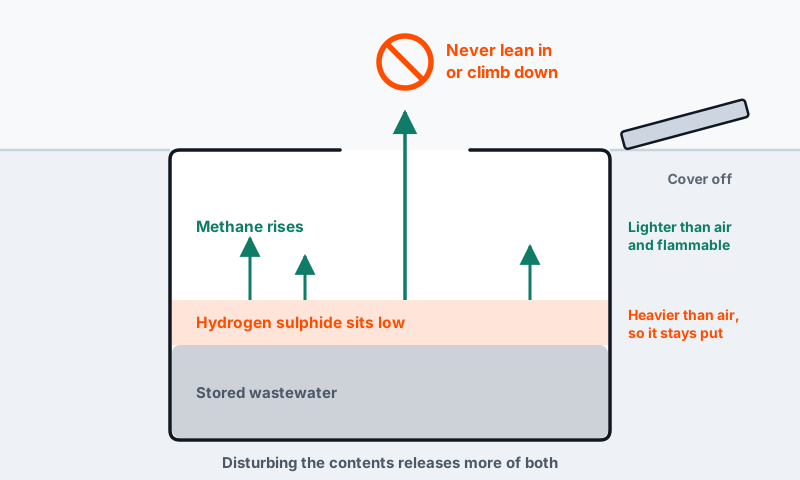
One more thing worth knowing, because it is the bit that surprises people. The Health and Safety Executive warns that liquids and solids in a confined space can release gases when they are disturbed. Stirring the contents, poking at a crust or running a hose into the tank does not just move the waste about. It brings gas out of it.
Never climb in, and never go in after someone
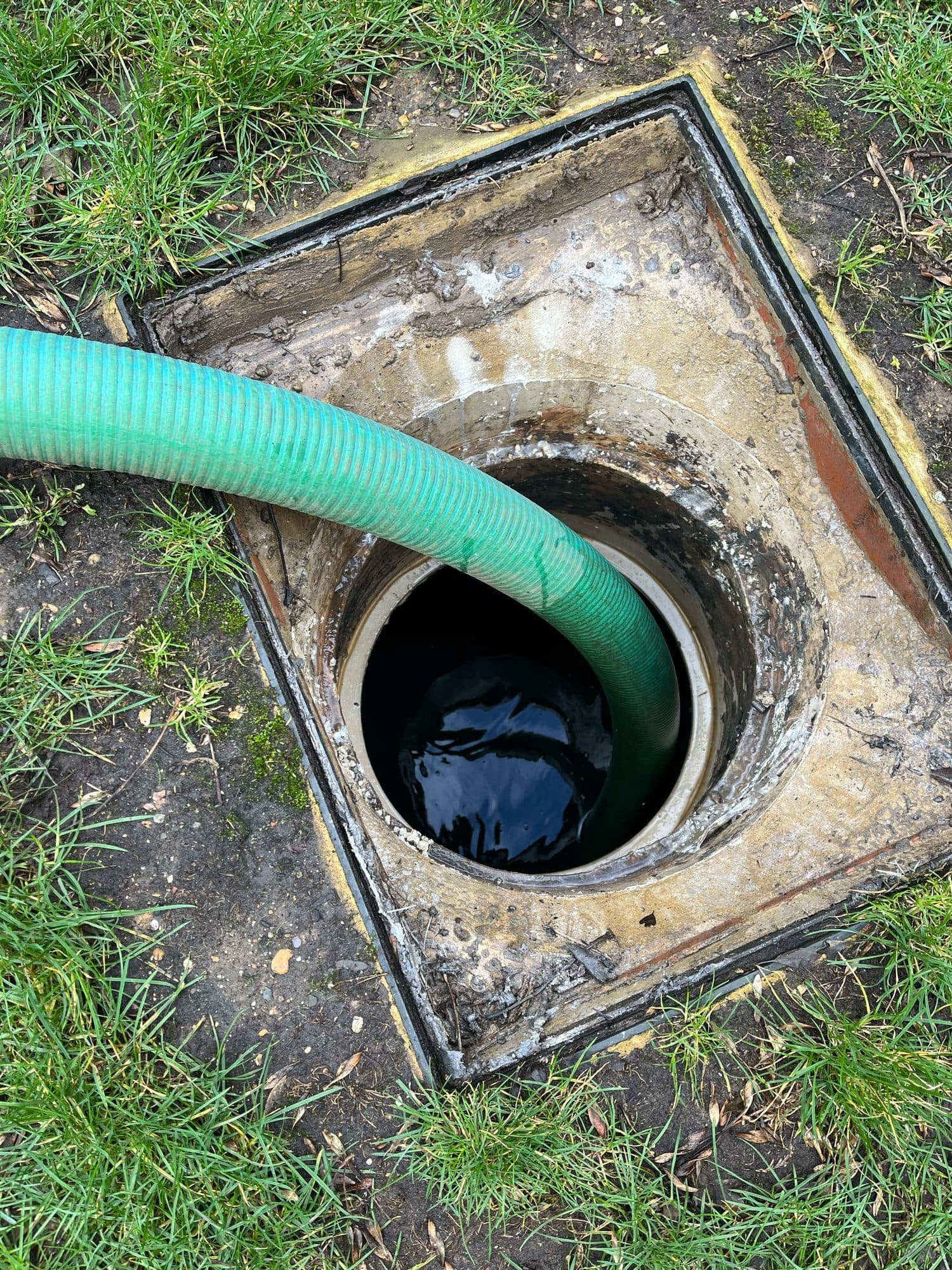
The Health and Safety Executive defines a confined space as any space of an enclosed nature where there is a risk of death or serious injury from hazardous substances or dangerous conditions such as a lack of oxygen. A cesspool is exactly that. The first duty in the Confined Spaces Regulations 1997 is to avoid entry altogether and do the work from outside, which is how a professional empty is carried out and why the hose goes in rather than a person.
The part of HSE's guidance that everyone should read is short. Those killed in confined spaces include the people working in them and those who try to rescue them without proper training and equipment. That is the reason the rule has to be absolute. If someone collapses in or near an open tank, the instinct to climb in after them is overwhelming and it is how one casualty becomes two. Call 999, say clearly that it is a confined space and a sewage tank, get everyone else back, and do what you can from outside without putting your head into the opening.
We have found the households that stay safest are simply the ones who decided early that the lid is not theirs to lift. There is nothing inside a cesspool a homeowner needs to see.
Treat the cover as a structure that ages
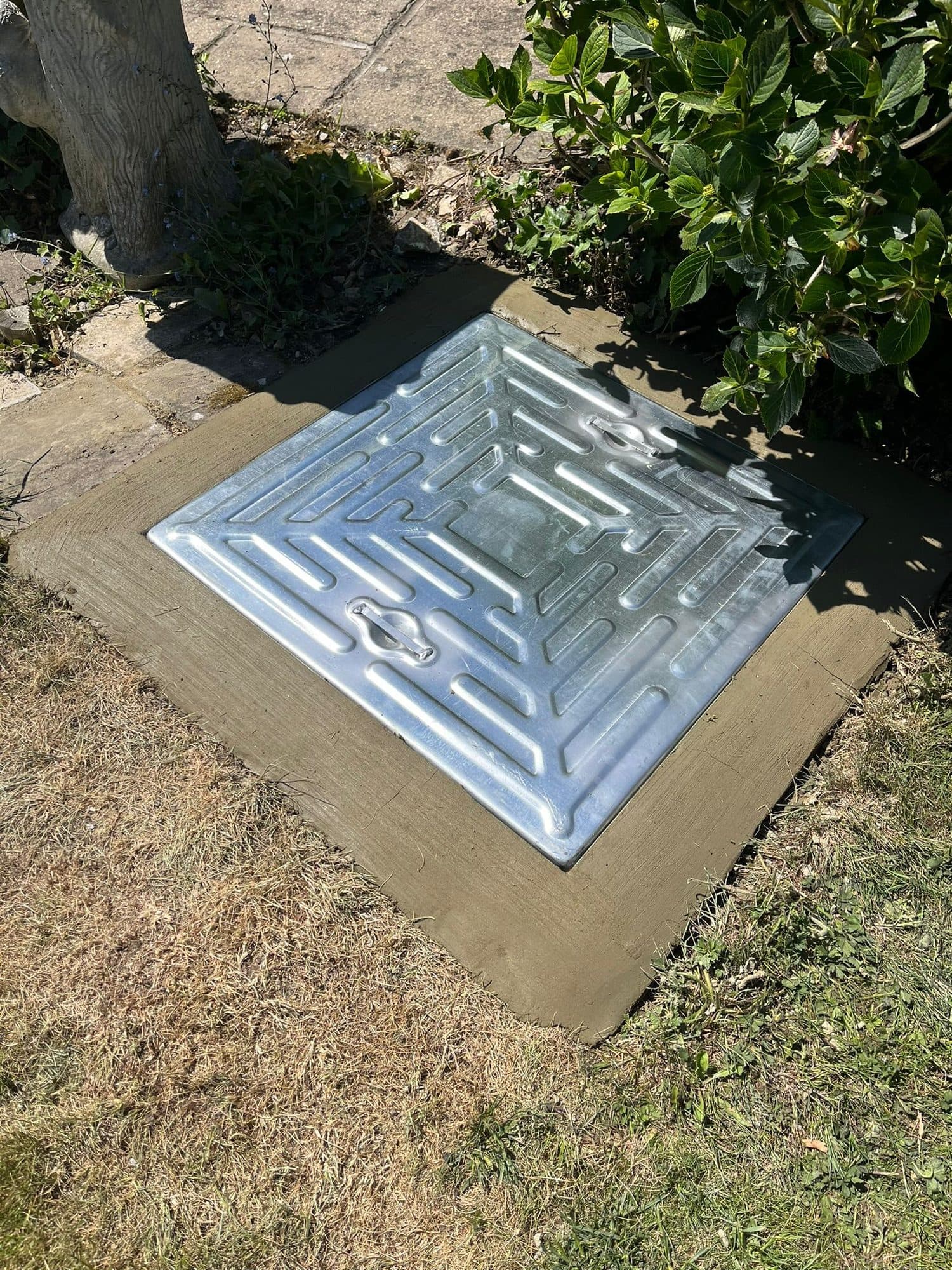
The cover is the hazard people walk over without thinking. Older ones are corroded steel, cracked concrete or, on properties we still come across, timber that was never meant to be permanent. They fail from underneath, so a cover can look completely sound from above right up until the moment it does not hold.
Near the coast this happens faster. Salt in the air eats steel covers, frames and fixings noticeably quicker than a few miles inland, which is something we check on every visit rather than once a year.
In our experience, a bolted or lockable cover works better than a heavy loose slab, because the weight only protects you for as long as nobody moves it, and almost every displaced cover we come across is the concrete sort that somebody lifted to take a look and then could not set back square in its frame. A cover sitting proud of its seating is both a trip hazard and an open tank.
Some practical habits. Never stand in the middle of a cover to test it, and never let anyone else. Know where your tank is and keep the cover visible rather than letting turf grow over it, because a cover you cannot see is one a child, a ride-on mower or a delivery van can find by accident. Keep vehicles off it entirely unless it was specifically built to take the load. If the cover rocks, rings hollow, has rust holes or a crack right across it, treat the area as out of bounds and get it replaced.
Keep chemicals out of the tank
Chemical drain unblockers are a poor idea on any private system, and on a cesspool they simply sit in the tank until somebody empties it. The same goes for large volumes of bleach or strong disinfectant poured down deliberately to deal with a smell. Normal household cleaning is not the problem. Volume and concentration are.
Never mix cleaning products in the hope of shifting something, either down a drain or anywhere else. Combining bleach with an acidic cleaner produces chlorine gas, and doing that into a confined drainage system is a way to create a hazard you cannot then get away from.
If a drain is running slow, the answer is to find out why rather than to pour something into it. Slow drainage on a cesspool usually means the tank is close to full or the pipework is restricted, and neither of those is solved by chemistry. That is a blocked drain or tank to be cleared properly.
Do not let it get to the point of overflowing
Because a cesspool has no outlet, it fills at exactly the rate you use water, and once it is full there is nowhere for the next litre to go. It comes back up through the lowest drain in the house or out around the cover. Most domestic tanks in our area need emptying every four to six weeks, and the safest thing you can do is book it on a schedule rather than wait for the signs that it is full.
An overflow is not just unpleasant. It is raw sewage on the ground, and it is worth knowing what actually happens when a cesspool overflows before you are standing in one.
If it has already overflowed
Treat the ground as contaminated until it has been dealt with. Keep children and pets off it completely, and keep them off long after it looks dry, because looking dry and being safe are not the same thing.
If you have to go near it, wear wellingtons and gloves, keep cuts covered, do not eat, drink or smoke, and wash your hands thoroughly afterwards even if you wore gloves. Do not pressure wash it. A jet wash turns contaminated water into an airborne mist and spreads it much further than it was, including to you. Get the tank emptied, get the cause found, and let the area be cleaned down properly rather than hosed around the garden.
Emptying day, and who should be doing it
Whoever empties your tank must be a registered waste carrier. You are entitled to ask to see the certificate, and you should keep the waste transfer note, which records who took the contents and where they were bound. Anyone offering to do it cheaply without paperwork is telling you something important about where your waste is going to end up.
What the Environment Agency expects of a cesspool is refreshingly short. Keep it sealed and watertight, empty it often enough that it never overflows, and have the contents removed by a registered carrier. It is worth clearing up one thing that gets quoted at cesspool owners a great deal. The General Binding Rules govern small sewage discharges to the ground, and a cesspool discharges nothing at all, so they do not apply to it. The duty not to cause pollution certainly does, and a leaking or overflowing tank is how that duty gets breached.
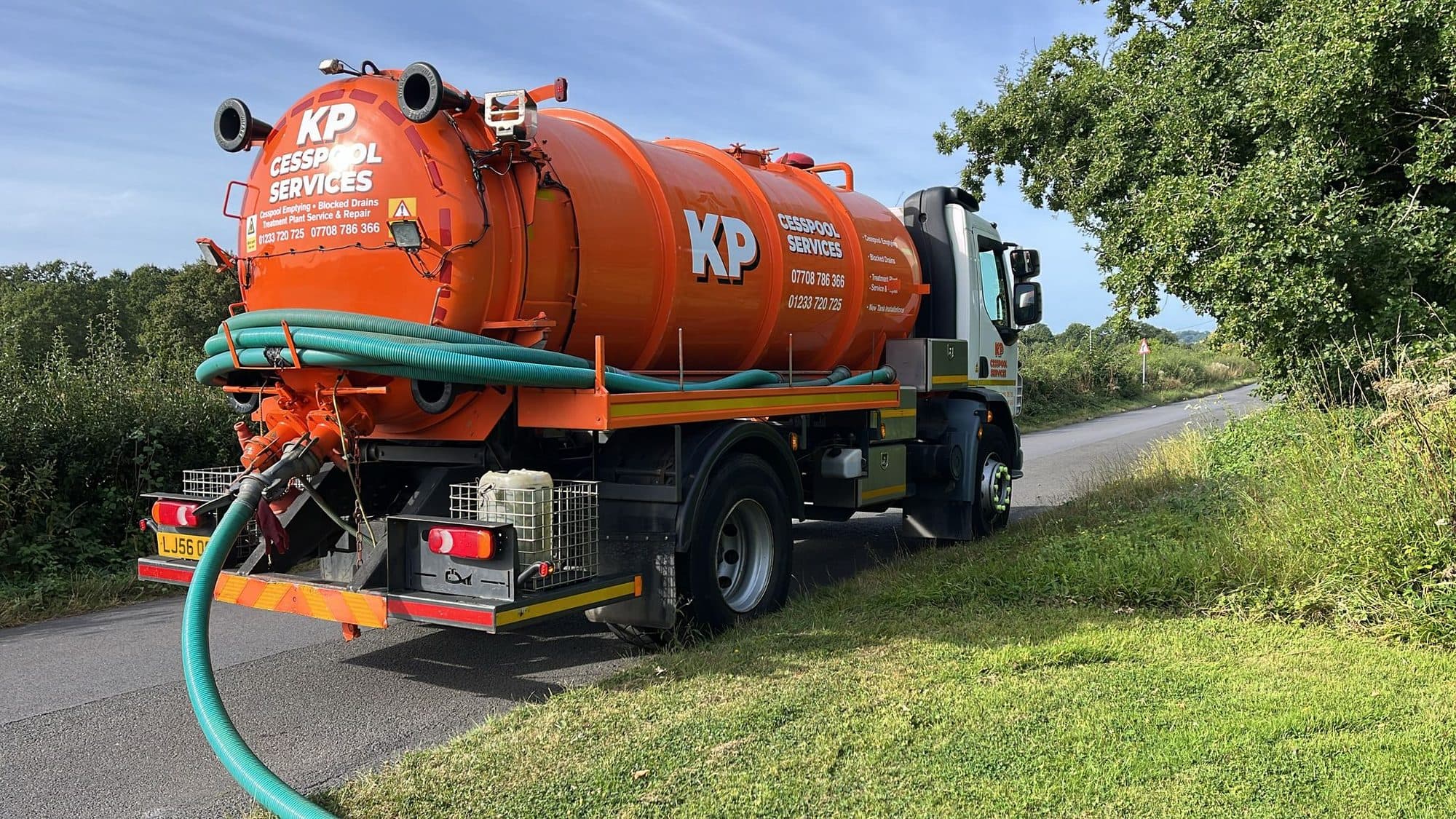
On the day itself, keep children and pets indoors. A charged suction hose across a lawn or drive is heavy, it is a trip hazard, and it is not a toy. Give the tanker room to get in and reverse, and tell us in advance if the ground is soft, because a loaded tanker is a great deal heavier than the van that came to quote and a track that carried a car in August will not always carry it in January.
Getting it looked at
If your cover is in poor condition, if your tank is close to full more often than it used to be, or if you have simply never been told where the tank is or what state it is in, that is worth an inspection rather than a guess. We have been emptying, inspecting and replacing these systems for over twenty years, and a great deal of what makes a cesspool dangerous is fixable long before it becomes urgent. Where a tank itself is past saving, a replacement built to current standards removes most of these risks at once.
You can read our reviews on Checkatrade before you book. To arrange an emptying or an inspection, call KP Cesspool Services on 01233 720725, email kpcesspoolservices@hotmail.com, or send us a message. If you have an overflow or a failed cover right now, say so when you call and we will treat it as an emergency.