Learn how to prevent blocked drains and tanks on private drainage systems, from septic tanks to cesspools, with practical advice that works.
Most blockages on private drainage come from a short list, and almost everything that prevents them costs nothing. Bin wipes and sanitary products instead of flushing them. Keep fats, oils and grease out of the sink. Have the tank emptied on a schedule that fits the property rather than waiting for a problem to announce itself. Check that no rainwater is finding its way into your foul run. And find out what your underground pipework is actually made of, because on a lot of rural properties that single fact explains why the same blockage keeps coming back.
This matters more without mains drainage because there is nobody downstream of you. On a mains connection, a mistake gets diluted into a large public sewer and becomes the water company's problem. With a septic tank, treatment plant or cesspool, your 100mm pipe run and your tank are the entire system. We've found that the properties that almost never need a blocked drains and tanks callout are rarely the ones with the newest equipment. They are the ones where a few habits changed years ago and stuck.
Fat does the most damage, and winter makes it worse
Fats, oils and grease go down the sink as a liquid and stop being one within a few metres. They cool, cling to the pipe wall, and narrow the bore a little further with every wash up. Then they catch everything else that passes. That is the entire mechanism behind a fatberg, and it works the same way in a domestic 100mm run as it does in a Victorian sewer, only faster, because there is far less pipe to lose.
Two things make it worse on a rural property. Drain runs tend to be longer than in a terrace, which gives fat more cold pipe to set against. And in winter the surrounding ground is cold, so the grease sets closer to the house and sets harder. From working with clients across Kent and East Sussex, the heaviest concentration of grease-related blockages we see falls in the run-up to Christmas and the fortnight after it.
The fix is to let the pan cool, wipe it out with kitchen roll and bin the paper. Hot water and washing up liquid are not a solution. They emulsify the fat just long enough to move it somewhere colder and less accessible, which is where it re-sets.
Wipes, and why the labelling stopped helping you
Water UK's 2017 investigation into sewer blockages found that wipes made up around 93% of the material in the blockages it examined, and that less than 1% was material actually designed to be flushed. Those figures describe public sewers, but the mechanism is identical on a private system, and the bill lands on you rather than a water company.
The labelling picture has changed, and a great deal of advice still circulating online has not caught up. The Fine to Flush certification ended in March 2024 and was replaced by Water UK's Bin the Wipe campaign and the simpler three Ps message, which is that only pee, paper and poo belong in a toilet. A ban on selling wet wipes containing plastic has since been signed into law in England and comes into force in spring 2027, with Scotland and Wales moving earlier. It is worth being clear about what that ban does not do. It removes the plastic, not the wipe. A plastic-free wipe still will not disintegrate the way toilet paper does, and it will still sit in your tank or snag on a rough pipe wall. A lidded bin in the bathroom is unglamorous and it works.
What goes down the sink decides what happens in the tank
A septic tank and a treatment plant both run on bacteria. Bleach, strong disinfectants and antibacterial cleaners in any real quantity kill that bacteria off, and the solids that should have been broken down instead sit there or get carried out with the flow. At that point you are no longer dealing with a blockage. You are dealing with a clogged drainage field, which is one of the most common routes to septic tank failure and a great deal more expensive to put right than a jetting visit.
Normal household cleaning is not the problem. Volume and concentration are. Tipping a bottle of bleach down the loo before a fortnight away, or running a strong disinfectant through every day, is what tips the balance.
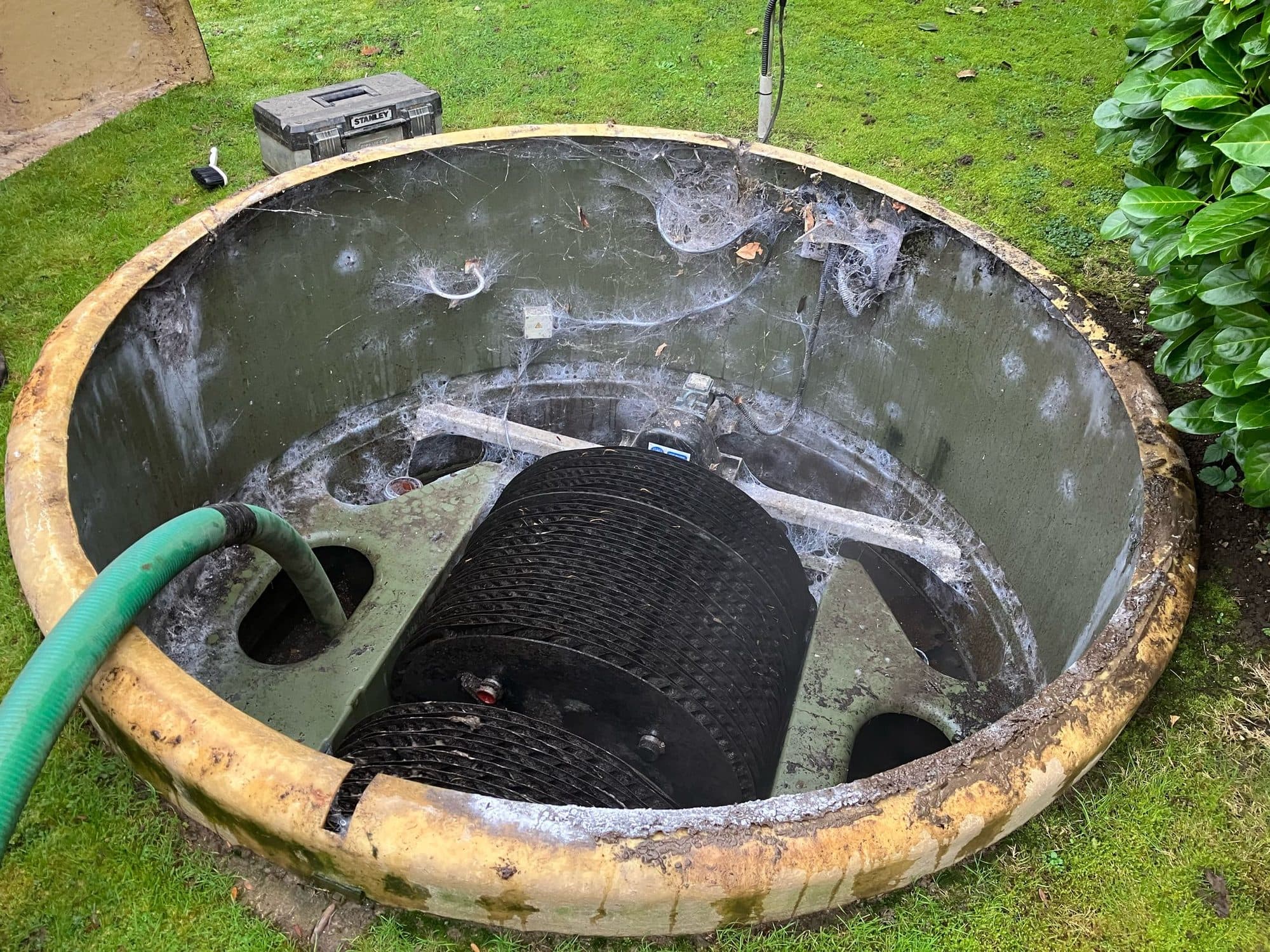
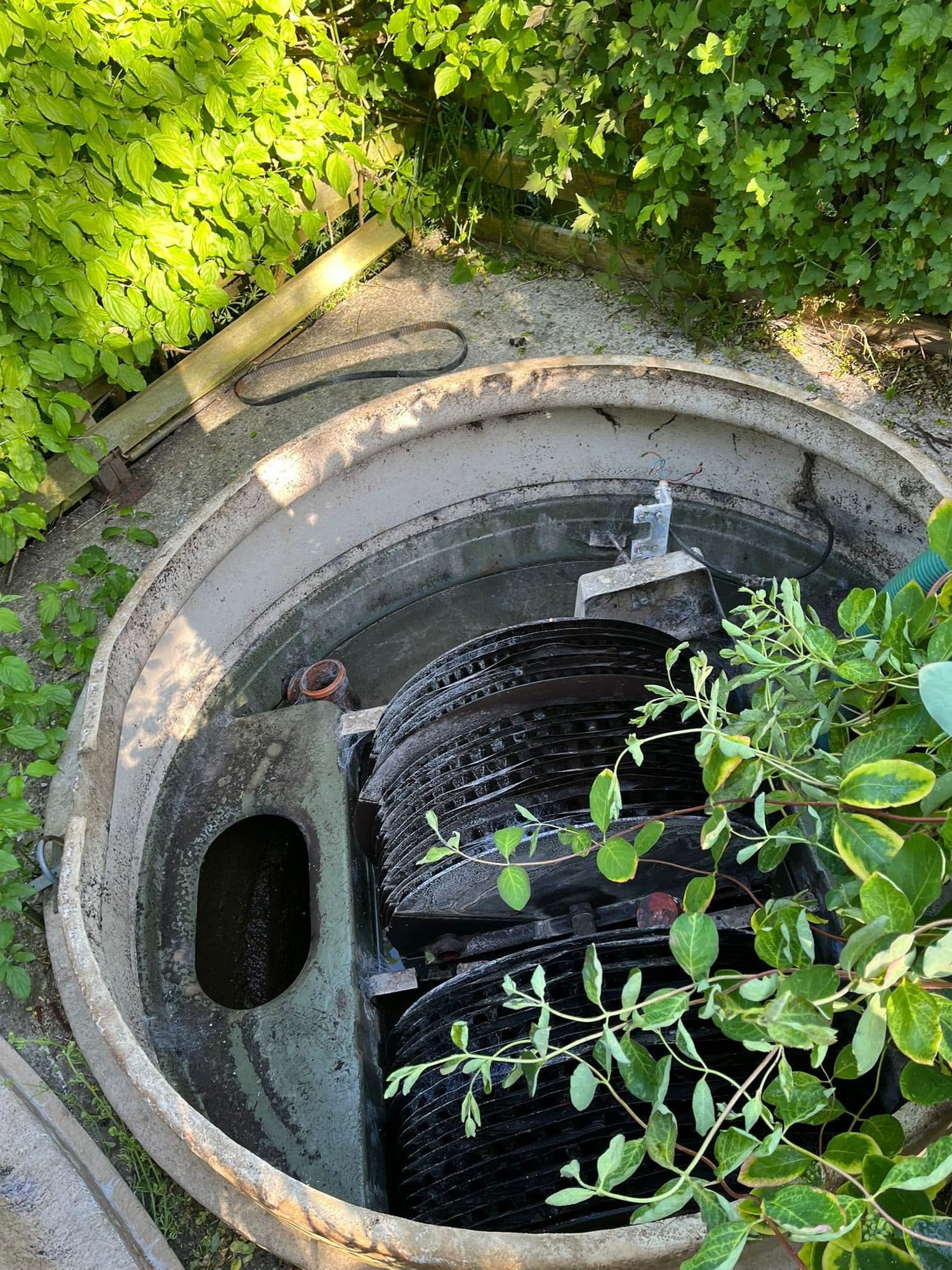
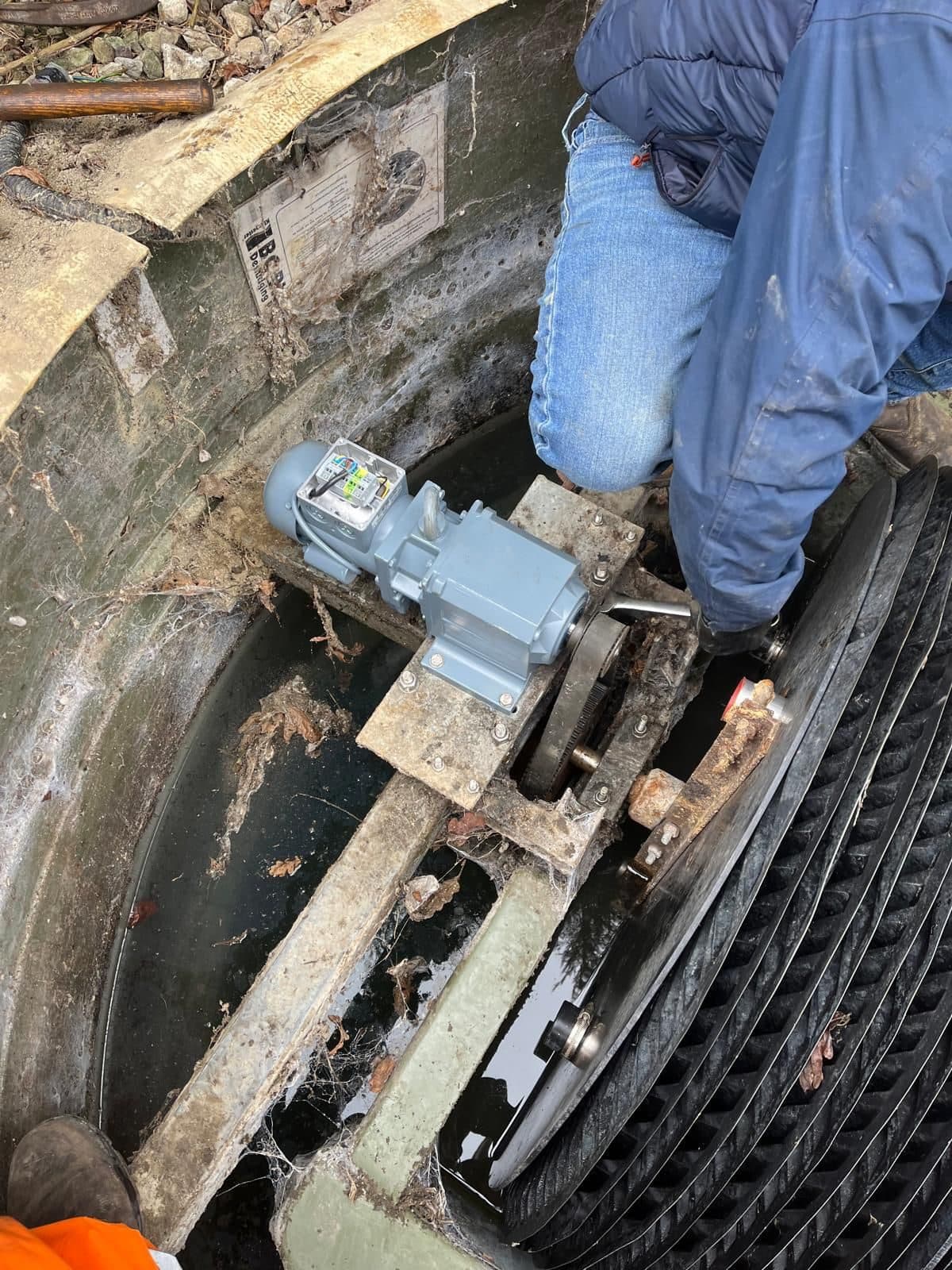
Treatment plants have a second vulnerability that septic tanks do not, which is moving parts. Wipes and fibrous material wrap around blowers, pumps and rotating components, and the first sign is usually a change in noise rather than a slow drain. That is one of the more common faults we attend on treatment plant servicing and repairs, and it is almost always avoidable.
The rainwater connection almost nobody checks
This is the one we find most often on older properties, and the one owners are most surprised by. At some point over the decades, a gutter downpipe or a yard gulley has been plumbed into the foul run rather than to a soakaway. Approved Document H expects surface water and foul drainage to be kept separate, and this is precisely why.
The effect on a septic tank or treatment plant is not a blockage as such. It is a hydraulic flush. A tank works by giving solids time to settle out. Put a roof's worth of rainwater through it during a downpour and the retention time collapses, so solids that should have stayed put get pushed straight into the drainage field. On a cesspool the damage is financial instead, because you are paying a tanker to take away rainwater.
The tell is timing. If the system misbehaves specifically during or just after heavy rain, if the tank level jumps after a storm, or if your emptying interval is noticeably shorter in winter for no other reason, surface water is getting in somewhere. It is worth chasing down and it is usually fixable.
Your property's age tells you what your pipes are made of
Salt-glazed clay with rigid socket and spigot joints was the standard until the 1950s. Those joints shift as the ground moves, they open slightly, and roots find the seep. Once a fine root is through, it thickens into a mat that catches paper. On properties with mature hedgerows sitting over the drain run, this is the single most common structural cause we see.
Between roughly the 1950s and the 1970s, a lot of pipework went in as pitch fibre, which is wood cellulose impregnated with coal tar pitch. It was cheap, light and push-fit. It also has a working life of around 40 to 50 years, which means every length of it still in the ground is now past its design life. It fails in a recognisable order. Hot water and fat soften the pitch, the inner surface blisters and delaminates, and the pipe deforms under soil load into an oval. A blistered, egg-shaped pipe catches paper and wipes, which is why some blockages recur in exactly the same place no matter how carefully the household behaves. If your property or an extension dates from that window, it is worth knowing before anyone puts rods down it.
Keep the tank on a schedule that fits the property
If you have a septic tank or treatment plant, the General Binding Rules require you to have it desludged before it goes beyond maximum capacity, at least once a year or in line with the manufacturer's instructions, and by a registered waste carrier. The Environment Agency is explicit about why. If you leave it too long, solids carry into the drainage field and cause damage that is expensive and disruptive to reverse.
Missed emptying does not simply fill a tank. It causes blockages. As the sludge layer deepens from the bottom and the crust thickens from the top, the working volume in the middle shrinks, and the inlet and outlet are the first things to be reached. That is why septic tank emptying and servicing is worth booking on a rota built around your actual household rather than a generic annual reminder.
When the same blockage keeps coming back
In our experience, a CCTV survey after a second blockage in the same spot works better than a third round of jetting, because jetting only proves the pipe was blocked, whereas the camera tells you whether you have a habit problem or a pipe problem. Those need opposite responses. A habit problem is solved in the kitchen and the bathroom for nothing. A pipe problem is solved underground, and no amount of clearing will keep it away. There is a safety argument too. Aged pitch fibre goes soft, and rodding hard at a soft pipe wall can punch straight through it, turning a shape problem into a collapse.
What to do when one starts
The most useful question is whether one fixture is affected or all of them. A single slow basin is local. Every drain in the house slowing together, gurgling from the toilet when a bath empties, or a smell around the tank lid points further down the system, and the earlier that gets looked at the cheaper it stays. Slow drainage on a rural property is almost never a one-off, and it is the stage at which a problem is still small.
Avoid chemical drain unblockers on a private system. They rarely shift a fat or root blockage, and whatever does not react ends up in the tank, working against the bacteria you need.
Getting help with blocked drains and tanks
Over more than 20 years across Kent and East Sussex, the pattern has held. Blockages are almost never bad luck. They are a habit, a schedule or a pipe, and all three are things you can get ahead of. KP Cesspool Services handles jetting, CCTV inspection, cesspool emptying and tank servicing for domestic and commercial properties across both counties, with a 24/7 emergency callout when something has already backed up. Our reviews and credentials are listed on Checkatrade. To book a survey, a scheduled visit or an emergency callout, call 01233 720725 or email kpcesspoolservices@hotmail.com.