Tank service in New Romney for cesspits, septic tanks and treatment plants, and what the Romney Marsh water table changes about servicing them.
A tank service in New Romney is a full inspection of a private wastewater system rather than simply a pump out. On a routine visit we lift the covers, measure the sludge depth, check that the inlet and outlet are running freely, look over the chamber walls and joints for damage, and on a treatment plant check the blower, the motor, the bearings and the alarm. As a general rule, septic tanks and treatment plants across Romney Marsh want servicing once a year. Cesspits need attention far more often, commonly every four to six weeks, because they store everything and treat nothing.
The reason we treat it as an inspection rather than a collection is the ground. New Romney sits on Romney Marsh, which is flat, low lying and holds a high water table through much of the winter. That single fact changes how a tank behaves here compared with a property on the Downs a few miles inland. It shortens the working life of an older tank, it means a failed joint lets clean groundwater in rather than letting sewage out, and it limits how much can safely be taken out of a tank in one visit. A service that ignores all of that will empty your tank and tell you nothing useful about it.
The three systems, and what each one actually needs
Which service you need depends on which of three systems you have, and plenty of owners inherit a property without ever being told.
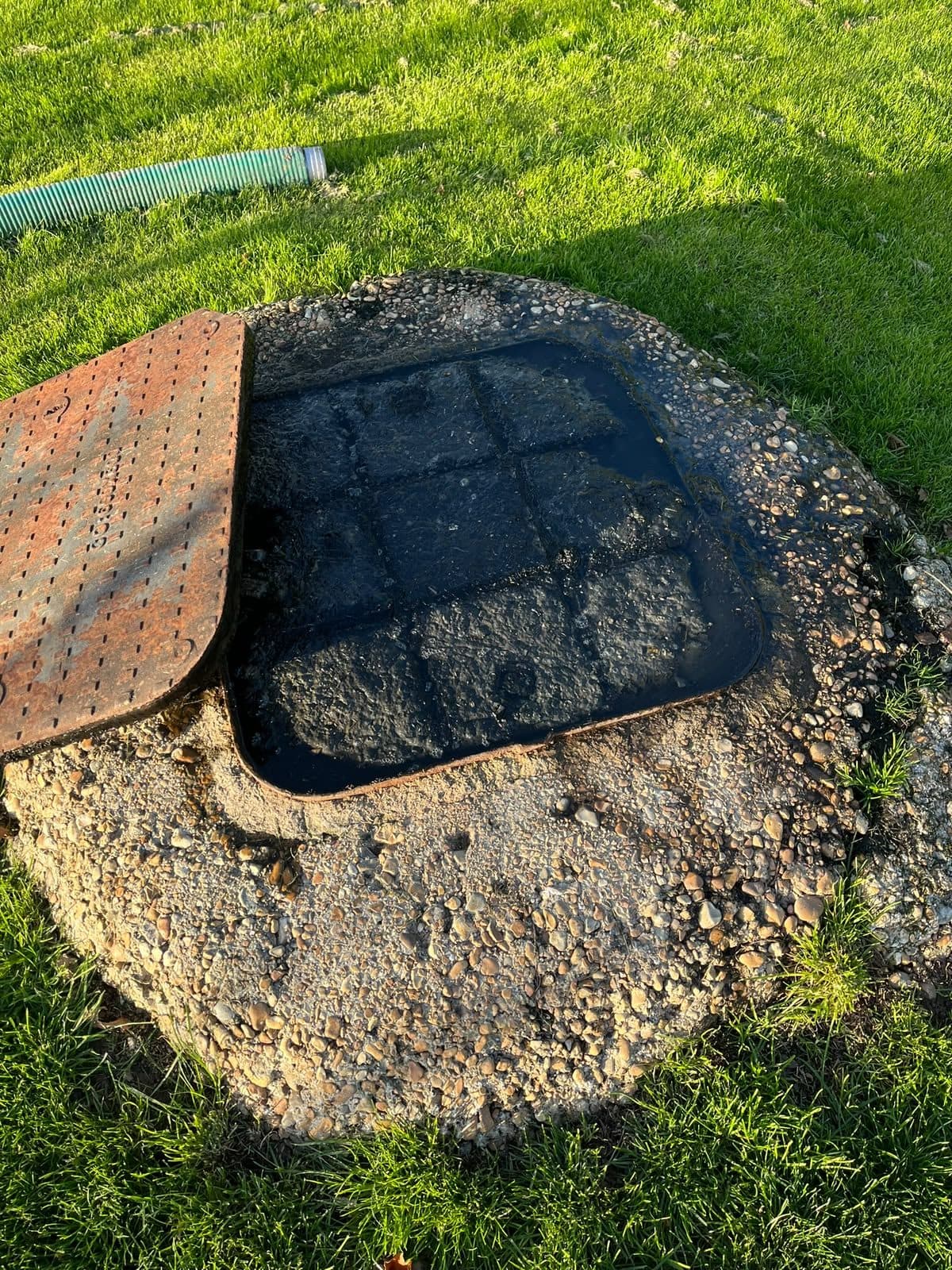
A cesspit, or cesspool, is a sealed tank with no outlet. Nothing is treated and nothing is discharged, so it fills at exactly the rate you use water, and routine emptying is the whole of its maintenance. Servicing one is about the structure, the covers and the seal, because a cesspit that leaks is the only real way it can fail.
A septic tank gives primary treatment only. Solids settle out and the liquid above flows to a drainage field where the soil finishes the job. Servicing a septic tank means desludging before the sludge reaches the outlet, checking the baffles or dip pipes, and looking at how the drainage field is coping.
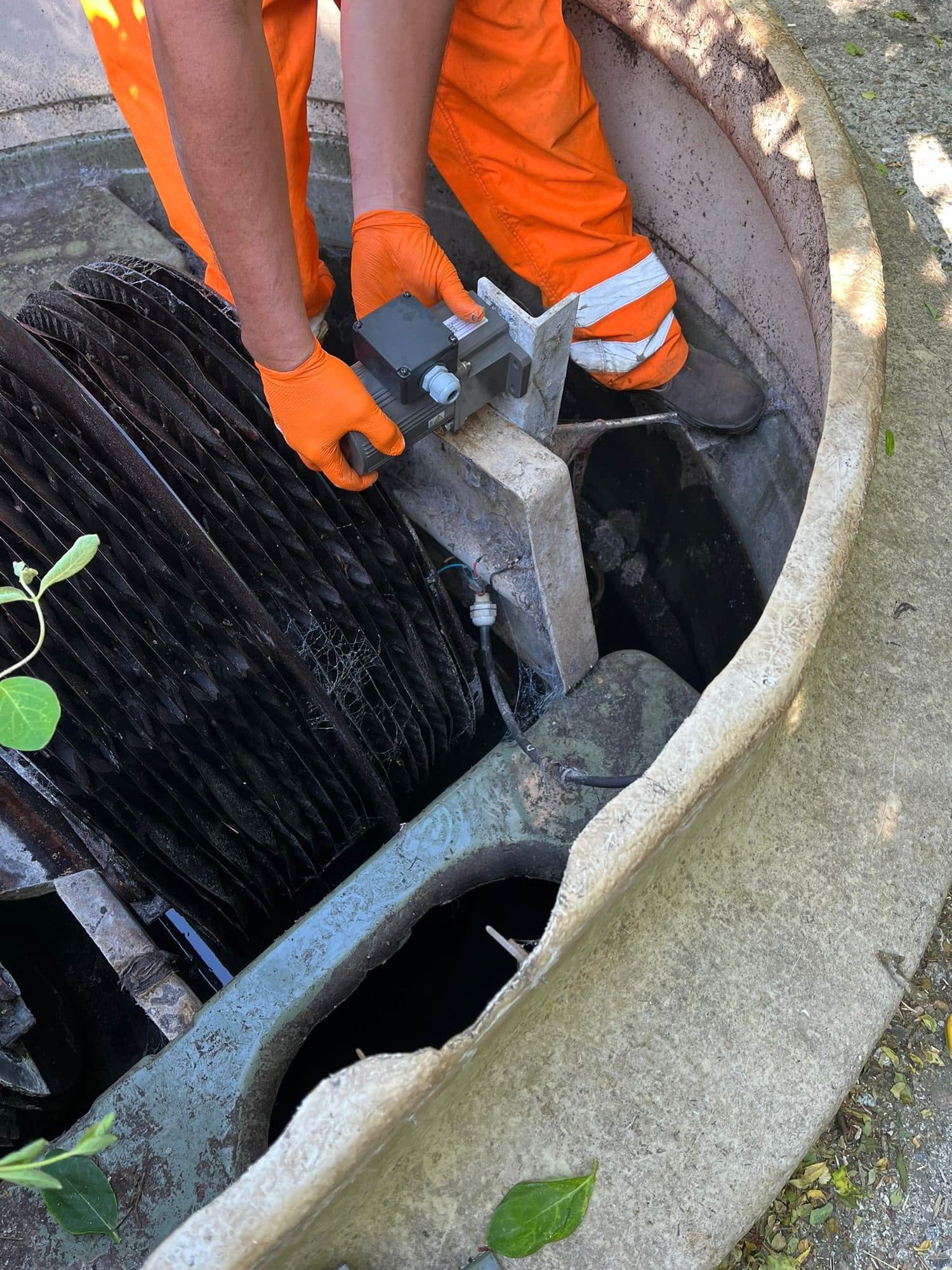
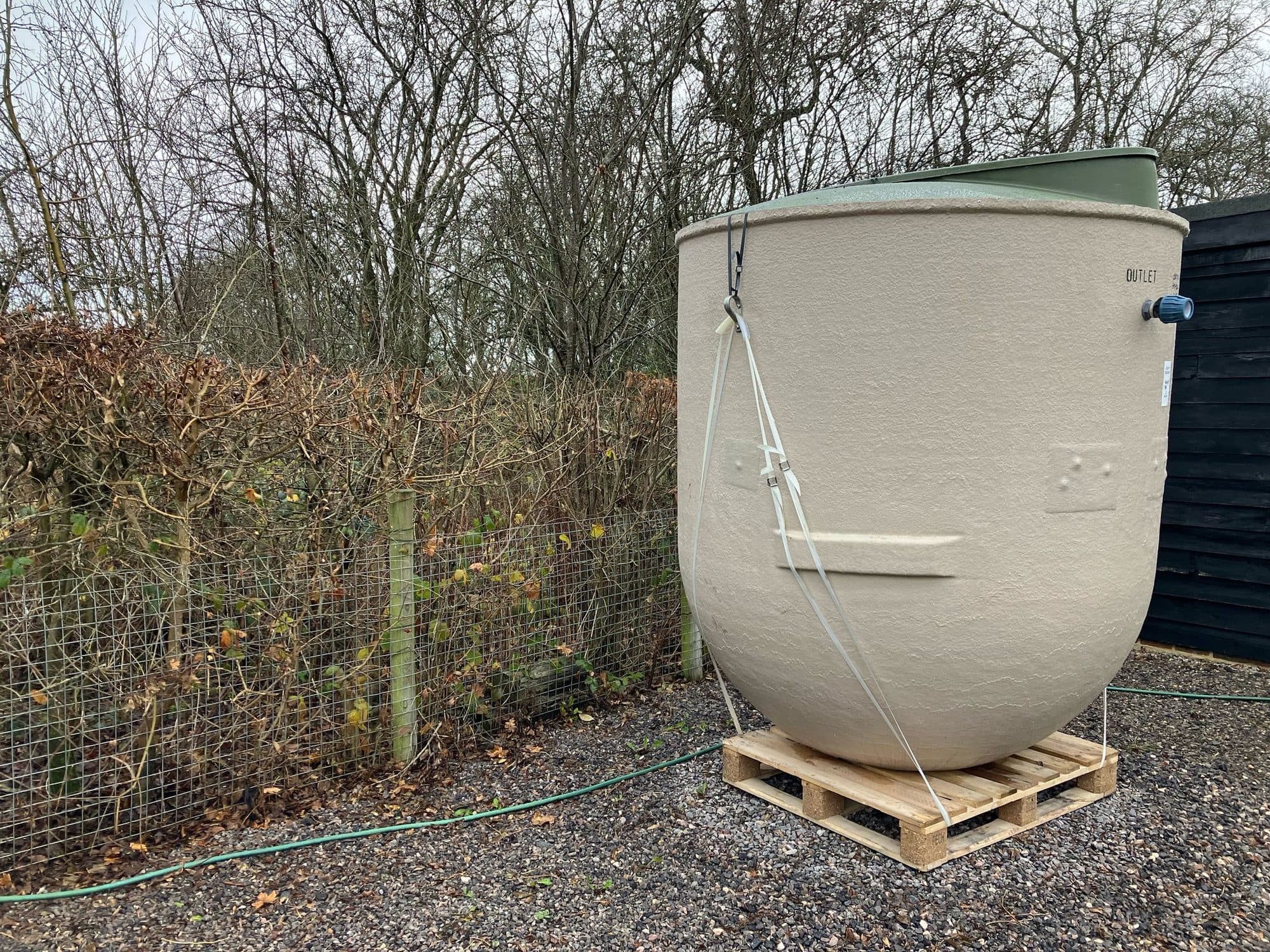
A sewage treatment plant does considerably more, using powered components to treat the effluent to a standard clean enough to discharge to a watercourse where permission exists. Because it has moving parts, treatment plant servicing is the most technical of the three, and the interval is not the same for every unit even within one manufacturer's range. Klargester's own BioDisc manual asks for desludging once a year on a BA, every nine months on a BAx and every six months on a BB or NB, each alongside annual maintenance. We work on a lot of Klargester units, and we have found the first sign of a failing blower or bearing is almost always a change in the noise the unit makes rather than anything visible in the chamber, so it is worth knowing what yours normally sounds like.
The tank that fills too fast and is not really full
This is the fault we find most often around New Romney, and it is the one owners are least likely to have heard of. An older brick or concrete tank sitting in saturated winter ground takes on groundwater through cracked joints. The level rises, the tank appears to fill in half its usual time, and the owner books more frequent emptying. What is actually happening is that you are paying to tanker away clean water from the Marsh.
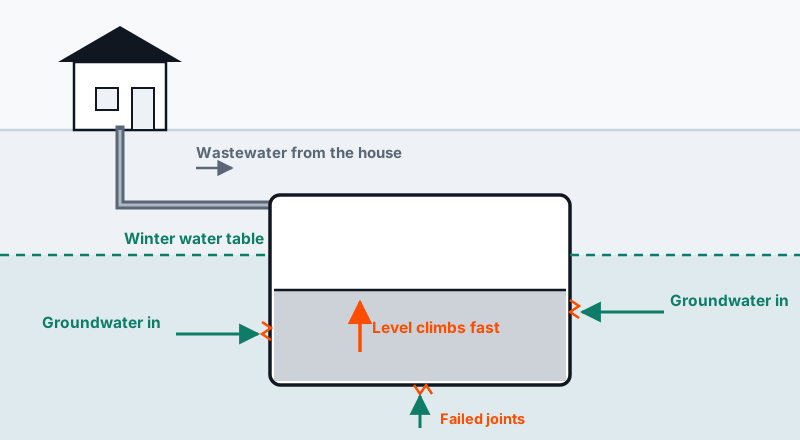
The tell is seasonal. If the interval shortens from November onwards and stretches back out in the spring with nothing else in the household having changed, the tank is drinking the water table. In our experience, a service that measures sludge depth and checks the tank for groundwater ingress works better than simply booking a shorter emptying interval, because a Marsh tank that seems to fill in three weeks is usually taking in clean groundwater through a failed joint, and tankering that away every month costs more across a single winter than sealing the fault once. It is a structural problem wearing the costume of a capacity problem, and no amount of emptying will fix it.
Why a Marsh tank is not stripped dry
There is a practical reason we leave a working level in a tank rather than drawing out every last litre, and it matters more on Romney Marsh than almost anywhere else we cover.
An empty tank sitting in saturated ground is a buoyant object, and what holds it down is the weight of whatever it was bedded and backfilled in. Manufacturers take that seriously at the installation stage. Klargester's BioDisc manual notes that tanks in Great Britain are typically set in concrete because of the rising water table, and it calls for a specialist structural design to hold the tank in place wherever there is a risk of a high water table or of the site flooding. The physics does not go away once the tank is in the ground, so through a wet Marsh winter the sensible approach is to keep a level in the tank rather than leave it empty and hope.
There is a second reason on septic tanks and treatment plants. The treatment is done by bacteria living in the tank, and removing everything sets that population back weeks. Where a tank genuinely has to go right down for an inspection or a repair, we refill it with clean water on the same visit rather than leaving it empty.
Salt, covers and control gear
New Romney is close enough to the coast that salt in the air is a genuine maintenance issue rather than a detail. Steel covers, frames, fixings and the enclosures around treatment plant control gear corrode noticeably faster here than they do inland. We check them on every visit, because a seized or perished cover is both a safety risk to anyone walking across it and the thing that turns a straightforward service into an hour of work before we can even see inside the tank. Replacing a corroded fixing costs very little. Replacing a cover somebody has stood on does not.
Getting a tanker to the tank
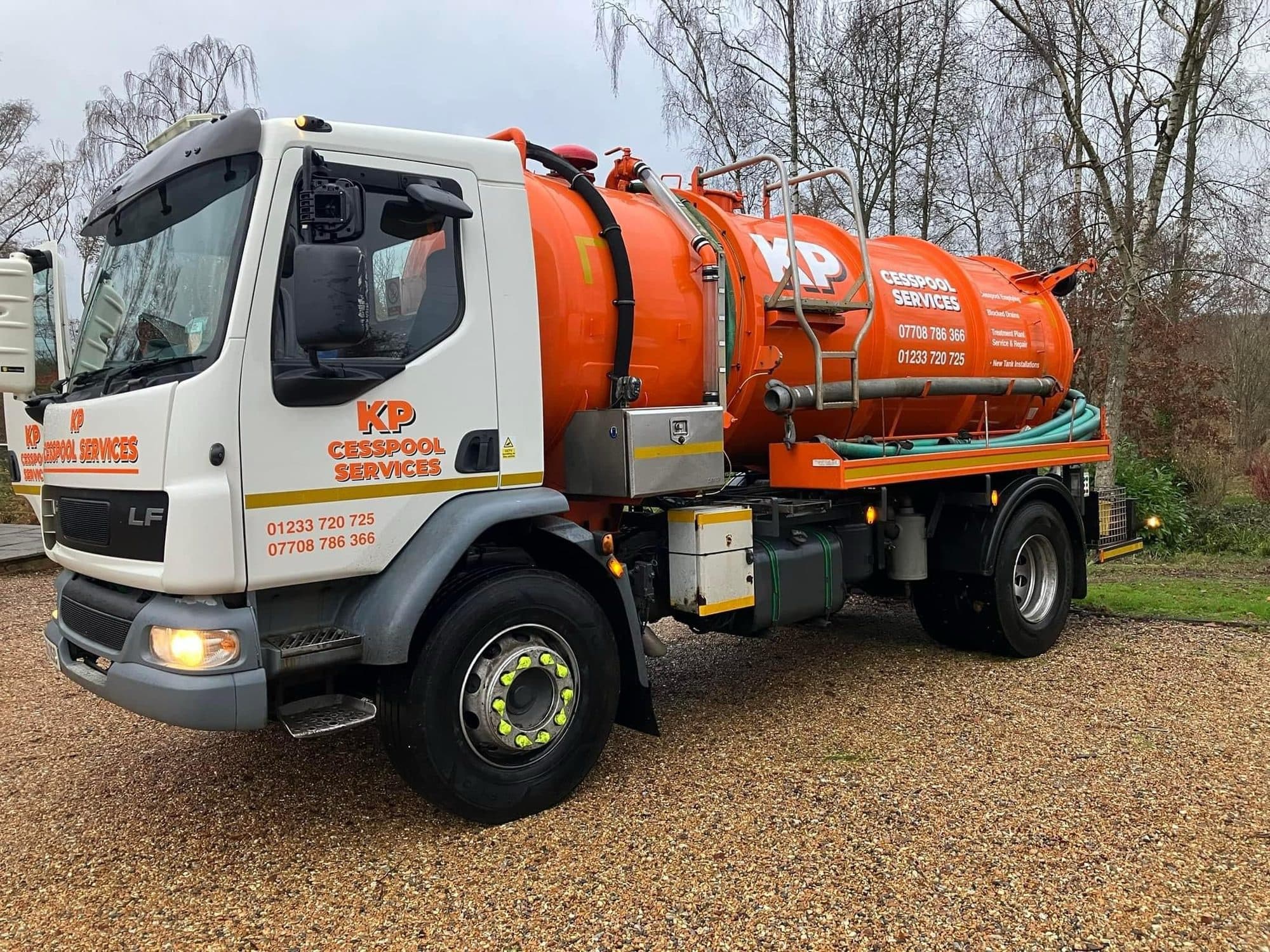
Access on the Marsh is about ground bearing rather than width. A drove or farm track that carries a car comfortably in August will not necessarily carry a loaded tanker in January, and the ground here holds water long after the rain stops. From working with clients across the Marsh, the properties that never have a problem are the ones with a small area of hardstanding within hose reach of the tank. It is a modest one off cost and it removes the risk of a winter visit being turned away, which is exactly when you least want to be waiting.
If you are unsure whether we can reach your tank, tell us the surface and the approximate distance from where a vehicle can stand, and we will tell you honestly before we set off.
The rainwater connection worth ruling out
On flat ground with ditches everywhere, it is easy for surface water to end up in the wrong pipe. A rainwater downpipe or a yard gulley plumbed into the foul run is a common fault in older properties, and it does real damage. On a septic tank or treatment plant it collapses the retention time during heavy rain and pushes solids out towards the drainage field. On a cesspit it simply means you are paying to tanker away rain.
The symptom is a system that misbehaves during or just after heavy rain, or an emptying interval that shortens in winter for no other reason. It is worth ruling out, because separating the two drainage systems is a permanent fix rather than an ongoing cost. Where the fault has already pushed solids into the pipework, it usually shows up first as slow or blocked drains.
What the rules ask of you
Private wastewater systems are the owner's responsibility, and the Environment Agency expects them to be maintained so they do not pollute. For septic tanks and treatment plants discharging to ground, the General Binding Rules require the system to be maintained in line with the manufacturer's instructions and desludged before it goes beyond its maximum capacity, which for most systems means at least once a year. Cesspits sit outside those rules because they discharge nothing, but they must be kept sealed, watertight and emptied often enough never to overflow.
Two practical points follow from that. Whoever empties your tank must be a registered waste carrier, and you are entitled to ask to see the certificate. And if you ever sell, you have to tell the buyer in writing what the system is, where it discharges and how it has been maintained, so keeping your service records is worth doing from the first visit rather than the day the sale starts. Klargester go a step further in their manuals and ask the owner to keep a log of every visit and to fix a notice inside the building itself, so that current and future owners know the system needs maintaining. It costs nothing and it is the surest way to stop the next owner inheriting a tank nobody has ever mentioned to them.
One local point is worth knowing if you are replacing rather than servicing. New Romney lies close to the Dungeness, Romney Marsh and Rye Bay designations, and a new or altered discharge within fifty metres of a Ramsar site, Special Protection Area or biological Site of Special Scientific Interest cannot rely on the General Binding Rules at all. That is a large part of why so many coastal properties here have a sealed cesspit rather than a tank with a drainage field, and it is a conversation to have before committing to a replacement system rather than after.
Helping your system between visits
Servicing does most of the work, but habits matter. Keep wipes out of the toilet, including the ones sold as flushable, because they do not break down the way paper does and they wrap around the moving parts of a treatment plant. Let fats and oils cool and bin them rather than rinsing them down the sink. Fix dripping taps and running overflows, since on a cesspit every wasted litre is a litre you pay to remove. Spread laundry through the week rather than running six loads on a Sunday. And keep an eye out for the early warning signs such as slow drains, gurgling pipework, smells near the tank or unusually green grass above it.
Booking a tank service in New Romney
We service cesspits, septic tanks and treatment plants throughout New Romney and the wider Romney Marsh, and we have been doing it for over twenty years. If your system is due, if the emptying interval has crept shorter over the winter, or if you have simply moved in and have no idea what is buried in the garden, we can look at it and tell you plainly what it needs. Cesspit owners can also arrange regular emptying on a schedule that suits the property rather than waiting for a problem.
You can see our reviews on Checkatrade before you book. To arrange a service, call KP Cesspool Services on 01233 720725, email kpcesspoolservices@hotmail.com, or send us a message and we will get you booked in.